
back-to-top
x
close
Three people smiling indoors next to a table overflowing with bags of groceries, including fresh fruit like apples and oranges, as well as packaged snacks, representing a food distribution or donation effort.

Editor’s note: This article has been aggregated from binje.com. To read the complete article, click here.

The Partners for Health Foundation has awarded a two-year, $120,000 grant to Table to Table, New Jersey’s first and largest food rescue nonprofit. The funding reinvests in Table to Table’s 27-year mission to reduce environmental food waste while directly addressing health inequities and hunger across northern New Jersey.

The grant arrives at a critical juncture for the region. State food systems are currently bracing for heightened demand due to recent SNAP policy changes and eligibility disruptions, which experts warm will significantly spike food insecurity.

“We are incredibly grateful for this generous grant, which is helping Table to Table advance our mission of keeping perfectly good food out of landfills while providing nourishment to children, families, seniors, and veterans facing food insecurity,” said Heather Thompson, executive director of Table to Table. “The foundation’s continued partnership has further fortified our food rescue efforts, allowing us to deepen our impact by growing our network of food donors, community partners, and volunteers.”


Table to Table is New Jersey’s first and largest food rescue nonprofit, bridging the gap between food being wasted and people facing food insecurity. We bring rescued fresh, nutritious food to 276 community partners, including social service organizations, pantries, shelters, fresh produce markets and centralized distribution hubs. Food is provided free of charge. Through this, Table to Table touches a diversity of those in need, including families, children, veterans, and older adults, making good nutrition accessible while serving as a stimulus for other longer-term benefits. Since 1999 we have rescued more than 133,271 tons of nutritious food — enough for 266,542,863 million meals — and delivered it to our neighbors in need, saving over 612 metric tons of methane saved.

Related:

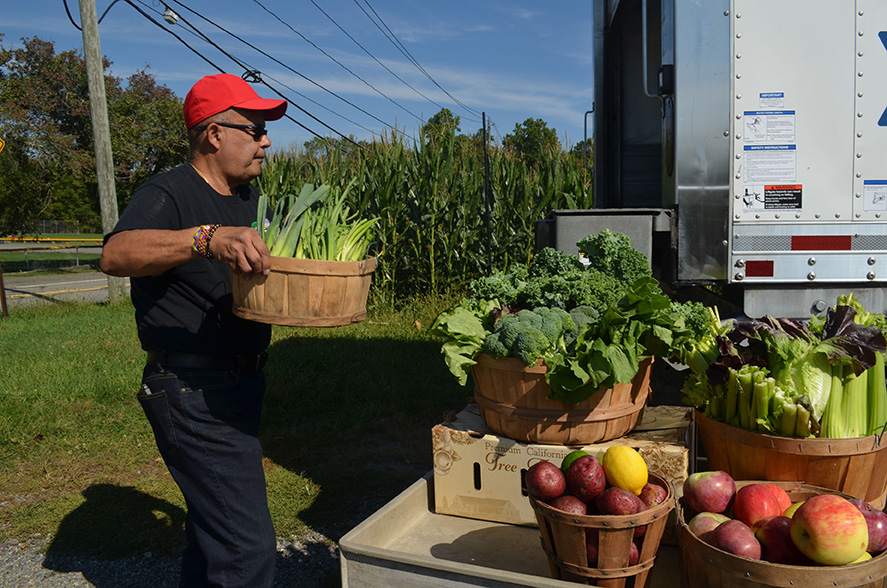
Ed Trucil is the subject of Table to Table’s most recent volunteer spotlight.

“Volunteering to help rescue food, reduce waste, and relieve hunger has been such a rewarding way to enjoy my retirement,” Ed said. “Providing transportation from the generous donors to the agencies that serve the hungry has helped connect me to our community in a new way, and also opened my eyes to the importance of sustainability. In addition, I’d like to give a big shoutout to the many volunteers and behind-the-scenes staff who make this organization so successful!”

Volunteering Like Ed Does

Signing up to be a Table to Table volunteer is easy. Julie Kinner, Table to Table’s Vice President of Operations, said all you have to do is download the Table to Table I-Rescue App, powered by Food Rescue Hero, on your phone to become a food rescue hero! You’ll complete a simple registration process and volunteer agreement, and then you can get started. The app walks you through every step! This is what Ed uses.

Volunteers of all ages are welcome to volunteer with our food rescue program. However, the driver must have a valid driver’s license, and a valid vehicle registration and insurance. 

Since we launched, more than 350 volunteers have completed more than 9,600 rescues and delivered more than 2 million pounds of donated food that would have been thrown away.

As New Jersey’s first and largest food rescue, our mission is to reduce food waste and provide nourishment to our food-insecure neighbors throughout North Jersey. We rescue millions of pounds of fresh food annually that would otherwise be wasted and end up in landfills, contributing to climate change. We deliver it to partner organizations who support the nearly 1.1 million people in our area who need it most.

Together, we can reduce food waste in our home and make a positive impact on the planet. Every little bit of effort — no matter how small — leads to change.

More than an estimated 120 million pounds of food, worth about $400 million, will go uneaten during the upcoming Independence Day weekend. That is about 20 percent of the food meant to be eaten during that time, according to ReFED, a national nonprofit working to end food waste by leveraging data and connecting individuals to help foster large-scale change within the food ecosystem. ReFED calculated the amount based on a survey conducted by the American Farm Bureau Federation.

About an estimated 126 million pounds of food was wasted during the 2025 Independence Day weekend, according to ReFED.

Cost and Scale
  • Total Food Wasted: Over 120 million pounds of food ends up in the trash.
  • Financial Loss: The wasted food costs nearly $400 million.
  • Spending Per Person: Consumers spend an average of $94.41 on Fourth of July food alone

The most popular, and costly, type of wasted food is beef. More than half of the methane emissions from wasted food on Independence Day come from beef, according to ReFED. These emissions are equal to the emissions generated by powering 50,000 American homes for a year. Other high-waste foods include ice cream, pork, and potato chips.

The waste associated with the Independence Day holiday does not just occur when consumers fail to eat it. It can be measured throughout the food ecosystem lifecycle. The wasted used to produce this food can supply about 14 days of residential waster use throughout the state of California, according to ReFED.

Fourth of July Food Waste Reduction Tips

  • Buy only what you need: Plan out your meal ahead of time. That way, you only buy what you know people want. You also avoid impulse buying. You reduce food waste and save money!
  • Storage is key: Explore the best way to store different types of produce to keep them fresh for as long as possible – learn what goes on the counter, what belongs in bags, what should or shouldn’t be pre-washed. And don’t forget about your freezer. Many foods can be frozen for later use, like rolls and hamburger and hot dog meat.
  • Love your leftovers: Make sure you eat your leftovers. Instead of letting them droop in the back of the fridge, try folding them into new meals. Got some roasted veggies from last night’s dinner? Throw them into an omelet for breakfast or a salad for lunch. Leftover chicken? Shred it up and make tacos or toss it into a stir-fry.


Table to Table is New Jersey’s first and largest food rescue nonprofit, bridging the gap between food being wasted and people facing food insecurity. We work with food businesses of all types to rescued fresh, nutritious surplus food, and deliver it for free to 300+ social service organizations, pantries, shelters, community produce markets and centralized distribution hubs. Through our community partnerships, Table to Table reaches families, children, veterans, older adults, and others in need, improving food security, nutritional access, and better health. Since 1999 we have rescued more than 120,700 tons of nutritious food—enough for 241,400,846 million meals—and delivered it to our neighbors in need, while also saving over 544 metric tons of methane from impacting climate change by preventing food waste.

Editor’s note: Feeding Hope: The “Ride to Independence” podcast interviewed Table to Table’s Executive Director Heather Thompson, who spoke about our mission and our Kick Hunger Out of NJ Tour during the FIFA World Cup.

Table to Table, New Jersey’s first food rescue organization, is feeding hope. It has been combating food waste and hunger since 1999.

Executive Director Heather Thompson shares how the organization collects fresh food from local businesses and events, like the FIFA World Cup, to feed the community. Their Kick Hunger out of New Jersey tour shows how large events can contribute to food security by rescuing surplus food. By collaborating with a wide network of pantries and shelters, Table to Table ensures that delicious, nutritious meals reach those in need without delay, proving that the solution lies in better distribution rather than more food production.


Table to Table is New Jersey’s first and largest food rescue nonprofit, bridging the gap between food being wasted and people facing food insecurity. We bring rescued fresh, nutritious food to 276 community partners, including social service organizations, pantries, shelters, fresh produce markets and centralized distribution hubs. Food is provided free of charge. Through this, Table to Table touches a diversity of those in need, including families, children, veterans, and older adults, making good nutrition accessible while serving as a stimulus for other longer-term benefits. Since 1999 we have rescued more than 133,271 tons of nutritious food — enough for 266,542,863 million meals — and delivered it to our neighbors in need, saving over 612 metric tons of methane saved.

Related:

‘We couldn’t do it without Table to Table’s help.’

Editor’s note: This story originally appeared on CBS New York.

A New Jersey charity is on a mission to make sure nothing goes to waste at 2026 Men’s World Cup Watch Parties in the state. 

Table to Table, a Saddle Brook-based nonprofit, launched an initiative to save leftover food from FIFA watch parties and get it to those who need it most all over northern and central Jersey. 

As soccer fan fever spreads across the Garden State, so do the crowds and the food. But what’s left behind doesn’t have to go to waste. 

The Kick Hunger out of New Jersey Tour is part of the call to rescue surplus meals from World Cup watch parties at restaurants and event spaces, food trucks, and fan festivals.

“We’re packing up food for hundreds of meals that’s already cooked, already prepared, ready to eat. And that is such a gift to our communities,” said Heather Thompson, with Table to Table. 

Restaurants, venues and watch party event organizers can donate surplus food if it’s been prepared in commercial kitchens, Table to Table says.   

During the 39-day tournament, the charity’s tour van is traveling around the state as crews work in real-time to pack up meals within hours and get them out to local partners. 

Food sent to Parkside Community Church in Westwood quickly goes to families who rely on fresh options. 

“The clients that we have, who come here regularly, this is their grocery shopping for the week. They can’t afford to buy food on their own,” said Lisa Bontemps, with the church. 

A Win for All

Table to Table’s initiative is a win on two fronts: cutting down food waste and helping tackle hunger across North Jersey. 

“We realized that there was a real opportunity to get even more of that food out into our community and make sure that those celebrations benefited as many people as possible,” said Thompson. 

“This is critical for them. We couldn’t do it without Table to Table’s help,” said Bontemps.

With dozens of World Cup events still ahead, organizers said they’re just getting started.

The tournament’s championship match will be on July 19 at MetLife Stadium in East Rutherford.


Table to Table is New Jersey’s first and largest food rescue nonprofit, bridging the gap between food being wasted and people facing food insecurity. We bring rescued fresh, nutritious food to 276 community partners, including social service organizations, pantries, shelters, fresh produce markets and centralized distribution hubs. Food is provided free of charge. Through this, Table to Table touches a diversity of those in need, including families, children, veterans, and older adults, making good nutrition accessible while serving as a stimulus for other longer-term benefits. Since 1999 we have rescued more than 133,271 tons of nutritious food — enough for 266,542,863 million meals — and delivered it to our neighbors in need, saving over 612 metric tons of methane saved.

Related:

Saddle Brook-based nonprofit is collecting surplus food at World Cup festivals, such as Flag Cities

Editor’s note: This story originally appeared on binje.com. Click here to read the entire article.

If you’re planning an event to celebrate the World Cup, make sure you have plenty of food. And if you have plenty of food left over, make sure you remember Table to Table, North Jersey’s leading food-rescue network.

Based in Saddle Brook, Table to Table turns surplus meals into immediate help for hungry neighbors. That’s the basis of its Kick Hunger Out of New Jersey Tour.

The Table to Table Tour Van has been on the road throughout the World Cup, rescuing surplus food from the Goya Presents Flag Cities fan festivals, as well as local parties and special events, and delivering directly to our neighbors in need.

Jim Kirkos, Chief Executive Officer of the Meadowlands Chamber and one of the creators of the Flag Cities festivals, said his group is eager to support the fine work Table to Table does.


Table to Table is New Jersey’s first and largest food rescue nonprofit, bridging the gap between food being wasted and people facing food insecurity. We bring rescued fresh, nutritious food to 276 community partners, including social service organizations, pantries, shelters, fresh produce markets and centralized distribution hubs. Food is provided free of charge. Through this, Table to Table touches a diversity of those in need, including families, children, veterans, and older adults, making good nutrition accessible while serving as a stimulus for other longer-term benefits. Since 1999 we have rescued more than 133,271 tons of nutritious food — enough for 266,542,863 million meals — and delivered it to our neighbors in need, saving over 612 metric tons of methane saved.

Related:

The Behind the Seams Fashion Show was held at Bottagra Restaurant and benefitted Table to Table.

Editor’s note: BC The Mag covered the Behind The Seams Fashion Show at Bottagra in Hawthorne. For more photos, click here.


Table to Table is New Jersey’s first and largest food rescue nonprofit, bridging the gap between food being wasted and people facing food insecurity. We bring rescued fresh, nutritious food to 276 community partners, including social service organizations, pantries, shelters, fresh produce markets and centralized distribution hubs. Food is provided free of charge. Through this, Table to Table touches a diversity of those in need, including families, children, veterans, and older adults, making good nutrition accessible while serving as a stimulus for other longer-term benefits. Since 1999 we have rescued more than 133,271 tons of nutritious food — enough for 266,542,863 million meals — and delivered it to our neighbors in need, saving over 612 metric tons of methane saved.

Julie received the Transformational Leadership Award

Julie Kinner, Table to Table’s longtime Vice President of Operations, was honored with a Russ Berrie Making a Difference Award at a ceremony Friday.

Related: Russ Berrie Making a Difference Award Honors Table to Table’s Julie Kinner

“Without Julie, Table to Table simply would not be the force for good that it has become in New Jersey. If a community partner needs help, she’s the first to raise her hand, and if someone reaches out with a question or concern, she picks up the phone and asks, ‘What can we do?’” said Heather Thompson, Executive Director of Table to Table. “Julie has been the quite but steady force behind so much of our growth, success, and impact for 26 years and counting.”

It is the 30th and final year the foundation is administering the awards. Table to Table Founder Claire Insalata Poulos, received a Berrie Award in 2010.

“As the awards come to a close, I cannot think of a New Jersey leader more deserving of being celebrated for the difference she makes, which translates into nourishment for hundreds of thousands of our neighbors every year,” Heather said.

Congratulations, Julie!


Table to Table is New Jersey’s first and largest food rescue nonprofit, bridging the gap between food being wasted and people facing food insecurity. We bring rescued fresh, nutritious food to 276 community partners, including social service organizations, pantries, shelters, fresh produce markets and centralized distribution hubs. Food is provided free of charge. Through this, Table to Table touches a diversity of those in need, including families, children, veterans, and older adults, making good nutrition accessible while serving as a stimulus for other longer-term benefits. Since 1999 we have rescued more than 133,271 tons of nutritious food — enough for 266,542,863 million meals — and delivered it to our neighbors in need, saving over 612 metric tons of methane saved.

Related:

Editor’s note: This story originally appeared on binje.com. Click here to read the entire article.

Table to Table’s Vice President of Operations Julie Kinner will be honored with a Russ Berrie Making a Difference Award Friday.

Kinner will receive the organization’s Transformational Leadership Award. This award recognizes inspiring leaders and volunteers nominated by previous honorees.

“Through their dedicated service to others, they extend the ripple effect of good works that will continue to transform lives and communities around New Jersey,” the organization said.

This year is final year the awards will be administered; 2026 is the first time the Russell Berrie Foundation has designated half of its award to Gen Z changemakers younger than 27. The foundation has honored 500 individuals in its 30-year history.

“This is Russ’s lasting legacy: to connect the past to the future and create a community of individuals who, together, are making a positive impact,” said Angelica Berrie, president of the Russell Berrie Foundation.


Table to Table is New Jersey’s first and largest food rescue nonprofit, bridging the gap between food being wasted and people facing food insecurity. We bring rescued fresh, nutritious food to 276 community partners, including social service organizations, pantries, shelters, fresh produce markets and centralized distribution hubs. Food is provided free of charge. Through this, Table to Table touches a diversity of those in need, including families, children, veterans, and older adults, making good nutrition accessible while serving as a stimulus for other longer-term benefits. Since 1999 we have rescued more than 133,271 tons of nutritious food — enough for 266,542,863 million meals — and delivered it to our neighbors in need, saving over 612 metric tons of methane saved.

Related:

Montclair State University’s Social Work and Child Advocacy Department Co-Sponsors Event 

April 30, 2025 – Saddle Brook, NJ – Table to Table, New Jersey’s first and largest food rescue organization, successfully concluded its third annual Partners for Good Conference co-sponsored by Montclair State University’s Social Work and Child Advocacy Department. The Partners for Good Conference is designed to connect, inform and empower the nonprofit’s partner pantries, social service agencies, shelters, and other community partners, who distribute the surplus food delivered by Table to Table to communities in need throughout Bergen, Essex, Passaic, Hudson, and Morris counties.  

“This year’s Partners for Good Conference provided our community partners with an interactive venue to network, learn, and share resources to support their vital work in our communities,” said Heather Thompson, Executive Director, Table to Table. “Many of our partners are navigating extraordinary challenges – increasing need among our neighbors, limited staffs and budgets, and a multitude of unpredictable circumstances. This annual gathering is an opportunity to not only share critical information and build connections among our partners; it also welcomes State and County leaders to listen and engage in our collective efforts to reduce food insecurity,” Thompson concluded.

The day-long Conference featured partner panels, breakout discussions, and presentations addressing critical and timely topics that were informed by Table to Table’s Community Advisory Board. The afternoon capped off with a discussion about New Jersey’s newly launched Food Security Strategic Plan led by Mark Dinglasan and Dr. Jenny Schrum from the New Jersey Office of the Food Security Advocate (OFSA). 

“OFSA applauds Table to Table for another successful Annual Partners for Good Conference. It was a pleasure for Dr. Jenny and me to present the statewide food security strategic plan and implementation tool kit to the attendees and to answer questions,” said Mark Dinglasan, Executive Director, NJ Office of the Food Security Advocate. “New Jersey’s food security efforts, including the strategic plan, are rooted in the belief that true food security can only be achieved through multisector partnerships that have consensus and collaboration among interconnected partners. Hunger, poverty, and food insecurity are insidious foes that are highly complex and interconnected. Our efforts to combat them must be just as interconnected, and it is through events like the annual Partners for Good Conference that we are able to build these rich connections,” Dinglasan concluded. 

“We were pleased to partner with Table to Table for the second year in a row to support these important efforts and realize Montclair State University’s mission to serve our state’s dynamic, varied communities,” said Milton A. Fuentes, Psy.D. Interim Chair, Social Work and Child Advocacy Special Advisor to the Provost/Professor, Psychology Department, Montclair State University.  

Table to Table’s Partners for Good Conference was made possible through the generosity of our sponsors: Montclair State University’s Social Work and Child Advocacy, College of Humanities and Social Sciences; ShopRite Inserra Supermarkets Inc.Horizon; Something to Talk About Marketing; Dorfman Abrams Music Accountants & Advisors; Bergen County Camera; and Premium Digital Office Solutions. 

About Table to Table 

Table to Table (http://www.tabletotable.org) is New Jersey’s first and largest food rescue nonprofit, bridging the gap between food being wasted and people facing food insecurity.We bring rescued fresh, nutritious food to 276 community partners, including social service organizations, pantries, shelters, fresh produce markets and centralized distribution hubs. Food is provided free of charge. Through this, Table to Table touches a diversity of those in need, including families, children, veterans, and older adults, making good nutrition accessible while serving as a stimulus for other longer-term benefits. Since 1999 we have rescued more than 133,271 tons of nutritious food — enough for 266,542,863 meals — and delivered it to our neighbors in need, saving over 612 metric tons of methane. 

###