back-to-top
x
close

March is National Nutrition Month. Creating a nutritious, balanced plate doesn’t have to be complicated. In fact, one of the simplest — and most impactful — changes you can make is to fill half your plate with fruits and vegetables. Not only does this add color, flavor, and texture to your meals, but it also boosts your intake of vitamins, minerals, and dietary fiber, the Academy of Nutrition and Dietetics said.

Of the 25 million pounds of food we rescued in 2025, 57% was produce.

A great daily goal is to aim for 2 cups of fruit and 2½ cups of vegetables, according to the academy. If that sounds like a lot, don’t worry — there are plenty of easy (and tasty!) ways to get there. Here are 20 simple ideas to enjoy more fruits and vegetables throughout your day.

20 Easy Ways to Eat More Fruits & Vegetables

1. Load up your pizza with veggies.

Broccoli, spinach, peppers, tomatoes, mushrooms, and zucchini all make flavorful pizza toppings.

2. Blend a fruit-packed smoothie.

Combine low-fat milk with frozen fruit like strawberries, bananas, mango, pineapple, or peaches for a refreshing breakfast.

3. Wrap it up.

Try a whole-wheat tortilla filled with roasted vegetables and a sprinkle of low-fat cheese.

4. Crunch smarter.

Swap chips for crunchy vegetables with low-fat dressing or hummus for dipping.

5. Grill veggie kabobs.

Skewer colorful veggies like tomatoes, peppers, onions, and mushrooms.

6. Brighten up your salads.

Add carrots, grape tomatoes, mandarin oranges, or spinach leaves for extra color and nutrients.

7. Keep cut veggies ready to go.

Perfect for snacking, lunch boxes, or quick sides. Try peppers, broccoli, cauliflower, carrots, cucumbers, snap peas, or radishes.

8. Make fruit irresistible.

Place a bowl of fresh, ripe fruit in a high-traffic spot for on‑the‑go snacking.

9. Get saucy.

Blend apples, berries, peaches, or pears into a sweet fruit sauce for seafood, poultry, pancakes, waffles, or French toast.

10. Veggie‑packed omelets.

Stuff your omelet with peppers, onions, broccoli, tomatoes, squash, carrots, or spinach—and top with low-fat cheddar.

11. Power up your sandwiches.

Add sliced pineapple, apples, cucumbers, peppers, or tomatoes. You can also add cooked or raw veggies to tacos and wraps.

12. Start your morning with fruit.

Top cereal, oatmeal, yogurt, or waffles with fresh fruit.

13. Supercharge your baked potato.

Try topping it with beans and salsa, or steamed broccoli and low‑fat cheese.

14. Warm up with vegetable soup.

A cup of veggie soup makes a nutritious snack or lunch side.

15. Add veggies to everything.

Stir grated or chopped vegetables like zucchini, spinach, eggplant, or carrots into pasta dishes, casseroles, curries, stews, and soups.

16. Fruit for dessert.

Split a banana, add a scoop of low‑fat frozen yogurt, and sprinkle nuts on top.

17. Stock up on frozen vegetables.

They’re perfect for quick steaming or stir-frying.

18. Make salad the main event.

Use leafy greens and colorful veggies, and top with chickpeas or edamame and a low‑fat dressing.

19. Grill fruit for a warm treat.

Pineapple, peaches, and bananas caramelize beautifully on low heat.

20. Dip deliciously.

Try hummus with whole‑wheat pita, salsa with baked tortilla chips, fruit with low‑fat yogurt, or graham crackers dipped in applesauce.


As New Jersey’s first and largest food rescue, our mission is to reduce food waste and provide nourishment to our food-insecure neighbors throughout North Jersey. We rescue millions of pounds of fresh, surplus food annually that would otherwise be wasted and end up in landfills. This rotting food emits methane gas, which contributes to climate change. We deliver this food to partner organizations who support the nearly 1.1 million people struggling with food insecurity in New Jersey.

Together, we can reduce food waste in our home and make a positive impact on the planet. Every little bit of effort — no matter how small — leads to change.

The New Jersey Office of the Food Security Advocate (OFSA) has published the New Jersey Food Security Strategic Plan.

The three-year plan outlines how the OFSA plans to coordinate statewide efforts to address the growing problem of food insecurity in New Jersey through a coordinated, cross-sector approach.

NJ_FoodSecurity_3Yr_StrategicPlan_010726_FINAL

“This is not a plan that tells New Jersey what to do. Rather, this is a plan that invites all New Jerseyans to see their food security work and everyday connection to the food system through a more holistic lens that acknowledges food insecurity as a highly complex, socio-economic issue,” said Mark Dinglasan, Executive Director of the OFSA. “This is the beginning of a journey to build a better tomorrow for New Jersey families.”

The plan has several focus areas:

Focus Areas
  • The Context of Food Security in New Jersey: This focus enhances and improves the exchange of information and access to improve the public’s awareness of food insecurity, optimize relief programs, and support data-driven decision-making.
  • Planning and Evidence: This describes the guiding principles, data, and evidence that informed the plan and explores the Six Dimensions of Food Security in New Jersey.
  • Strategic Direction: Outlines the plans focus areas and strategies, which help form a roadmap for advancing food security throughout New Jersey.
  • Accountability and Action: Defines what success looks like for the strategic plan and invites partners to use the plan as a call to action to help coordinate efforts statewide.
  • Strengthening Food Systems to Enhance Long-Term Stability: Includes improving the food supply chain to reduce food waste and enhance food security stability and sustainability, including sustainable farming practices and positioning food security efforts in climate action work.

The OFSA will be releasing a Implementation Tactics and Action Planning Toolkit in early 2026. This will provide guidance and practical tools for organizations to implement relevant strategies in their communities.


As New Jersey’s first and largest food rescue, our mission is to reduce food waste and provide nourishment to our food-insecure neighbors throughout North Jersey. We rescue millions of pounds of fresh, surplus food annually that would otherwise be wasted and end up in landfills. This rotting food emits methane gas, which contributes to climate change. We deliver this food to partner organizations who support the nearly 1.1 million people struggling with food insecurity in New Jersey.

Together, we can reduce food waste in our home and make a positive impact on the planet. Every little bit of effort — no matter how small — leads to change.

Related:

Organizers of the Winter Olympics in Milano Cortina, Italy are doing what they can to recover 100% of surplus food served in the Olympic Village and distribute it to vulnerable people. They are dedicated to a “zero food waste” approach.

This approach includes recovering surplus food to fight hunger and promote environmental sustainability, in accordance with the Food and Agriculture Organization of the United Nations’ Four Betters approach, which is part of the UN’s Agenda 2030 for Sustainable Development.

Food waste mitigation efforts were supported when more than 270 local mayors signed the Milan Urban Food Policy Pact in 2015 along with other local initiatives designed to support combatting food waste in and near the cities hosting the games, a story on Olympics.com reported.

As New Jersey’s first and largest food rescue, our mission is to reduce food waste and provide nourishment to our food-insecure neighbors throughout North Jersey. We rescue millions of pounds of fresh, surplus food annually that would otherwise be wasted and end up in landfills. This rotting food emits methane gas, which contributes to climate change. We deliver this food to partner organizations who support the nearly 1.1 million people struggling with food insecurity in New Jersey.

Together, we can reduce food waste in our home and make a positive impact on the planet. Every little bit of effort — no matter how small — leads to change.

Related:

When LaToya talks about her children, her face lights up with love and determination. Her son, Sterling, is 22 and living with sickle cell disease, autism, and epilepsy. Her daughter, Praise, is 12, full of energy and potential. Like any mother, LaToya wants the best for her children. But the challenges of caring for her son’s complex needs while keeping food on the table are overwhelming — especially because Sterling requires a highly nutritious diet to keep his health stable.

The nourishing food LaToya receives from Table to Table is more than just groceries. It’s a lifeline. It means she can provide her children with healthy meals she otherwise could not afford. It means she can take a breath in the middle of her hectic days, knowing she has what her family needs to get through the week.

“When we get food from Table to Table, we always get a lot of healthy vegetables & fruits. It means nourishment. It means health,” LaToya said.

Read more about what we’re doing to rescue healthy surplus food into sustenance and deliver it to our hungry neighbors.

As New Jersey’s first and largest food rescue, our mission is to reduce food waste and provide nourishment to our food-insecure neighbors throughout North Jersey. We rescue millions of pounds of fresh, surplus food annually that would otherwise be wasted and end up in landfills. This rotting food emits methane gas, which contributes to climate change. We deliver this food to partner organizations who support the nearly 1.1 million people struggling with food insecurity in New Jersey.

Together, we can reduce food waste in our home and make a positive impact on the planet. Every little bit of effort — no matter how small — leads to change.

Related:

What foods are heart healthy? February is American Heart Month. It is a month dedicated to raising awareness about heart disease, the leading cause of death in the United States.

Table to Table takes pride in rescuing fresh, nutritious heart-healthy fruits and vegetables, including apples, broccoli, and carrots from our hundreds of food donors.

According to the National Heart, Lung, and Blood Institute, the following foods are a part of a heart-healthy eating plan:

  • Vegetables such as leafy greens (spinach, collard greens, kale, cabbage), broccoli, and carrots
  • Fruits such as apples, bananas, oranges, pears, grapes, and prunes
  • Whole grains such as plain oatmeal, brown rice, and whole-grain bread or tortillas
  • Fat-free or low-fat dairy foods such as milk, cheese, or yogurt
  • Protein-rich foods:
  • Fish high in omega-3 fatty acids (salmon, tuna, and trout)
  • Lean meats such as 95% lean ground beef or pork tenderloin or skinless chicken or turkey
  • Eggs
  • Nuts such as walnuts, almonds, and pine nuts
  • Seeds
  • Nut and seed butters
  • Legumes such as kidney beans, lentils, chickpeas, black-eyed peas, and lima beans
  • Oils and foods high in monounsaturated and polyunsaturated fats:
  • Canola, corn, olive, safflower, sesame, sunflower, and soybean oils (not coconut or palm oil)
  • Salmon and trout
  • Seeds (sesame, sunflower, pumpkin, or flax)
  • Avocados
  • Tofu

Read more about what we’re doing to rescue healthy surplus food and deliver it to our hungry neighbors.

As New Jersey’s first and largest food rescue, our mission is to reduce food waste and provide nourishment to our food-insecure neighbors throughout North Jersey. We rescue millions of pounds of fresh, surplus food annually that would otherwise be wasted and end up in landfills. This rotting food emits methane gas, which contributes to climate change. We deliver this food to partner organizations who support the nearly 1.1 million people struggling with food insecurity in New Jersey.

Together, we can reduce food waste in our home and make a positive impact on the planet. Every little bit of effort —no matter how small — leads to change.

Related:

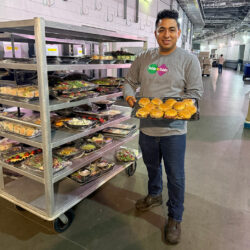
Driver Edgar Brieva rescuing fresh produce from a farm for Table to Table.

Editor’s note: This article first appeared in City Lifestyle magazine’s The Oranges, Ramapo Valley, and Northern Highlands editions. Click here to read the rest of the article.

In northern New Jersey, where food insecurity touches every community and billions of pounds of edible food go to waste each year, Table to Table has built a mission rooted in compassion and efficiency. The nonprofit rescues fresh, perishable food and delivers it — free of charge — to neighbors who need it most.

For Executive Director Heather Thompson, the work is both urgent and deeply personal.

“Food represents so much — health, hope, comfort — and I believe it is a human right for everyone to have fresh, nutritious food,” she says. Thompson, whose career includes roles at Citymeals-on-Wheels, Eva’s Village and Norwescap, has seen how quickly families can fall into crisis. “Good, healthy food is often the first thing someone sacrifices when money is tight. And that should not be something we accept as a society.”

Last year, Table to Table rescued enough surplus food to provide more than 23 million meals across Bergen, Essex, Hudson, Morris and Passaic counties.


Table to Table is New Jersey’s first and largest food rescue nonprofit, bridging the gap between food being wasted and people facing food insecurity. We bring rescued fresh, nutritious food to 303 community partners, including social service organizations, pantries, shelters, fresh produce markets and centralized distribution hubs. Food is provided free of charge. Through this, Table to Table touches a diversity of those in need, including families, children, veterans, and older adults, making good nutrition accessible while serving as a stimulus for other longer-term benefits. Since 1999 we have rescued more than 120,700 tons of nutritious food—enough for 241,400,846 million meals—and delivered it to our neighbors in need, saving over 544 metric tons of methane saved.

Related:

A new work requirement went into effect Sunday for recipients to receive benefits from the New Jersey Supplemental Nutrition Assistance Program (SNAP). The requirement is for recipients between 18 and 65 years old. Click here to learn more.

If You Or Someone You Know Needs Help Finding Food

Table to Table is New Jersey’s first and largest food rescue nonprofit, bridging the gap between food being wasted and people facing food insecurity. We bring rescued fresh, nutritious food to 303 community partners, including social service organizations, pantries, shelters, fresh produce markets and centralized distribution hubs. Food is provided free of charge. Through this, Table to Table touches a diversity of those in need, including families, children, veterans, and older adults, making good nutrition accessible while serving as a stimulus for other longer-term benefits. Since 1999 we have rescued more than 120,700 tons of nutritious food—enough for 241,400,846 million meals—and delivered it to our neighbors in need, saving over 544 metric tons of methane saved.

Related:

Table to Table was featured by The Hoboken Girl as one of the places to volunteer in Bergen County this winter.

Editor’s note: The Hoboken Girl included Table to Table in a social media post/list about Where to Volunteer This Winter in Bergen County.

Giving back is always in season, but on MLK Day it’s important to reflect [on] how we are serving our communities.

From food pantries and animal shelters to arts programs and environmental, these local NJ organizations to volunteer at this winter.


Table to Table is New Jersey’s first and largest food rescue nonprofit, bridging the gap between food being wasted and people facing food insecurity. We bring rescued fresh, nutritious food to 303 community partners, including social service organizations, pantries, shelters, fresh produce markets and centralized distribution hubs. Food is provided free of charge. Through this, Table to Table touches a diversity of those in need, including families, children, veterans, and older adults, making good nutrition accessible while serving as a stimulus for other longer-term benefits. Since 1999 we have rescued more than 120,700 tons of nutritious food—enough for 241,400,846 million meals—and delivered it to our neighbors in need, saving over 544 metric tons of methane saved.

Related:

Food insecurity in New Jersey is increasing, with one in 10 households experiencing the status between 2022 and 2024, a new report by the U.S. Department of Agriculture (USDA) released recently shows.

“Household Food Security in the United States in 2024” provides state-level food insecurity prevalence rates, averaging data from 2022, 2023, and 2024. The New Jersey Office of the Food Security Advocate (NJOFSA) featured New Jersey-centric findings of the report on its website.

According to the report, between 2022 and 2024:

  • One in 10 households, 9.8%, or about 350,000, experienced food insecurity in New Jersey, an increase from the 8.3% reported in 2019-2022
  • New Jersey recorded the fifth lowest prevalence of household food insecurity in the United States

Although New Jersey’s 9.8% rate of food insecurity is below the national average of 13.3%, “any amount, and increases to, food insecurity is unsuitable for a state with our strong resources, partnerships, and commitment to ensuring food security for all,” the NJOFSA said in an update on its website.

What Is Food Insecurity?

There are two classifications of food insecurity, according to the USDA. One type is when there are “reports of reduced quality, variety, or desirability of diet,” but there is “little or no indication of reduced food intake.” The other, more serious type, is when there are “reports of multiple indications of disrupted eating patterns and reduced food intake.”

The USDA published its food security report for 30 years before announcing that the 2025 report would be its last one, calling the report and study behind it, “redundant, costly, politicized, and extraneous.” It was originally created to support the increase and eligibility of families and individuals to the federal Supplemental Nutrition Assistance Program (SNAP), commonly known as food stamps.

The NJOFSA said the report served as an “essential public resource for tracking trends and evaluating progress in food security,” providing the “most consistent national and state level data on household food insecurity.

“It grounds research, informs policy decisions, and helps advocates, agencies, and communities identify where people may struggle to afford enough food.”

As New Jersey’s first and largest food rescue, our mission is to reduce food waste and provide nourishment to our food-insecure neighbors throughout North Jersey. We rescue millions of pounds of fresh food annually that would otherwise be wasted and end up in landfills, contributing to climate change. We deliver it to partner organizations who support the nearly 1.1 million people in our area who need it most.

Together, we can reduce food waste in our home and make a positive impact on the planet. Every little bit of effort — no matter how small — leads to change.

Related:

Table to Table's annual Chefs Gala was Oct. 9 at Edgewood Country Club. Chef Christian Petroni was the chef honoree.

Editor’s note: The following aggregated article first appeared in an article and photo gallery on NorthJersey.com. Click here to view the article and click here to view the photo gallery.

Table to Table, New Jersey’s first and largest food rescue organization, welcomed to its 2025 Chefs Gala more than 25 notable chefs who personally served their signature multi-course menus tableside for guests.

Shining in the spotlight was this year’s honoree, Christian Petroni, the Italian American chef, restauratuer, author and Food Network star. Table to Table’s Chefs Gala raised enough funds to reduce food waste and deliver nearly 5 million nutritious meals to our neighbors in need.

The event was held at the Edgewood Country Club in River Vale on October 9, 2025.


Table to Table is New Jersey’s first and largest food rescue nonprofit, bridging the gap between food being wasted and people facing food insecurity. We bring rescued fresh, nutritious food to 303 community partners, including social service organizations, pantries, shelters, fresh produce markets and centralized distribution hubs. Food is provided free of charge. Through this, Table to Table touches a diversity of those in need, including families, children, veterans, and older adults, making good nutrition accessible while serving as a stimulus for other longer-term benefits. Since 1999 we have rescued more than 120,700 tons of nutritious food—enough for 241,400,846 million meals—and delivered it to our neighbors in need, saving over 544 metric tons of methane saved.

Related: