Table to Table’s 2026 Chefs Gala on Thursday, October 15, brought together more than 30 culinary talents, including James Beard Award-winning chef Kwame Onwuachi, and raised over $600,000 to support the nonprofit’s food rescue mission.
The organization also announced plans to relocate its headquarters to Englewood, where expanded storage space will help provide an additional 1.5 million meals or more in its first year.
Table to Table is New Jersey’s first and largest food rescue nonprofit, bridging the gap between food being wasted and people facing food insecurity. We bring rescued fresh, nutritious food to 276 community partners, including social service organizations, pantries, shelters, fresh produce markets and centralized distribution hubs. Food is provided free of charge. Through this, Table to Table touches a diversity of those in need, including families, children, veterans, and older adults, making good nutrition accessible while serving as a stimulus for other longer-term benefits. Since 1999 we have rescued more than 133,271 tons of nutritious food — enough for 266,542,863 million meals — and delivered it to our neighbors in need, saving over 612 metric tons of methane saved.
More than an estimated 120 million pounds of food, worth about $400 million, will go uneaten during the upcoming Independence Day weekend. That is about 20 percent of the food meant to be eaten during that time, according to ReFED, a national nonprofit working to end food waste by leveraging data and connecting individuals to help foster large-scale change within the food ecosystem. ReFED calculated the amount based on a survey conducted by the American Farm Bureau Federation.
Total Food Wasted: Over 120 million pounds of food ends up in the trash.
Financial Loss: The wasted food costs nearly $400 million.
Spending Per Person: Consumers spend an average of $94.41 on Fourth of July food alone
The most popular, and costly, type of wasted food is beef. More than half of the methane emissions from wasted food on Independence Day come from beef, according to ReFED. These emissions are equal to the emissions generated by powering 50,000 American homes for a year. Other high-waste foods include ice cream, pork, and potato chips.
The waste associated with the Independence Day holiday does not just occur when consumers fail to eat it. It can be measured throughout the food ecosystem lifecycle. The wasted used to produce this food can supply about 14 days of residential waster use throughout the state of California, according to ReFED.
Fourth of July Food Waste Reduction Tips
Buy only what you need: Plan out your meal ahead of time. That way, you only buy what you know people want. You also avoid impulse buying. You reduce food waste and save money!
Storage is key: Explore the best way to store different types of produce to keep them fresh for as long as possible – learn what goes on the counter, what belongs in bags, what should or shouldn’t be pre-washed. And don’t forget about your freezer. Many foods can be frozen for later use, like rolls and hamburger and hot dog meat.
Love your leftovers: Make sure you eat your leftovers. Instead of letting them droop in the back of the fridge, try folding them into new meals. Got some roasted veggies from last night’s dinner? Throw them into an omelet for breakfast or a salad for lunch. Leftover chicken? Shred it up and make tacos or toss it into a stir-fry.
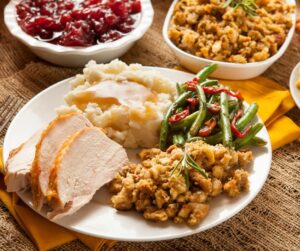
Thanksgiving is a time to slow down, reconnect with family and friends, and savor dishes that many of us don’t make the rest of the year.
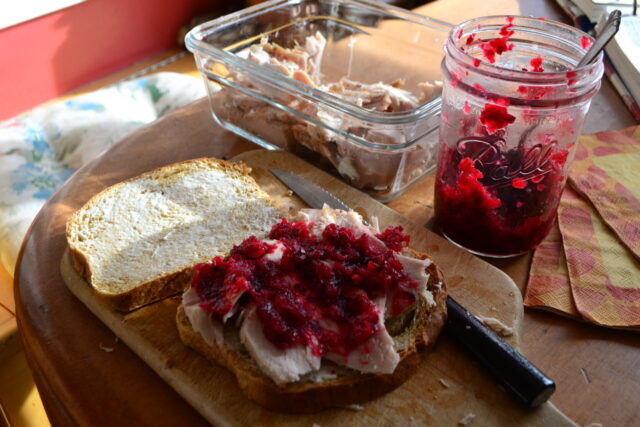
The feelings of nostalgia surrounding this time of year can lead to overindulgence, but that doesn’t mean you need to eat that same plate of turkey, stuffing, and cranberry sauce over and over.
If you are looking for new ways to enjoy your leftovers, look no further:
Stuffing Waffles
Spray your waffle maker well and place 1 cup of room-temperature stuffing in each section, close, and cook until crispy and browned
Top with leftover cranberry sauce or gravy and enjoy
Breakfast Burritos
Wrap turkey, stuffing, a couple scrambled eggs and a splash of gravy in a flour tortilla
Heat a pan over medium high heat and spray with a touch of oil
Lay burritos seam side down and let cook for 4-5 minutes or until golden, flip carefully and brown the top side
Enjoy dipped in extra cranberry sauce
Stuffing Strata
Stuffing Strata is the perfect morning after breakfast.
Before heading off to bed combine leftover stuffing with shredded turkey or ham any roasted veggies, eggs, & cream, and a healthy sprinkle of cheese.
Cover and let sit in the fridge overnight, then bake covered at 350 degrees for 40-50 minutes for a hearty breakfast that everyone will love.
Potato Soup
Mashed potatoes almost never last in my house, but if you find yourself with extras, try making a pot of potato soup!
Bring your mashed potatoes to room temperature, then combine them in a pot with your choice of chicken or vegetable broth and whisk. Start with equal amounts of potatoes and broth, then thin until you find your desired consistency.
Serve with shredded cheddar, sliced scallions, maybe some crumbled bacon, and of course a turkey sandwich!
These are just a few ideas about transforming Thanksgiving leftovers into delicious meals! Have a happy and healthy Thanksgiving!
Editor’s note: Nicolle Walker is a volunteer with Table to Table and a member of our Emerging Leaders Council. She is the executive chef and owner of Love & Plates in Bloomfield, New Jersey.
What’s better than a refreshing glass of lemonade?
Is there anything better than a delicious, refreshing glass of ice-cold lemonade on a hot summer day?
While lemonade is a delicious way to quench your thirst, it’s also a way to help feed others who do not have regular access to nutritious food.
Two northern New Jersey siblings from Westfield donated enough proceeds from their lemonade stands last year to rescue enough healthy food for 200 meals!
“Thank you for all of your efforts to rescue food and feed those who need it,” the children’s parents said in a note to us.
Manning a lemonade stand is just one easy way kids can volunteer to help Table to Table. Volunteering with Table to Table is easy. We offer many opportunities, including with our I-Rescue app!
If you’re interested in helping Table to Table in a way we haven’t mentioned, including hosting a lemonade stand and donating the proceeds, we’d love to hear from you.
Please visit our volunteer page, complete the form, and someone will get in touch with you. Thank you for your interest in our mission.
An estimated 126 million pounds of food, worth about $400 million, will go uneaten this during the Fourth of July weekend. That is about 20 percent of the food meant to be eaten this Independence Day, according to ReFED, a national nonprofit working to end food waste by leveraging data and connecting individuals to help foster large-scale change within the food ecosystem. ReFED calculated the amount based on a survey conducted by the American Farm Bureau Federation.
The most popular, and costly, type of wasted food is beef. More than half of the methane emissions from wasted food on Independence Day come from beef, according to ReFED. These emissions are equal to the emissions generated by powering 50,000 American homes for a year. Other high-waste foods include ice cream, pork, and potato chips.
The waste associated with the Independence Day holiday does not just occur when consumers fail to eat it. It can be measured throughout the food ecosystem lifecycle. The wasted used to produce this food can supply about 14 days of residential waster use throughout the state of California, according to ReFED.
Fourth of July Food Waste Reduction Tips
Buy only what you need: Plan out your meal ahead of time. That way, you only buy what you know people want. You also avoid impulse buying. You reduce food waste and save money!
Storage is key: Explore the best way to store different types of produce to keep them fresh for as long as possible – learn what goes on the counter, what belongs in bags, what should or shouldn’t be pre-washed. And don’t forget about your freezer. Many foods can be frozen for later use, like rolls and hamburger and hot dog meat.
Love your leftovers: Make sure you eat your leftovers. Instead of letting them droop in the back of the fridge, try folding them into new meals. Got some roasted veggies from last night’s dinner? Throw them into an omelet for breakfast or a salad for lunch. Leftover chicken? Shred it up and make tacos or toss it into a stir-fry.
Chef Jamie Knott, a Table to Table trustee, uses locally sourced, seasonal ingredients.
Editor’s note: This article about acclaimed Chef Jamie Knott’s Saddle River Inn being named among the 25 most essential restaurants in North Jersey first ran on NorthJersey.com. Click here to read the entire article.
“Saddle River Inn is essential,” the website reported. “If it closed tomorrow, North Jersey dining would be worse for it.”
The article described Knott as a chef who clearly cares about his craft and the restaurant industry in New Jersey. Knott was the chef honoree at our annual gala in 2024 “not only for his culinary chops but for his work lifting other restaurateurs and supporting the organization’s effort to fight food insecurity through food rescue.”
Chef Jamie Knott
“There’s enough food on this planet for everyone who is food insecure. But it’s not always making its way to the right mouths,” Knott said at the gala. “That’s why Table to table is so crucial, and frankly, they’re saving lives out here. I vow to carry on the incredible work that’s been done over the last two and a half decades, and look for ways to expand our reach and impact even further.”
Knott also recently participated in a celebratory third anniversary celebration of Chef Antonio De Ieso’s Fiorentini restaurant, an event that helped raise enough to support the rescue and delivery of nearly 300,000 pounds of healthy food!
The distinction bestowed by NorthJersey.com is the latest of several recent honors for Knott and the inn.
OpenTable named the inn to its annual list of the top 100 eateries in the United States.
is also the chef-owner of Madame and Kinjo. He warmly welcomes guests for flavorful, unforgettable dining experiences focused on locally sourced, fresh ingredients, reflecting his commitment to quality. These restaurants “have quickly become some of the most celebrated restaurants in New Jersey this year,” New Jersey Monthly stated.
Knott’s portfolio of restaurants is consistently praised and acknowledged by media and influencers alike. Educated at the New York Restaurant School, Knott’s career is marked by innovation and a deep understanding of the culinary world.
Table to Table is New Jersey’s first and largest food rescue nonprofit, bridging the gap between food being wasted and people facing food insecurity. We bring rescued fresh, nutritious food to 303 community partners, including social service organizations, pantries, shelters, fresh produce markets and centralized distribution hubs. Food is provided free of charge. Through this, Table to Table touches a diversity of those in need, including families, children, veterans, and older adults, making good nutrition accessible while serving as a stimulus for other longer-term benefits. Since 1999 we have rescued more than 120,700 tons of nutritious food—enough for 241,400,846 million meals—and delivered it to our neighbors in need, saving over 544 metric tons of methane from entering the environment.
Heather shares the daily challenges and the feeling of facing an uphill battle against a massive problem that can seem impossible to solve. She explains her approach to breaking down seemingly insurmountable obstacles into manageable steps—learning “how to eat an elephant, one bite at a time.” Heather’s insights on resilience, perseverance, and making a difference one step at a time will inspire anyone looking to tackle big issues with a hopeful, steady approach.
As a personal chef, I am always thinking about the next meal that I am making. And as a food access advocate and Table to Table volunteer/emerging leader, I am always thinking about how to make sure that food waste becomes a thing of the past.
Thanksgiving is one of those holidays that begs for excess. The “once-a-year” meal promises leftovers galore, but how many days in a row can we really eat “gobbler” sandwiches? I have some new ideas to transform that turkey and sides into new meals that you will want to savor, maybe even more than the traditional ones!
Stuffing Strata
Stuffing Strata is the perfect morning after breakfast.
Before heading off to bed combine leftover stuffing with shredded turkey (or ham), any roasted veggies, eggs and cream, and a healthy sprinkle of cheese.
Cover and let sit in the fridge overnight, then bake covered at 350 degrees for 40-50 minutes for a hearty breakfast that everyone will love.
Potato Soup
Mashed potatoes almost never last in my house, but if you find yourself with extras, try making a pot of potato soup!
Bring your mashed potatoes to room temperature, then combine them in a pot with your choice of chicken or vegetable broth and whisk. Start with equal amounts of potatoes and broth, then thin until you find your desired consistency.
Serve with shredded cheddar, sliced scallions, maybe some crumbled bacon, and of course a turkey sandwich!
These are just a few ideas about transforming Thanksgiving leftovers into delicious meals! Have a happy and healthy Thanksgiving!
Editor’s note: Nicolle Walker is a volunteer with Table to Table and a member of our Emerging Leaders Council. She is the executive chef and owner of Love & Plates.