back-to-top
x
close

The New Jersey Office of the Food Security Advocate (OFSA) has published the New Jersey Food Security Strategic Plan.

The three-year plan outlines how the OFSA plans to coordinate statewide efforts to address the growing problem of food insecurity in New Jersey through a coordinated, cross-sector approach.

NJ_FoodSecurity_3Yr_StrategicPlan_010726_FINAL

“This is not a plan that tells New Jersey what to do. Rather, this is a plan that invites all New Jerseyans to see their food security work and everyday connection to the food system through a more holistic lens that acknowledges food insecurity as a highly complex, socio-economic issue,” said Mark Dinglasan, Executive Director of the OFSA. “This is the beginning of a journey to build a better tomorrow for New Jersey families.”

The plan has several focus areas:

Focus Areas
  • The Context of Food Security in New Jersey: This focus enhances and improves the exchange of information and access to improve the public’s awareness of food insecurity, optimize relief programs, and support data-driven decision-making.
  • Planning and Evidence: This describes the guiding principles, data, and evidence that informed the plan and explores the Six Dimensions of Food Security in New Jersey.
  • Strategic Direction: Outlines the plans focus areas and strategies, which help form a roadmap for advancing food security throughout New Jersey.
  • Accountability and Action: Defines what success looks like for the strategic plan and invites partners to use the plan as a call to action to help coordinate efforts statewide.
  • Strengthening Food Systems to Enhance Long-Term Stability: Includes improving the food supply chain to reduce food waste and enhance food security stability and sustainability, including sustainable farming practices and positioning food security efforts in climate action work.

The OFSA will be releasing a Implementation Tactics and Action Planning Toolkit in early 2026. This will provide guidance and practical tools for organizations to implement relevant strategies in their communities.


As New Jersey’s first and largest food rescue, our mission is to reduce food waste and provide nourishment to our food-insecure neighbors throughout North Jersey. We rescue millions of pounds of fresh, surplus food annually that would otherwise be wasted and end up in landfills. This rotting food emits methane gas, which contributes to climate change. We deliver this food to partner organizations who support the nearly 1.1 million people struggling with food insecurity in New Jersey.

Together, we can reduce food waste in our home and make a positive impact on the planet. Every little bit of effort — no matter how small — leads to change.

Related:

Organizers of the Winter Olympics in Milano Cortina, Italy are doing what they can to recover 100% of surplus food served in the Olympic Village and distribute it to vulnerable people. They are dedicated to a “zero food waste” approach.

This approach includes recovering surplus food to fight hunger and promote environmental sustainability, in accordance with the Food and Agriculture Organization of the United Nations’ Four Betters approach, which is part of the UN’s Agenda 2030 for Sustainable Development.

Food waste mitigation efforts were supported when more than 270 local mayors signed the Milan Urban Food Policy Pact in 2015 along with other local initiatives designed to support combatting food waste in and near the cities hosting the games, a story on Olympics.com reported.

As New Jersey’s first and largest food rescue, our mission is to reduce food waste and provide nourishment to our food-insecure neighbors throughout North Jersey. We rescue millions of pounds of fresh, surplus food annually that would otherwise be wasted and end up in landfills. This rotting food emits methane gas, which contributes to climate change. We deliver this food to partner organizations who support the nearly 1.1 million people struggling with food insecurity in New Jersey.

Together, we can reduce food waste in our home and make a positive impact on the planet. Every little bit of effort — no matter how small — leads to change.

Related:

When LaToya talks about her children, her face lights up with love and determination. Her son, Sterling, is 22 and living with sickle cell disease, autism, and epilepsy. Her daughter, Praise, is 12, full of energy and potential. Like any mother, LaToya wants the best for her children. But the challenges of caring for her son’s complex needs while keeping food on the table are overwhelming — especially because Sterling requires a highly nutritious diet to keep his health stable.

The nourishing food LaToya receives from Table to Table is more than just groceries. It’s a lifeline. It means she can provide her children with healthy meals she otherwise could not afford. It means she can take a breath in the middle of her hectic days, knowing she has what her family needs to get through the week.

“When we get food from Table to Table, we always get a lot of healthy vegetables & fruits. It means nourishment. It means health,” LaToya said.

Read more about what we’re doing to rescue healthy surplus food into sustenance and deliver it to our hungry neighbors.

As New Jersey’s first and largest food rescue, our mission is to reduce food waste and provide nourishment to our food-insecure neighbors throughout North Jersey. We rescue millions of pounds of fresh, surplus food annually that would otherwise be wasted and end up in landfills. This rotting food emits methane gas, which contributes to climate change. We deliver this food to partner organizations who support the nearly 1.1 million people struggling with food insecurity in New Jersey.

Together, we can reduce food waste in our home and make a positive impact on the planet. Every little bit of effort — no matter how small — leads to change.

Related:

What foods are heart healthy? February is American Heart Month. It is a month dedicated to raising awareness about heart disease, the leading cause of death in the United States.

Table to Table takes pride in rescuing fresh, nutritious heart-healthy fruits and vegetables, including apples, broccoli, and carrots from our hundreds of food donors.

According to the National Heart, Lung, and Blood Institute, the following foods are a part of a heart-healthy eating plan:

  • Vegetables such as leafy greens (spinach, collard greens, kale, cabbage), broccoli, and carrots
  • Fruits such as apples, bananas, oranges, pears, grapes, and prunes
  • Whole grains such as plain oatmeal, brown rice, and whole-grain bread or tortillas
  • Fat-free or low-fat dairy foods such as milk, cheese, or yogurt
  • Protein-rich foods:
  • Fish high in omega-3 fatty acids (salmon, tuna, and trout)
  • Lean meats such as 95% lean ground beef or pork tenderloin or skinless chicken or turkey
  • Eggs
  • Nuts such as walnuts, almonds, and pine nuts
  • Seeds
  • Nut and seed butters
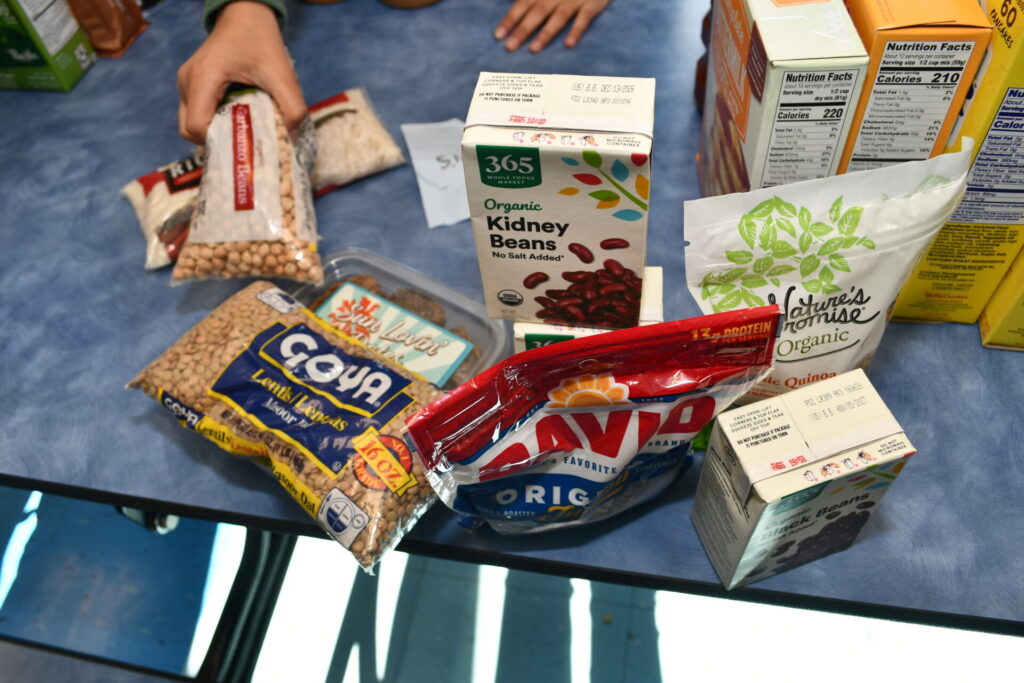
  • Legumes such as kidney beans, lentils, chickpeas, black-eyed peas, and lima beans
  • Oils and foods high in monounsaturated and polyunsaturated fats:
  • Canola, corn, olive, safflower, sesame, sunflower, and soybean oils (not coconut or palm oil)
  • Salmon and trout
  • Seeds (sesame, sunflower, pumpkin, or flax)
  • Avocados
  • Tofu

Read more about what we’re doing to rescue healthy surplus food and deliver it to our hungry neighbors.

As New Jersey’s first and largest food rescue, our mission is to reduce food waste and provide nourishment to our food-insecure neighbors throughout North Jersey. We rescue millions of pounds of fresh, surplus food annually that would otherwise be wasted and end up in landfills. This rotting food emits methane gas, which contributes to climate change. We deliver this food to partner organizations who support the nearly 1.1 million people struggling with food insecurity in New Jersey.

Together, we can reduce food waste in our home and make a positive impact on the planet. Every little bit of effort —no matter how small — leads to change.

Related:

Food insecurity in New Jersey is increasing, with one in 10 households experiencing the status between 2022 and 2024, a new report by the U.S. Department of Agriculture (USDA) released recently shows.

“Household Food Security in the United States in 2024” provides state-level food insecurity prevalence rates, averaging data from 2022, 2023, and 2024. The New Jersey Office of the Food Security Advocate (NJOFSA) featured New Jersey-centric findings of the report on its website.

According to the report, between 2022 and 2024:

  • One in 10 households, 9.8%, or about 350,000, experienced food insecurity in New Jersey, an increase from the 8.3% reported in 2019-2022
  • New Jersey recorded the fifth lowest prevalence of household food insecurity in the United States

Although New Jersey’s 9.8% rate of food insecurity is below the national average of 13.3%, “any amount, and increases to, food insecurity is unsuitable for a state with our strong resources, partnerships, and commitment to ensuring food security for all,” the NJOFSA said in an update on its website.

What Is Food Insecurity?

There are two classifications of food insecurity, according to the USDA. One type is when there are “reports of reduced quality, variety, or desirability of diet,” but there is “little or no indication of reduced food intake.” The other, more serious type, is when there are “reports of multiple indications of disrupted eating patterns and reduced food intake.”

The USDA published its food security report for 30 years before announcing that the 2025 report would be its last one, calling the report and study behind it, “redundant, costly, politicized, and extraneous.” It was originally created to support the increase and eligibility of families and individuals to the federal Supplemental Nutrition Assistance Program (SNAP), commonly known as food stamps.

The NJOFSA said the report served as an “essential public resource for tracking trends and evaluating progress in food security,” providing the “most consistent national and state level data on household food insecurity.

“It grounds research, informs policy decisions, and helps advocates, agencies, and communities identify where people may struggle to afford enough food.”

As New Jersey’s first and largest food rescue, our mission is to reduce food waste and provide nourishment to our food-insecure neighbors throughout North Jersey. We rescue millions of pounds of fresh food annually that would otherwise be wasted and end up in landfills, contributing to climate change. We deliver it to partner organizations who support the nearly 1.1 million people in our area who need it most.

Together, we can reduce food waste in our home and make a positive impact on the planet. Every little bit of effort — no matter how small — leads to change.

Related:

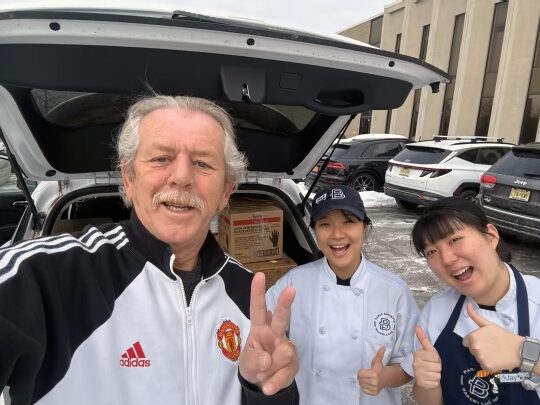
Kaleb Lohmann is Table to Table’s December Volunteer Spotlight.

“Food waste while people go hungry in the richest nation in the world is senseless and cruel. I’ve always wanted to help ease suffering in the world, but depression, anxiety, and other health issues stopped me from committing long-term. The Table to Table I-Rescue App is extremely convenient and lets you volunteer in short time frames when and where you want to, like UberEats for those in need. It’s so easy that I’ve been able to complete over 100 rescues in 13 months,” Kaleb said. “Volunteering eases food insecurity, reduces landfill waste and emissions, combats the helplessness so often felt when reading the news, and helps me gain confidence for future employment. It has truly changed my life over the past year, and I couldn’t be more grateful!”

Volunteering Like Kaleb Does

Signing up to be a Table to Table volunteer is easy. Julie Kinner, Table to Table’s Vice President of Operations, said all you have to do is download the Table to Table I-Rescue App, powered by Food Rescue Hero, on your phone to become a food rescue hero! You’ll complete a simple registration process and volunteer agreement, and then you can get started. The app walks you through every step! This is what Kaleb uses.

Volunteers of all ages are welcome to volunteer with our food rescue program. However, the driver must have a valid driver’s license, and a valid vehicle registration and insurance. 

Since we launched, more than 350 volunteers have completed more than 9,600 rescues and delivered more than 2 million pounds of donated food that would have been thrown away.

As New Jersey’s first and largest food rescue, our mission is to reduce food waste and provide nourishment to our food-insecure neighbors throughout North Jersey. We rescue millions of pounds of fresh food annually that would otherwise be wasted and end up in landfills, contributing to climate change. We deliver it to partner organizations who support the nearly 1 million people in our area who need it most.

Together, we can reduce food waste in our home and make a positive impact on the planet. Every little bit of effort — no matter how small — leads to change.

Deacon Stephanie Taylor-Cucuta co-founded the Disabled Combat Veterans Youth Program.

Table to Table Food Rescue Hero Stephanie Taylor-Cucuta was named a Hometown Hero by Rep. Josh Gottheimer of New Jersey’s Fifth Congressional District Monday. Stephanie co-founded the Disabled Combat Veterans Youth Program, which helps provide veterans and families access to healthy food. She helps run a weekly food distribution with Table to Table in Englewood Cliffs.

“Deacon Stephanie Taylor-Cucuta is a leader whose life is defined by faith, service, and compassion. She co-founded the Disabled Combat Veterans Youth Program, providing mentorship, food access, and support to families and veterans in need,” Rep. Gottheimer’s office said in a news release. “Through programs that empower young women and girls, she creates spaces where youth feel seen and supported. Recently ordained, she continues offering pastoral care and crisis support across North Jersey. Her work has fed thousands and strengthened countless families.”

Congratulations, Stephanie!


Table to Table is New Jersey’s first and largest food rescue nonprofit, bridging the gap between food being wasted and people facing food insecurity. We bring rescued fresh, nutritious food to 303 community partners, including social service organizations, pantries, shelters, fresh produce markets and centralized distribution hubs. Food is provided free of charge. Through this, Table to Table touches a diversity of those in need, including families, children, veterans, and older adults, making good nutrition accessible while serving as a stimulus for other longer-term benefits. Since 1999 we have rescued more than 120,700 tons of nutritious food—enough for 241,400,846 million meals—and delivered it to our neighbors in need, saving over 544 metric tons of methane saved.

Related:

TRENTON, NJ – The Department of Environmental Protection Commissioner Shawn M. LaTourette today announced the winners of the 26th annual Governor’s Environmental Excellence Awards, New Jersey’s premier awards program that recognizes outstanding environmental achievements, programs and projects across the state. The awards were presented during a ceremony at the Historic Masonic Temple in Trenton.

“On behalf of the Governor, DEP and the I-Bank are proud to honor all of this year’s awardees for their spirited dedication to protecting the environment we all share and the health of our communities,” Environmental Protection Commissioner Shawn M. LaTourette said. “Their passion and dedication serve as an inspiration to us all and exemplifies why New Jersey is a national leader in environmental protection.”

The annual awards are given to individuals, businesses, organizations and communities that make exceptional efforts to protect the environment and advance solutions across diverse environmental matters, including environmental justice, climate change, sustainability and education. Deputy Commissioner Kati Angarone and I-Bank Executive Director David Zimmer presented the awards.

Richard J. Sullivan Award

Named for New Jersey’s first Commissioner of the Department of Environmental Protection, the Richard J. Sullivan Award is given to a person who demonstrates exceptional leadership and outstanding accomplishments in safeguarding public health and protecting and enhancing the state’s environment and resources.

This year’s Sullivan Award was given to Joseph Seebode, Deputy District Engineer for the New York District of the U.S. Army Corps of Engineers, who has dedicated more than 35 years to advancing coastal resilience, environmental restoration and sustainable water management.

Seebode’s leadership helped guide post-Hurricane Sandy recovery efforts and other major projects such as the deepening of the Port of New York and New Jersey. A lifelong steward of waterways, Seebode exemplifies collaboration, innovation, and dedication to making the region safer, more resilient, and environmentally sound.

2025 Governor’s Environmental Excellence Award Winners

James J. Florio Emerging Environmental Leader: Landon Hoberman

Landon Hoberman is the founder of the Student Environmental Ambassador (SEA) Program, a youth-led initiative empowering students to reduce plastic waste and promote civic engagement. Since 2023, SEA has reached more than 50,000 students with over 725 ambassadors across 14 states and three countries. Through initiatives like #reducebyrequest, SEA has prevented over 1.8 million single-use utensils from entering the environment, saved local restaurants more than $45,000, and inspired state legislation.

Climate Change Mitigation: Duke Farms

Duke Farms, a 2,700-acre center of the Doris Duke Foundation, is transforming its campus through its Natural Systems Energy Project to sharply reduce emissions and sequester carbon through reforestation and natural climate solutions. The project also includes a new solar energy system for powering the campus and aims to support an 80 percent reduction in emissions by 2030.

Climate Resilience: City of Newark Office of Sustainability, Resilience & Community Transformation

The City of Newark Office of Sustainability, Resilience & Community Transformation leads initiatives to enhance climate resilience, focusing on the disproportionate impacts of climate change on vulnerable communities. In the past year, the office expanded its “Beat the Heat” campaign and implemented urban cooling strategies including tree planting, pocket parks, and cool roof projects.

Environmental Justice: Montclair State University PSEG Institute for Sustainability Studies

The Montclair State University PSEG Institute for Sustainability Studies’ Green Teams Internship Program empowers diverse student teams to support communities facing disproportionate climate impacts. In 2025, ten teams partnered with nonprofits and municipalities—including Newark, Paterson, Montclair, and West Orange — to deliver projects that improved air and water quality, expanded tree canopies, strengthened food security, and advanced nature-based flood and heat resilience measures.

Healthy Communities: Association of New Jersey Environmental Commissions (ANJEC)

ANJEC empowers New Jersey communities to protect natural resources and promote healthy, resilient environments. In the past year, ANJEC advanced this work through the restoration of the Parvin-Tarkiln Watershed in Vineland, adding tree pits, rain gardens, and riparian buffers that enhance local water quality and stormwater management.

Healthy Ecosystems and Habitats: Hunters Helping the Hungry

Hunters Helping the Hungry is a nonprofit organization that connects deer hunters, inspected processors, and food banks to provide venison to families in need. The organization supports responsible deer management that restores forest health, protects biodiversity, and strengthens food security. Recently, partnerships with the New Jersey Department of Agriculture and New Jersey Farm Bureau eliminated processing fees and increased processor payments, boosting deer donations and meal distribution statewide.

Sustainability and Waste Reduction: Table to Table

Table to Table, New Jersey’s first and largest food rescue organization, delivers surplus fresh food to those in need. In the past year alone, the organization rescued more than 23 million pounds of food and expanded its data-driven network to reach the most food-insecure areas. Since its founding, Table to Table has prevented more than 240 million pounds of food waste and significantly reduced methane emissions.

Watershed Management and Water Resources: PolyGone Systems (in partnership with Atlantic County Utilities Authority)

PolyGone Systems, a Princeton University spinoff cleantech company, is pioneering technology to remove microplastics from waterways. In partnership with the Atlantic County Utilities Authority, PolyGone launched the world’s first municipal-scale microplastic removal pilot in 2024 and successfully captured millions of microplastic particles from wastewater.

Environmental Education: Erin Colfax, Unity Charter School

Erin Colfax is a Science Integrationist at Unity Charter School in Morristown and brings sustainability to life through hands-on, inquiry-based science education for grades K–8. Colfax engages students in real-world projects like water quality monitoring and biodiversity studies and led a project to transform the school’s lower field into a living classroom that deepens environmental literacy and stewardship.

About the Governor’s Environmental Excellence Awards

The Governor’s Environmental Excellence Awards has been New Jersey’s premier environmental awards program since 2000. The DEP, New Jersey Infrastructure Bank and the New Jersey Corporation for Advanced Technology sponsor the program.

A panel of judges evaluate nominations for their impact on the environment, actions to address the needs of New Jersey, leadership and innovation, and use of outreach and educational activities to make an impact in their community. To learn more about the program, visit dep.nj.gov/awards.

###


About Table to Table

Table to Table (http://www.tabletotable.org) is New Jersey’s first and largest food rescue nonprofit, bridging the gap between food being wasted and people facing food insecurity. We work with food businesses of all types to rescue fresh, nutritious surplus food, and deliver it for free to 300+ social service organizations, pantries, shelters, community produce markets and centralized distribution hubs. Through our community partnerships, Table to Table reaches families, children, veterans, older adults, and others in need, improving food security, nutritional access, and better health. Since 1999 we have rescued more than 120,700 tons of nutritious food — enough for 241,400,846 million meals — and delivered it to our neighbors in need, while also saving over 544 metric tons of methane from impacting climate change by preventing food waste.

By Nicolle Walker

Thanksgiving is a time to slow down, reconnect with family and friends, and savor dishes that many of us don’t make the rest of the year.

The feelings of nostalgia surrounding this time of year can lead to overindulgence, but that doesn’t mean you need to eat that same plate of turkey, stuffing, and cranberry sauce over and over.

If you are looking for new ways to enjoy your leftovers, look no further:

Stuffing Waffles

  • Spray your waffle maker well and place 1 cup of room-temperature stuffing in each section, close, and cook until crispy and browned
  • Top with leftover cranberry sauce or gravy and enjoy

Breakfast Burritos

  • Wrap turkey, stuffing, a couple scrambled eggs and a splash of gravy in a flour tortilla
  • Heat a pan over medium high heat and spray with a touch of oil
  • Lay burritos seam side down and let cook for 4-5 minutes or until golden, flip carefully and brown the top side
  • Enjoy dipped in extra cranberry sauce

Stuffing Strata

Stuffing Strata is the perfect morning after breakfast.

  • Before heading off to bed combine leftover stuffing with shredded turkey or ham any roasted veggies, eggs, & cream, and a healthy sprinkle of cheese.
  • Cover and let sit in the fridge overnight, then bake covered at 350 degrees for 40-50 minutes for a hearty breakfast that everyone will love. 

Potato Soup

Mashed potatoes almost never last in my house, but if you find yourself with extras, try making a pot of potato soup!

  • Bring your mashed potatoes to room temperature, then combine them in a pot with your choice of chicken or vegetable broth and whisk. Start with equal amounts of potatoes and broth, then thin until you find your desired consistency.
  • Serve with shredded cheddar, sliced scallions, maybe some crumbled bacon, and of course a turkey sandwich! 

These are just a few ideas about transforming Thanksgiving leftovers into delicious meals! Have a happy and healthy Thanksgiving!

Editor’s note: Nicolle Walker is a volunteer with Table to Table and a member of our Emerging Leaders Council. She is the executive chef and owner of Love & Plates in Bloomfield, New Jersey.

Related:

The amount of discarded food equals 267 million meals: ReFED

A new analysis estimates that 320 million pounds of food worth $550 million will be thrown away on Thanksgiving. That discarded food equals 267 million meals that could have gone to help feed our hungry neighbors. This is about the same amount of food ReFED estimated was wasted last Thanksgiving.

ReFED, a national nonprofit dedicated to ending loss and waste across the food ecosystem, and NielsenIQ, published their findings of a survey conducted in October.

A major reason for the waste is that more than 90 percent of Thanksgiving hosts intentionally prepare more food that is needed for their Thanksgiving gathering, according to ReFED. What is troubling is that nearly half of all hosts surveyed said they are not concerned about food waste around the holidays. Additionally, 12% of hosts, who feed 36 million people, according to the survey, do not plan to manage their leftovers in any specific way.

The breakdown of what is done with those leftovers covers a wide variety of options:

  • 45% send guests home with food
  • 46% make sandwiches or wraps
  • 32% eat it for breakfast or brunch
  • 31% make new meals like casseroles or soups

In New Jersey, officials estimate that 1.1 million residents are food insecure.

As New Jersey’s first and largest food rescue, Table to Table’s mission is to reduce food waste by rescuing nutritious food and deliver it to our food-insecure neighbors throughout northern New Jersey. We rescue millions of pounds of fresh food annually that would otherwise be wasted and end up in landfills. This contributes to climate change. We deliver it to partner organizations who support the nearly 1 million people in our area who need it most.

Together, we can reduce food waste in our home and make a positive impact on the planet. Every little bit of effort—no matter how small—leads to change. Join us. Become a food rescue hero by downloading the Table to Table I-Rescue app. Claim a rescue, pick the food up, and deliver it to a local nonprofit. Most rescues take less than 1 hour.