
back-to-top
x
close

March is National Nutrition Month. Creating a nutritious, balanced plate doesn’t have to be complicated. In fact, one of the simplest — and most impactful — changes you can make is to fill half your plate with fruits and vegetables. Not only does this add color, flavor, and texture to your meals, but it also boosts your intake of vitamins, minerals, and dietary fiber, the Academy of Nutrition and Dietetics said.

Of the 25 million pounds of food we rescued in 2025, 57% was produce.

A great daily goal is to aim for 2 cups of fruit and 2½ cups of vegetables, according to the academy. If that sounds like a lot, don’t worry — there are plenty of easy (and tasty!) ways to get there. Here are 20 simple ideas to enjoy more fruits and vegetables throughout your day.

20 Easy Ways to Eat More Fruits & Vegetables

1. Load up your pizza with veggies.

Broccoli, spinach, peppers, tomatoes, mushrooms, and zucchini all make flavorful pizza toppings.

2. Blend a fruit-packed smoothie.

Combine low-fat milk with frozen fruit like strawberries, bananas, mango, pineapple, or peaches for a refreshing breakfast.

3. Wrap it up.

Try a whole-wheat tortilla filled with roasted vegetables and a sprinkle of low-fat cheese.

4. Crunch smarter.

Swap chips for crunchy vegetables with low-fat dressing or hummus for dipping.

5. Grill veggie kabobs.

Skewer colorful veggies like tomatoes, peppers, onions, and mushrooms.

6. Brighten up your salads.

Add carrots, grape tomatoes, mandarin oranges, or spinach leaves for extra color and nutrients.

7. Keep cut veggies ready to go.

Perfect for snacking, lunch boxes, or quick sides. Try peppers, broccoli, cauliflower, carrots, cucumbers, snap peas, or radishes.

8. Make fruit irresistible.

Place a bowl of fresh, ripe fruit in a high-traffic spot for on‑the‑go snacking.

9. Get saucy.

Blend apples, berries, peaches, or pears into a sweet fruit sauce for seafood, poultry, pancakes, waffles, or French toast.

10. Veggie‑packed omelets.

Stuff your omelet with peppers, onions, broccoli, tomatoes, squash, carrots, or spinach—and top with low-fat cheddar.

11. Power up your sandwiches.

Add sliced pineapple, apples, cucumbers, peppers, or tomatoes. You can also add cooked or raw veggies to tacos and wraps.

12. Start your morning with fruit.

Top cereal, oatmeal, yogurt, or waffles with fresh fruit.

13. Supercharge your baked potato.

Try topping it with beans and salsa, or steamed broccoli and low‑fat cheese.

14. Warm up with vegetable soup.

A cup of veggie soup makes a nutritious snack or lunch side.

15. Add veggies to everything.

Stir grated or chopped vegetables like zucchini, spinach, eggplant, or carrots into pasta dishes, casseroles, curries, stews, and soups.

16. Fruit for dessert.

Split a banana, add a scoop of low‑fat frozen yogurt, and sprinkle nuts on top.

17. Stock up on frozen vegetables.

They’re perfect for quick steaming or stir-frying.

18. Make salad the main event.

Use leafy greens and colorful veggies, and top with chickpeas or edamame and a low‑fat dressing.

19. Grill fruit for a warm treat.

Pineapple, peaches, and bananas caramelize beautifully on low heat.

20. Dip deliciously.

Try hummus with whole‑wheat pita, salsa with baked tortilla chips, fruit with low‑fat yogurt, or graham crackers dipped in applesauce.


As New Jersey’s first and largest food rescue, our mission is to reduce food waste and provide nourishment to our food-insecure neighbors throughout North Jersey. We rescue millions of pounds of fresh, surplus food annually that would otherwise be wasted and end up in landfills. This rotting food emits methane gas, which contributes to climate change. We deliver this food to partner organizations who support the nearly 1.1 million people struggling with food insecurity in New Jersey.

Together, we can reduce food waste in our home and make a positive impact on the planet. Every little bit of effort — no matter how small — leads to change.
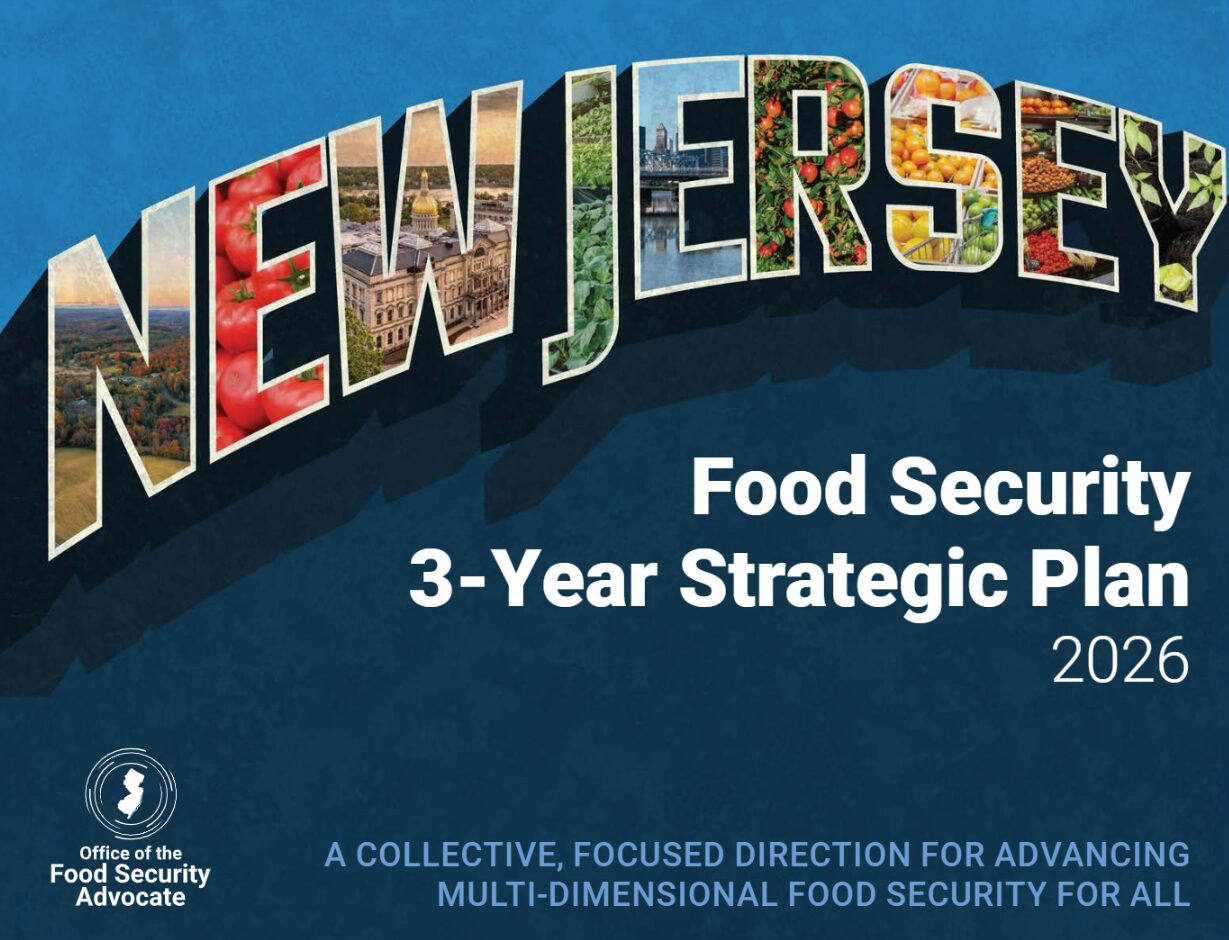
The New Jersey Office of the Food Security Advocate (OFSA) has published the New Jersey Food Security Strategic Plan.

The three-year plan outlines how the OFSA plans to coordinate statewide efforts to address the growing problem of food insecurity in New Jersey through a coordinated, cross-sector approach.

NJ_FoodSecurity_3Yr_StrategicPlan_010726_FINAL

“This is not a plan that tells New Jersey what to do. Rather, this is a plan that invites all New Jerseyans to see their food security work and everyday connection to the food system through a more holistic lens that acknowledges food insecurity as a highly complex, socio-economic issue,” said Mark Dinglasan, Executive Director of the OFSA. “This is the beginning of a journey to build a better tomorrow for New Jersey families.”

The plan has several focus areas:

Focus Areas
  • The Context of Food Security in New Jersey: This focus enhances and improves the exchange of information and access to improve the public’s awareness of food insecurity, optimize relief programs, and support data-driven decision-making.
  • Planning and Evidence: This describes the guiding principles, data, and evidence that informed the plan and explores the Six Dimensions of Food Security in New Jersey.
  • Strategic Direction: Outlines the plans focus areas and strategies, which help form a roadmap for advancing food security throughout New Jersey.
  • Accountability and Action: Defines what success looks like for the strategic plan and invites partners to use the plan as a call to action to help coordinate efforts statewide.
  • Strengthening Food Systems to Enhance Long-Term Stability: Includes improving the food supply chain to reduce food waste and enhance food security stability and sustainability, including sustainable farming practices and positioning food security efforts in climate action work.

The OFSA will be releasing a Implementation Tactics and Action Planning Toolkit in early 2026. This will provide guidance and practical tools for organizations to implement relevant strategies in their communities.


As New Jersey’s first and largest food rescue, our mission is to reduce food waste and provide nourishment to our food-insecure neighbors throughout North Jersey. We rescue millions of pounds of fresh, surplus food annually that would otherwise be wasted and end up in landfills. This rotting food emits methane gas, which contributes to climate change. We deliver this food to partner organizations who support the nearly 1.1 million people struggling with food insecurity in New Jersey.

Together, we can reduce food waste in our home and make a positive impact on the planet. Every little bit of effort — no matter how small — leads to change.
Related:

Organizers of the Winter Olympics in Milano Cortina, Italy are doing what they can to recover 100% of surplus food served in the Olympic Village and distribute it to vulnerable people. They are dedicated to a “zero food waste” approach.

This approach includes recovering surplus food to fight hunger and promote environmental sustainability, in accordance with the Food and Agriculture Organization of the United Nations’ Four Betters approach, which is part of the UN’s Agenda 2030 for Sustainable Development.

Food waste mitigation efforts were supported when more than 270 local mayors signed the Milan Urban Food Policy Pact in 2015 along with other local initiatives designed to support combatting food waste in and near the cities hosting the games, a story on Olympics.com reported.

As New Jersey’s first and largest food rescue, our mission is to reduce food waste and provide nourishment to our food-insecure neighbors throughout North Jersey. We rescue millions of pounds of fresh, surplus food annually that would otherwise be wasted and end up in landfills. This rotting food emits methane gas, which contributes to climate change. We deliver this food to partner organizations who support the nearly 1.1 million people struggling with food insecurity in New Jersey.

Together, we can reduce food waste in our home and make a positive impact on the planet. Every little bit of effort — no matter how small — leads to change.

Related:

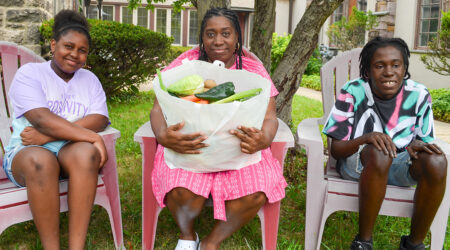
When LaToya talks about her children, her face lights up with love and determination. Her son, Sterling, is 22 and living with sickle cell disease, autism, and epilepsy. Her daughter, Praise, is 12, full of energy and potential. Like any mother, LaToya wants the best for her children. But the challenges of caring for her son’s complex needs while keeping food on the table are overwhelming — especially because Sterling requires a highly nutritious diet to keep his health stable.

The nourishing food LaToya receives from Table to Table is more than just groceries. It’s a lifeline. It means she can provide her children with healthy meals she otherwise could not afford. It means she can take a breath in the middle of her hectic days, knowing she has what her family needs to get through the week.

“When we get food from Table to Table, we always get a lot of healthy vegetables & fruits. It means nourishment. It means health,” LaToya said.

Read more about what we’re doing to rescue healthy surplus food into sustenance and deliver it to our hungry neighbors.

As New Jersey’s first and largest food rescue, our mission is to reduce food waste and provide nourishment to our food-insecure neighbors throughout North Jersey. We rescue millions of pounds of fresh, surplus food annually that would otherwise be wasted and end up in landfills. This rotting food emits methane gas, which contributes to climate change. We deliver this food to partner organizations who support the nearly 1.1 million people struggling with food insecurity in New Jersey.

Together, we can reduce food waste in our home and make a positive impact on the planet. Every little bit of effort — no matter how small — leads to change.
Related:

By Nicolle Walker

Thanksgiving is a time to slow down, reconnect with family and friends, and savor dishes that many of us don’t make the rest of the year.

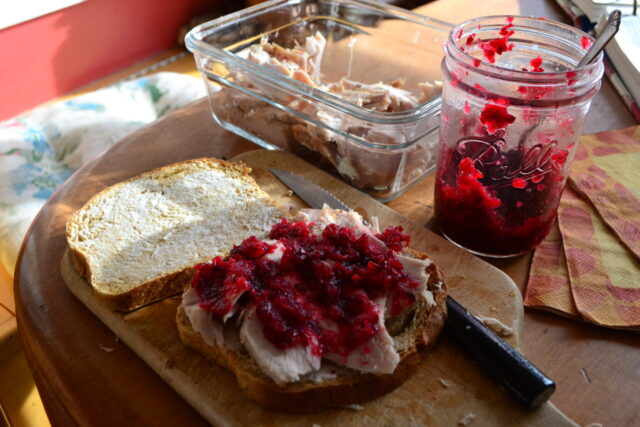
The feelings of nostalgia surrounding this time of year can lead to overindulgence, but that doesn’t mean you need to eat that same plate of turkey, stuffing, and cranberry sauce over and over.

If you are looking for new ways to enjoy your leftovers, look no further:

Stuffing Waffles

  • Spray your waffle maker well and place 1 cup of room-temperature stuffing in each section, close, and cook until crispy and browned
  • Top with leftover cranberry sauce or gravy and enjoy

Breakfast Burritos

  • Wrap turkey, stuffing, a couple scrambled eggs and a splash of gravy in a flour tortilla
  • Heat a pan over medium high heat and spray with a touch of oil
  • Lay burritos seam side down and let cook for 4-5 minutes or until golden, flip carefully and brown the top side
  • Enjoy dipped in extra cranberry sauce

Stuffing Strata

Stuffing Strata is the perfect morning after breakfast.

  • Before heading off to bed combine leftover stuffing with shredded turkey or ham any roasted veggies, eggs, & cream, and a healthy sprinkle of cheese.
  • Cover and let sit in the fridge overnight, then bake covered at 350 degrees for 40-50 minutes for a hearty breakfast that everyone will love. 

Potato Soup

Mashed potatoes almost never last in my house, but if you find yourself with extras, try making a pot of potato soup!

  • Bring your mashed potatoes to room temperature, then combine them in a pot with your choice of chicken or vegetable broth and whisk. Start with equal amounts of potatoes and broth, then thin until you find your desired consistency.
  • Serve with shredded cheddar, sliced scallions, maybe some crumbled bacon, and of course a turkey sandwich! 

These are just a few ideas about transforming Thanksgiving leftovers into delicious meals! Have a happy and healthy Thanksgiving!

Editor’s note: Nicolle Walker is a volunteer with Table to Table and a member of our Emerging Leaders Council. She is the executive chef and owner of Love & Plates in Bloomfield, New Jersey.

Related:

By Nicolle Walker

As a personal chef, I am always thinking about the next meal that I am making. And as a food access advocate and Table to Table volunteer/emerging leader, I am always thinking about how to make sure that food waste becomes a thing of the past. 

Thanksgiving is one of those holidays that begs for excess. The “once-a-year” meal promises leftovers galore, but how many days in a row can we really eat “gobbler” sandwiches? I have some new ideas to transform that turkey and sides into new meals that you will want to savor, maybe even more than the traditional ones! 

Stuffing Strata

Stuffing Strata is the perfect morning after breakfast.

Before heading off to bed combine leftover stuffing with shredded turkey (or ham), any roasted veggies, eggs and cream, and a healthy sprinkle of cheese.

Cover and let sit in the fridge overnight, then bake covered at 350 degrees for 40-50 minutes for a hearty breakfast that everyone will love. 

Potato Soup

Mashed potatoes almost never last in my house, but if you find yourself with extras, try making a pot of potato soup!

Bring your mashed potatoes to room temperature, then combine them in a pot with your choice of chicken or vegetable broth and whisk. Start with equal amounts of potatoes and broth, then thin until you find your desired consistency.

Serve with shredded cheddar, sliced scallions, maybe some crumbled bacon, and of course a turkey sandwich! 

These are just a few ideas about transforming Thanksgiving leftovers into delicious meals! Have a happy and healthy Thanksgiving!

Editor’s note: Nicolle Walker is a volunteer with Table to Table and a member of our Emerging Leaders Council. She is the executive chef and owner of Love & Plates.

What fruits and vegetables are grown in NJ? When are fruits and vegetables harvested in New Jersey?

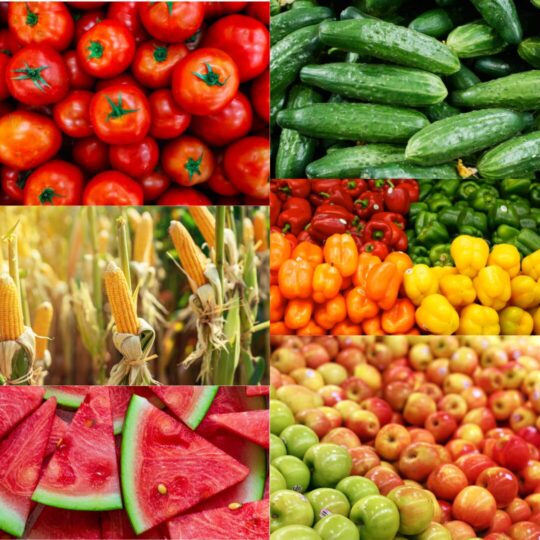
New Jersey is famous for its sweet corn and vine-ripened tomatoes. But there are a lot more delicious fruits and vegetables that are grown in New Jersey. We are The Garden State after all. Here is a list of what fruits and vegetable are grown in New Jersey and when they are harvested. Thank you to the New Jersey Agricultural Society for all their hard work on behalf of our state.

  • Apples, July through October (cold storage until spring)
  • Arugula, May through September
  • Asparagus, May, and June
  • Basil, July through September
  • Beets, June through December
  • Blackberries, late July through mid-August
  • Blueberries, July and August
  • Broccoli, June through November
  • Broccoli Rabe, August through November
  • Brussels Sprouts, September through November
  • Cabbage, June through October
  • Cantaloupes, August and September
  • Carrots, June through September (local harvest available from storage through March)
  • Cauliflower, August through November
  • Celeriac/Celery Root, September through November
  • Celery, August through October
  • Chard, May through November
  • Cherries, July
  • Chicories, September and October
  • Corn, June through August
  • Cranberries, October through December
  • Cucumbers, July through October
  • Currants, August
  • Eggplant, July through October
  • Escarole, September and October
  • Fava beans, May and June
  • Fennel, October, and November
  • Fiddleheads, April and May
  • Garlic, July through October (stored year-round)
  • Grapes, September and October
  • Green Beans, July through September
  • Green Onions/Scallions, May through September
  • Kale, June through November
  • Herbs, April through September
  • Kohlrabi, June and July, September and October
  • Leeks, August through December
  • Lettuce, May through October
  • Melons, July through October
  • Mint, spring, and summer
  • Morels, spring
  • Mushrooms (cultivated), year-round
  • Mushrooms (wild), spring through fall
  • Nectarines, August and September
  • Nettles, spring
  • New Potatoes, May
  • Okra, August and September
  • Onions, July through October (stored in winter)
  • Oregano, June through October
  • Parsley, May through November
  • Parsnips, April and May and again October through December
  • Peaches, July through September
  • Pears, August through December
  • Pea Greens, April through June
  • Peas and pea pods, June and July
  • Peppers (sweet), July through October
  • Plums, August and September
  • Potatoes, July through December (available from storage year-round)
  • Pumpkins, September through November
  • Radicchio, September and October
  • Radishes, May through September
  • Raspberries, July through September
  • Rhubarb, May through July
  • Rutabagas, August through November
  • Scallions/Green Onions, May through September
  • Shelling Beans, September through November
  • Snap peas/snow peas/pea pods, June through September
  • Spinach, May through September
  • Squash (summer), July through September
  • Squash (winter), August through December
  • Stinging Nettles, spring
  • Strawberries, June
  • Thyme, May through September
  • Tomatoes, July through September
  • Turnips, August through November (local harvest available from storage through the winter)
  • Watermelons, August through October
  • Winter Squash, August through December
  • Zucchini, July through September
  • Zucchini Blossoms, June and July

As New Jersey’s first and largest food rescue, our mission is to reduce food waste and provide nourishment to our food-insecure neighbors throughout North Jersey. We rescue millions of pounds of fresh food annually that would otherwise be wasted and end up in landfills. This contributes to climate change. We deliver it to partner organizations who support the nearly 1 million people in our area who need it most.

Together, we can reduce food waste in our home and make a positive impact on the planet. Every little bit of effort—no matter how small—leads to change.

The New Jersey Food Democracy Collaborative has compiled a list of farmers markets across New Jersey that are authorized to accept state SNAP and EBT benefits. Currently, less than 1/10th of 1% of SNAP benefits are redeemed at Farmers Markets, the FDC stated.

Table to Table regularly delivers rescued and donated food to area markets in Newark that serve their communities, but do not accept SNAP/EBT benefits.

  • Bessie Green Community Fresh Produce Market
  • ICC Cortland Street-Fresh Produce Market
  • Senior Market (Grace West, Villa Victoria)

The Farmers Markets accepting SNAP/EBT benefits located in Table to Table’s service area of Bergen, Passaic, Hudson, and Essex counties are:

Bergen County:

Essex County:

  • Ironbound Community Farmers Market/Down Bottom Farms, 371 Ferry St., Newark; Tuesdays, 2 – 7 pm
  • Montclair Community Farms, 1088 Orange Road, Montclair; Mondays, June 17 – Oct. 28, 10 am – noon and 12:30 – 2 pm
  • The Beth Greenhouse Farmers Market, 201 Lyons Ave., Newark; Thursdays, June – November, 11 am – 3 pm
  • Steam Urban Artisan Farmers Market, 179 Broadway, Newark
  • South Orange Downtown Farmers Market, 12 Sloan St., South Orange; Wednesdays until Oct. 30, 2 – 7 pm

Hudson County:

  • Historic Downtown Farmers Market, Grove Street South Path Plaza, Jersey City; Mondays and Thursdays, 3 – 7 pm
  • Riverview Farmers Market, 1 Bowers St., Jersey City; Sundays 10 am – 2 pm until Nov. 24

Passaic County:

  • City Green Farm Eco-Center, 171 Grove St., Clifton; Fridays 10 am – 2 pm and Wednesdays 3 – 6 pm until Nov. 15
  • Little Falls Farmers Market, Municipal Building, 225 Main St., Little Falls; Sundays 9 am – 2 pm until Oct. 27

As New Jersey’s first and largest food rescue, our mission is to reduce food waste and provide nourishment to our food-insecure neighbors throughout North Jersey. We rescue millions of pounds of fresh food annually that would otherwise be wasted and deliver it to partner organizations who support the nearly 1 million people in our area who need it most.

Together, we can reduce food waste in our homes and make a positive impact on the planet. Every little bit of effort — no matter how small — leads to change.  
Related: