

back-to-top
x
close

The New Jersey Office of the Food Security Advocate (OFSA) has published the New Jersey Food Security Strategic Plan.

The three-year plan outlines how the OFSA plans to coordinate statewide efforts to address the growing problem of food insecurity in New Jersey through a coordinated, cross-sector approach.

NJ_FoodSecurity_3Yr_StrategicPlan_010726_FINAL

“This is not a plan that tells New Jersey what to do. Rather, this is a plan that invites all New Jerseyans to see their food security work and everyday connection to the food system through a more holistic lens that acknowledges food insecurity as a highly complex, socio-economic issue,” said Mark Dinglasan, Executive Director of the OFSA. “This is the beginning of a journey to build a better tomorrow for New Jersey families.”

The plan has several focus areas:

Focus Areas
  • The Context of Food Security in New Jersey: This focus enhances and improves the exchange of information and access to improve the public’s awareness of food insecurity, optimize relief programs, and support data-driven decision-making.
  • Planning and Evidence: This describes the guiding principles, data, and evidence that informed the plan and explores the Six Dimensions of Food Security in New Jersey.
  • Strategic Direction: Outlines the plans focus areas and strategies, which help form a roadmap for advancing food security throughout New Jersey.
  • Accountability and Action: Defines what success looks like for the strategic plan and invites partners to use the plan as a call to action to help coordinate efforts statewide.
  • Strengthening Food Systems to Enhance Long-Term Stability: Includes improving the food supply chain to reduce food waste and enhance food security stability and sustainability, including sustainable farming practices and positioning food security efforts in climate action work.

The OFSA will be releasing a Implementation Tactics and Action Planning Toolkit in early 2026. This will provide guidance and practical tools for organizations to implement relevant strategies in their communities.


As New Jersey’s first and largest food rescue, our mission is to reduce food waste and provide nourishment to our food-insecure neighbors throughout North Jersey. We rescue millions of pounds of fresh, surplus food annually that would otherwise be wasted and end up in landfills. This rotting food emits methane gas, which contributes to climate change. We deliver this food to partner organizations who support the nearly 1.1 million people struggling with food insecurity in New Jersey.

Together, we can reduce food waste in our home and make a positive impact on the planet. Every little bit of effort — no matter how small — leads to change.

Related:

Organizers of the Winter Olympics in Milano Cortina, Italy are doing what they can to recover 100% of surplus food served in the Olympic Village and distribute it to vulnerable people. They are dedicated to a “zero food waste” approach.

This approach includes recovering surplus food to fight hunger and promote environmental sustainability, in accordance with the Food and Agriculture Organization of the United Nations’ Four Betters approach, which is part of the UN’s Agenda 2030 for Sustainable Development.

Food waste mitigation efforts were supported when more than 270 local mayors signed the Milan Urban Food Policy Pact in 2015 along with other local initiatives designed to support combatting food waste in and near the cities hosting the games, a story on Olympics.com reported.

As New Jersey’s first and largest food rescue, our mission is to reduce food waste and provide nourishment to our food-insecure neighbors throughout North Jersey. We rescue millions of pounds of fresh, surplus food annually that would otherwise be wasted and end up in landfills. This rotting food emits methane gas, which contributes to climate change. We deliver this food to partner organizations who support the nearly 1.1 million people struggling with food insecurity in New Jersey.

Together, we can reduce food waste in our home and make a positive impact on the planet. Every little bit of effort — no matter how small — leads to change.
Related:

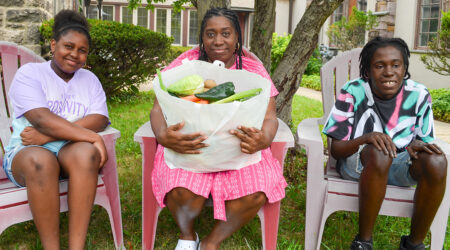
When LaToya talks about her children, her face lights up with love and determination. Her son, Sterling, is 22 and living with sickle cell disease, autism, and epilepsy. Her daughter, Praise, is 12, full of energy and potential. Like any mother, LaToya wants the best for her children. But the challenges of caring for her son’s complex needs while keeping food on the table are overwhelming — especially because Sterling requires a highly nutritious diet to keep his health stable.

The nourishing food LaToya receives from Table to Table is more than just groceries. It’s a lifeline. It means she can provide her children with healthy meals she otherwise could not afford. It means she can take a breath in the middle of her hectic days, knowing she has what her family needs to get through the week.

“When we get food from Table to Table, we always get a lot of healthy vegetables & fruits. It means nourishment. It means health,” LaToya said.

Read more about what we’re doing to rescue healthy surplus food into sustenance and deliver it to our hungry neighbors.

As New Jersey’s first and largest food rescue, our mission is to reduce food waste and provide nourishment to our food-insecure neighbors throughout North Jersey. We rescue millions of pounds of fresh, surplus food annually that would otherwise be wasted and end up in landfills. This rotting food emits methane gas, which contributes to climate change. We deliver this food to partner organizations who support the nearly 1.1 million people struggling with food insecurity in New Jersey.

Together, we can reduce food waste in our home and make a positive impact on the planet. Every little bit of effort — no matter how small — leads to change.
Related:

What foods are heart healthy? February is American Heart Month. It is a month dedicated to raising awareness about heart disease, the leading cause of death in the United States.

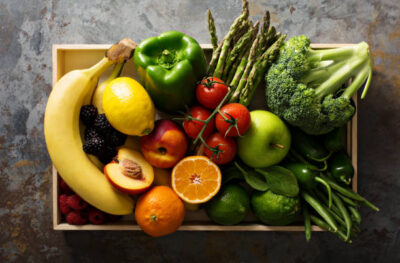
Table to Table takes pride in rescuing fresh, nutritious heart-healthy fruits and vegetables, including apples, broccoli, and carrots from our hundreds of food donors.

According to the National Heart, Lung, and Blood Institute, the following foods are a part of a heart-healthy eating plan:

  • Vegetables such as leafy greens (spinach, collard greens, kale, cabbage), broccoli, and carrots
  • Fruits such as apples, bananas, oranges, pears, grapes, and prunes
  • Whole grains such as plain oatmeal, brown rice, and whole-grain bread or tortillas
  • Fat-free or low-fat dairy foods such as milk, cheese, or yogurt
  • Protein-rich foods:
  • Fish high in omega-3 fatty acids (salmon, tuna, and trout)
  • Lean meats such as 95% lean ground beef or pork tenderloin or skinless chicken or turkey
  • Eggs
  • Nuts such as walnuts, almonds, and pine nuts
  • Seeds
  • Nut and seed butters
  • Legumes such as kidney beans, lentils, chickpeas, black-eyed peas, and lima beans
  • Oils and foods high in monounsaturated and polyunsaturated fats:
  • Canola, corn, olive, safflower, sesame, sunflower, and soybean oils (not coconut or palm oil)
  • Salmon and trout
  • Seeds (sesame, sunflower, pumpkin, or flax)
  • Avocados
  • Tofu

Read more about what we’re doing to rescue healthy surplus food and deliver it to our hungry neighbors.

As New Jersey’s first and largest food rescue, our mission is to reduce food waste and provide nourishment to our food-insecure neighbors throughout North Jersey. We rescue millions of pounds of fresh, surplus food annually that would otherwise be wasted and end up in landfills. This rotting food emits methane gas, which contributes to climate change. We deliver this food to partner organizations who support the nearly 1.1 million people struggling with food insecurity in New Jersey.

Together, we can reduce food waste in our home and make a positive impact on the planet. Every little bit of effort —no matter how small — leads to change.

Related:

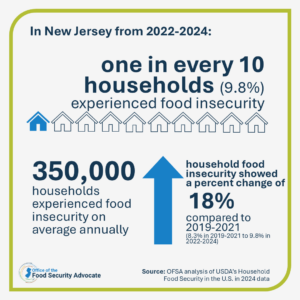
Food insecurity in New Jersey is increasing, with one in 10 households experiencing the status between 2022 and 2024, a new report by the U.S. Department of Agriculture (USDA) released recently shows.

“Household Food Security in the United States in 2024” provides state-level food insecurity prevalence rates, averaging data from 2022, 2023, and 2024. The New Jersey Office of the Food Security Advocate (NJOFSA) featured New Jersey-centric findings of the report on its website.

According to the report, between 2022 and 2024:

  • One in 10 households, 9.8%, or about 350,000, experienced food insecurity in New Jersey, an increase from the 8.3% reported in 2019-2022
  • New Jersey recorded the fifth lowest prevalence of household food insecurity in the United States

Although New Jersey’s 9.8% rate of food insecurity is below the national average of 13.3%, “any amount, and increases to, food insecurity is unsuitable for a state with our strong resources, partnerships, and commitment to ensuring food security for all,” the NJOFSA said in an update on its website.

What Is Food Insecurity?

There are two classifications of food insecurity, according to the USDA. One type is when there are “reports of reduced quality, variety, or desirability of diet,” but there is “little or no indication of reduced food intake.” The other, more serious type, is when there are “reports of multiple indications of disrupted eating patterns and reduced food intake.”

The USDA published its food security report for 30 years before announcing that the 2025 report would be its last one, calling the report and study behind it, “redundant, costly, politicized, and extraneous.” It was originally created to support the increase and eligibility of families and individuals to the federal Supplemental Nutrition Assistance Program (SNAP), commonly known as food stamps.

The NJOFSA said the report served as an “essential public resource for tracking trends and evaluating progress in food security,” providing the “most consistent national and state level data on household food insecurity.

“It grounds research, informs policy decisions, and helps advocates, agencies, and communities identify where people may struggle to afford enough food.”

As New Jersey’s first and largest food rescue, our mission is to reduce food waste and provide nourishment to our food-insecure neighbors throughout North Jersey. We rescue millions of pounds of fresh food annually that would otherwise be wasted and end up in landfills, contributing to climate change. We deliver it to partner organizations who support the nearly 1.1 million people in our area who need it most.

Together, we can reduce food waste in our home and make a positive impact on the planet. Every little bit of effort — no matter how small — leads to change.
Related:

Kaleb Lohmann is Table to Table’s December Volunteer Spotlight.

“Food waste while people go hungry in the richest nation in the world is senseless and cruel. I’ve always wanted to help ease suffering in the world, but depression, anxiety, and other health issues stopped me from committing long-term. The Table to Table I-Rescue App is extremely convenient and lets you volunteer in short time frames when and where you want to, like UberEats for those in need. It’s so easy that I’ve been able to complete over 100 rescues in 13 months,” Kaleb said. “Volunteering eases food insecurity, reduces landfill waste and emissions, combats the helplessness so often felt when reading the news, and helps me gain confidence for future employment. It has truly changed my life over the past year, and I couldn’t be more grateful!”

Volunteering Like Kaleb Does

Signing up to be a Table to Table volunteer is easy. Julie Kinner, Table to Table’s Vice President of Operations, said all you have to do is download the Table to Table I-Rescue App, powered by Food Rescue Hero, on your phone to become a food rescue hero! You’ll complete a simple registration process and volunteer agreement, and then you can get started. The app walks you through every step! This is what Kaleb uses.

Volunteers of all ages are welcome to volunteer with our food rescue program. However, the driver must have a valid driver’s license, and a valid vehicle registration and insurance. 

Since we launched, more than 350 volunteers have completed more than 9,600 rescues and delivered more than 2 million pounds of donated food that would have been thrown away.

As New Jersey’s first and largest food rescue, our mission is to reduce food waste and provide nourishment to our food-insecure neighbors throughout North Jersey. We rescue millions of pounds of fresh food annually that would otherwise be wasted and end up in landfills, contributing to climate change. We deliver it to partner organizations who support the nearly 1 million people in our area who need it most.

Together, we can reduce food waste in our home and make a positive impact on the planet. Every little bit of effort — no matter how small — leads to change.
Food security exists when all people, at all times have physical, social, and economic access to sufficient, safe, and nutritious food that meets their dietary needs and food preferences for an active and healthy life. Why food insecurity occurs is an issue with no easy answer, but the response to it is one that has fueled our 26-year mission: People need regular access to healthy, nutritious food.

The problem of food insecurity in New Jersey is a complex issue. Estimates are that nearly 3 billion pounds of food are wasted annually in the Garden State while 1.1 million residents, including 270,000 children, experience food insecurity. Determining the root causes of this widespread issue is also complex.

The New Jersey Office of the Food Security Advocate (OFSA) partnered with the Center for Nutrition & Health Impact to develop and implement a set of measures framed around the six dimensions of food security: Stability, utilization, access, agency, availability, and sustainability. OFSA recently published a report outlining what it found to be the reasons why food insecurity occurs. This data collection initiative informs the OFSA’s strategic planning efforts to ultimately guide cross-sector collaboration and policy development regarding food insecurity throughout New Jersey. Also, findings can serve as a baseline from which future progress can be measured.

The full report is embedded here:

Exploring-the-Six-Dimensions-of-Food-Security-in-New-Jersey_October-2025

Table to Table is New Jersey’s first and largest food rescue nonprofit, bridging the gap between food being wasted and people facing food insecurity. We bring rescued fresh, nutritious food to 303 community partners, including social service organizations, pantries, shelters, fresh produce markets and centralized distribution hubs. Food is provided free of charge. Through this, Table to Table touches a diversity of those in need, including families, children, veterans, and older adults, making good nutrition accessible while serving as a stimulus for other longer-term benefits. Since 1999 we have rescued more than 120,700 tons of nutritious food—enough for 241,400,846 million meals—and delivered it to our neighbors in need, saving over 544 metric tons of methane saved.

Related:

By Nicolle Walker

Thanksgiving is a time to slow down, reconnect with family and friends, and savor dishes that many of us don’t make the rest of the year.

The feelings of nostalgia surrounding this time of year can lead to overindulgence, but that doesn’t mean you need to eat that same plate of turkey, stuffing, and cranberry sauce over and over.

If you are looking for new ways to enjoy your leftovers, look no further:

Stuffing Waffles

  • Spray your waffle maker well and place 1 cup of room-temperature stuffing in each section, close, and cook until crispy and browned
  • Top with leftover cranberry sauce or gravy and enjoy

Breakfast Burritos

  • Wrap turkey, stuffing, a couple scrambled eggs and a splash of gravy in a flour tortilla
  • Heat a pan over medium high heat and spray with a touch of oil
  • Lay burritos seam side down and let cook for 4-5 minutes or until golden, flip carefully and brown the top side
  • Enjoy dipped in extra cranberry sauce

Stuffing Strata

Stuffing Strata is the perfect morning after breakfast.

  • Before heading off to bed combine leftover stuffing with shredded turkey or ham any roasted veggies, eggs, & cream, and a healthy sprinkle of cheese.
  • Cover and let sit in the fridge overnight, then bake covered at 350 degrees for 40-50 minutes for a hearty breakfast that everyone will love. 

Potato Soup

Mashed potatoes almost never last in my house, but if you find yourself with extras, try making a pot of potato soup!

  • Bring your mashed potatoes to room temperature, then combine them in a pot with your choice of chicken or vegetable broth and whisk. Start with equal amounts of potatoes and broth, then thin until you find your desired consistency.
  • Serve with shredded cheddar, sliced scallions, maybe some crumbled bacon, and of course a turkey sandwich! 

These are just a few ideas about transforming Thanksgiving leftovers into delicious meals! Have a happy and healthy Thanksgiving!

Editor’s note: Nicolle Walker is a volunteer with Table to Table and a member of our Emerging Leaders Council. She is the executive chef and owner of Love & Plates in Bloomfield, New Jersey.

Related:

November 1 is around the corner, and over 800,000 NJ residents do not know whether their SNAP cards will be refilled.  

The federal government shutdown could impact hundreds of thousands of working folks, families with children, veterans, and senior citizens here in New Jersey who rely on SNAP to get food on the table.   

Coupled with furloughs for military and government workers, rising healthcare and housing costs, and ongoing inflation, more and more of our neighbors are facing unprecedented strain – and they are turning to their local food pantries for help. 

Especially with the holidays coming, we are working seven days a week to supply as much free, fresh food as possible to our network of 300 pantries, community kitchens, and social service agencies – rescuing surplus from food donor partners ranging from HelloFresh and Driscoll Foods, to major grocery stores, to local farmers markets and school cafeterias. And you can help.  

Do you have connections to a food business? Introduce us! Do you have a little extra time on your hands? Download our I-Rescue App and help run rescues where you live or work. Are you in an office, part of a faith or civic group, club, Scout troop, or school community? Coordinate with us to organize a produce or turkey drive – we’ll pick up everything and deliver directly to local pantries. 

And if you or someone you know is facing hardships right now and you need help finding food, visit https://nj211.org/njsnap and click on Supplemental Food Resources. 

Together, we will continue our daily commitment to turn surplus into sustenance for our community. 

###

Below is flier from the New Jersey Department of Human Services regarding the federal government shutdown and NJ SNAP food assistance in English and Spanish.

SNAP-Nov-2025-Update-Flyer SNAP-Nov-2025-Update-Flyer-Spanish