

back-to-top
x
close

TRENTON – The Sherrill Administration today recognized six businesses and organizations for their recycling efforts during the annual DEP Recycling Awards program.

The awards ceremony at the Forsgate Country Club in Monroe was held in conjunction with the annual recycling symposium hosted by the Association of New Jersey Recyclers (ANJR). The recycling leaders were honored for their creative solutions that reduce waste generation, recycle and enhance sustainability in their communities.

“Recycling helps conserve resources, reduces waste, promotes sustainability and protects public health – and makes economic sense by creating jobs, avoiding disposal costs and saving energy,” Department of Environmental Protection Commissioner Ed Potosnak said. “I commend these award winners for their outstanding work in their communities and for serving as roles models for all of us to follow.”

In 1987, New Jersey became the first state to enact legislation that requires recycling in residential, commercial and institutional settings. In 2023, New Jersey achieved an overall recycling rate of 53%, and continues to promote recycling through numerous grant and educational programs, including informing residents on recycling best practices in their communities.

“We applaud the award winners for their accomplishments and dedication to recycling, waste reduction and protecting the environment,” said Paul Baldauf, DEP’s Assistant Commissioner for Air Quality, Energy and Sustainability. “We are confident that the impressive achievements of our recycling award winners will inspire others.”

The 2026 DEP Recycling Award winners are as follows:

Government

City of Hoboken: Hoboken established one of New Jersey’s first municipal residential composting programs, starting in 2015 with a community compost company partnership. The city has continued to build upon its success. In 2025, the city diverted 265,560 pounds of food scraps from landfills through its residential drop-off, curbside residential and commercial composting programs.

Recycling Industry

Commercial Solar Panel Recycling Inc., Phillipsburg: Commercial Solar Panel Recycling Inc. is New Jersey’s first and only dedicated solar panel recycling center, processing two solar panels per minute and recovering aluminum frames, electronics and panel glass that are recycled into new products. The company has kept almost 20,000 solar panels out of the waste stream and recycled 245,000 pounds of glass, 36,000 pounds of aluminum and 1,500 pounds of junction boxes and wiring.

Leadership

Table to Table, Saddle Brook: Table to Table is a community-based nonprofit that reuses fresh, nutritious, surplus perishable food that would otherwise be wasted and delivers it free to organizations serving the hungry in Bergen, Essex, Hudson, Morris and Passaic counties. In 2025, Table to Table collected more than 25 million pounds of surplus food.

Rising Star

Torus, West Windsor: Torus is a youth-founded, student-led non-profit organization that implemented a free food-waste curbside collection program. In 2025, Torus served more than 1,000 households and businesses in 19 municipalities, diverting more than 150,000 pounds of food waste from solid waste facilities.

Business

ECOS (Earth Friendly Products), Parsippany: ECOS (Earth Friendly Products), a manufacturer of household and commercial green cleaning products, reduces and reuses items while recycling mandated and non-traditional items. These sustainable practices enabled the facility to divert 99.3% of its manufacturing and office waste from disposal facilities, reducing disposal costs by more than $273,000 in 2025.

Waste Reduction, Resource Management/Sustainability

Roxbury Township, Roxbury Public Library and the Lake Hopatcong Foundation: The Roxbury Community Repair Café, a collaborative initiative between Roxbury Township, the Roxbury Public Library and the Lake Hopatcong Foundation, is a free community event that utilizes skilled volunteers to repair household items, helping extend the life of products and diverting them from the waste stream.

Recycling Takes Everyone

The DEP urges all residents, businesses and institutions to participate in their local recycling program and do their part to keep non-acceptable materials, such as plastic bags, trash, propane tanks and used syringes out of curbside and workplace recycling bins. Recycling programs vary by town, so it’s important to check up-to-date policies.

Manufacturers require clean, contaminant-free recyclable feedstocks to make new recycled content products and thus cannot accept loads of recyclable materials that are contaminated with non-acceptable items.

The recycling industry continues to face the challenge of contamination of the recycling stream caused by incorrect materials being recycled, limiting the economic benefits of recycling. Many recycling companies reject loads of recyclables that include non-recyclable items. When in doubt, throw it out.

Recycling keeps millions of tons of material out of disposal facilities, conserves natural resources, saves energy, and reduces water and air pollution, including greenhouse gas generation.

Recycling Resources

To learn more about recycling policies and practices to help keep our environment cleaner, visit DEP’s Recycling webpage.

Visit the Association of New Jersey Recyclers at anjr.com.


About Table to Table

Table to Table (http://www.tabletotable.org) is New Jersey’s first and largest food rescue nonprofit, bridging the gap between food being wasted and people facing food insecurity. We work with food businesses of all types to rescue fresh, nutritious surplus food, and deliver it for free to 300+ social service organizations, pantries, shelters, community produce markets and centralized distribution hubs. Through our community partnerships, Table to Table reaches families, children, veterans, older adults, and others in need, improving food security, nutritional access, and better health. Since 1999 we have rescued more than 133,271 tons of nutritious food — enough for 266,452,863 meals — and delivered it to our neighbors in need, while also saving over 544 metric tons of methane from impacting climate change by preventing food waste.
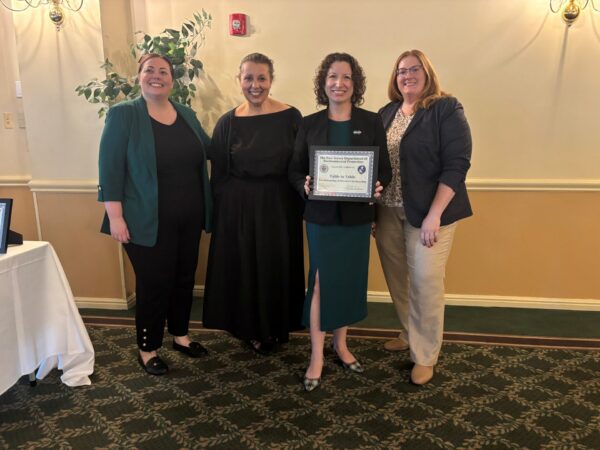
There were many impressive achievements in the field of recycling and waste reduction in New Jersey this past year. The New Jersey Department of Environmental Protection recognizes these accomplishments through its annual Recycling Awards program. The 2026 DEP recycling award winners are:

Leadership: Table to Table

Table to Table, a nonprofit organization located in Saddle Brook, is a community-based food rescue program that collects fresh, nutritious, surplus perishable food that would otherwise be wasted and delivers it free to organizations serving the hungry in Bergen, Essex, Hudson, Morris, and Passaic counties.

This program not only addresses hunger in New Jersey, but also diverts wasted food from landfills, which, in turn, reduces greenhouse gas generation. In 2025, Table to Table diverted and rescued more than 25 million pounds of surplus food from numerous sources.


About Table to Table

Table to Table (http://www.tabletotable.org) is New Jersey’s first and largest food rescue nonprofit, bridging the gap between food being wasted and people facing food insecurity. We work with food businesses of all types to rescue fresh, nutritious surplus food, and deliver it for free to 300+ social service organizations, pantries, shelters, community produce markets and centralized distribution hubs. Through our community partnerships, Table to Table reaches families, children, veterans, older adults, and others in need, improving food security, nutritional access, and better health. Since 1999 we have rescued more than 133,271 tons of nutritious food — enough for 266,452,863 meals — and delivered it to our neighbors in need, while also saving over 544 metric tons of methane from impacting climate change by preventing food waste.

TRENTON, NJ – The Sherrill Administration today recognized Table to Table, along with five other businesses and organizations, for our recycling efforts at the annual DEP Recycling Awards program.

The recycling leaders were honored for their creative solutions that reduce waste generation, recycle and enhance sustainability in their communities. Table to Table received the Leadership Award.

“Table to Table is a community-based nonprofit that reuses fresh, nutritious, surplus perishable food that would otherwise be wasted and delivers it free to organizations serving the hungry in Bergen, Essex, Hudson, Morris and Passaic counties,” NJDEP said in a statement. “In 2025, Table to Table collected more than 25 million pounds of surplus food.”

The awards ceremony at the Forsgate Country Club in Monroe was held in conjunction with the annual recycling symposium hosted by the Association of New Jersey Recyclers.

“We applaud the award winners for their accomplishments and dedication to recycling, waste reduction and protecting the environment,” said Paul Baldauf, DEP’s Assistant Commissioner for Air Quality, Energy and Sustainability. “We are confident that the impressive achievements of our recycling award winners will inspire others.”

The other awardees were: The City of Hoboken, Commercial Solar Panel Recycling Inc., Torus, ECOS (Earth Friendly Products), and Roxbury Township, the Roxbury Public Library, & the Lake Hopatcong Foundation.


About Table to Table

Table to Table (http://www.tabletotable.org) is New Jersey’s first and largest food rescue nonprofit, bridging the gap between food being wasted and people facing food insecurity. We work with food businesses of all types to rescue fresh, nutritious surplus food, and deliver it for free to 300+ social service organizations, pantries, shelters, community produce markets and centralized distribution hubs. Through our community partnerships, Table to Table reaches families, children, veterans, older adults, and others in need, improving food security, nutritional access, and better health. Since 1999 we have rescued more than 133,271 tons of nutritious food — enough for 266,452,863 meals — and delivered it to our neighbors in need, while also saving over 544 metric tons of methane from impacting climate change by preventing food waste.

TRENTON, NJ – The Department of Environmental Protection Commissioner Shawn M. LaTourette today announced the winners of the 26th annual Governor’s Environmental Excellence Awards, New Jersey’s premier awards program that recognizes outstanding environmental achievements, programs and projects across the state. The awards were presented during a ceremony at the Historic Masonic Temple in Trenton.

“On behalf of the Governor, DEP and the I-Bank are proud to honor all of this year’s awardees for their spirited dedication to protecting the environment we all share and the health of our communities,” Environmental Protection Commissioner Shawn M. LaTourette said. “Their passion and dedication serve as an inspiration to us all and exemplifies why New Jersey is a national leader in environmental protection.”

The annual awards are given to individuals, businesses, organizations and communities that make exceptional efforts to protect the environment and advance solutions across diverse environmental matters, including environmental justice, climate change, sustainability and education. Deputy Commissioner Kati Angarone and I-Bank Executive Director David Zimmer presented the awards.

Richard J. Sullivan Award

Named for New Jersey’s first Commissioner of the Department of Environmental Protection, the Richard J. Sullivan Award is given to a person who demonstrates exceptional leadership and outstanding accomplishments in safeguarding public health and protecting and enhancing the state’s environment and resources.

This year’s Sullivan Award was given to Joseph Seebode, Deputy District Engineer for the New York District of the U.S. Army Corps of Engineers, who has dedicated more than 35 years to advancing coastal resilience, environmental restoration and sustainable water management.

Seebode’s leadership helped guide post-Hurricane Sandy recovery efforts and other major projects such as the deepening of the Port of New York and New Jersey. A lifelong steward of waterways, Seebode exemplifies collaboration, innovation, and dedication to making the region safer, more resilient, and environmentally sound.

2025 Governor’s Environmental Excellence Award Winners

James J. Florio Emerging Environmental Leader: Landon Hoberman

Landon Hoberman is the founder of the Student Environmental Ambassador (SEA) Program, a youth-led initiative empowering students to reduce plastic waste and promote civic engagement. Since 2023, SEA has reached more than 50,000 students with over 725 ambassadors across 14 states and three countries. Through initiatives like #reducebyrequest, SEA has prevented over 1.8 million single-use utensils from entering the environment, saved local restaurants more than $45,000, and inspired state legislation.

Climate Change Mitigation: Duke Farms

Duke Farms, a 2,700-acre center of the Doris Duke Foundation, is transforming its campus through its Natural Systems Energy Project to sharply reduce emissions and sequester carbon through reforestation and natural climate solutions. The project also includes a new solar energy system for powering the campus and aims to support an 80 percent reduction in emissions by 2030.

Climate Resilience: City of Newark Office of Sustainability, Resilience & Community Transformation

The City of Newark Office of Sustainability, Resilience & Community Transformation leads initiatives to enhance climate resilience, focusing on the disproportionate impacts of climate change on vulnerable communities. In the past year, the office expanded its “Beat the Heat” campaign and implemented urban cooling strategies including tree planting, pocket parks, and cool roof projects.

Environmental Justice: Montclair State University PSEG Institute for Sustainability Studies

The Montclair State University PSEG Institute for Sustainability Studies’ Green Teams Internship Program empowers diverse student teams to support communities facing disproportionate climate impacts. In 2025, ten teams partnered with nonprofits and municipalities—including Newark, Paterson, Montclair, and West Orange — to deliver projects that improved air and water quality, expanded tree canopies, strengthened food security, and advanced nature-based flood and heat resilience measures.

Healthy Communities: Association of New Jersey Environmental Commissions (ANJEC)

ANJEC empowers New Jersey communities to protect natural resources and promote healthy, resilient environments. In the past year, ANJEC advanced this work through the restoration of the Parvin-Tarkiln Watershed in Vineland, adding tree pits, rain gardens, and riparian buffers that enhance local water quality and stormwater management.

Healthy Ecosystems and Habitats: Hunters Helping the Hungry

Hunters Helping the Hungry is a nonprofit organization that connects deer hunters, inspected processors, and food banks to provide venison to families in need. The organization supports responsible deer management that restores forest health, protects biodiversity, and strengthens food security. Recently, partnerships with the New Jersey Department of Agriculture and New Jersey Farm Bureau eliminated processing fees and increased processor payments, boosting deer donations and meal distribution statewide.

Sustainability and Waste Reduction: Table to Table

Table to Table, New Jersey’s first and largest food rescue organization, delivers surplus fresh food to those in need. In the past year alone, the organization rescued more than 23 million pounds of food and expanded its data-driven network to reach the most food-insecure areas. Since its founding, Table to Table has prevented more than 240 million pounds of food waste and significantly reduced methane emissions.

Watershed Management and Water Resources: PolyGone Systems (in partnership with Atlantic County Utilities Authority)

PolyGone Systems, a Princeton University spinoff cleantech company, is pioneering technology to remove microplastics from waterways. In partnership with the Atlantic County Utilities Authority, PolyGone launched the world’s first municipal-scale microplastic removal pilot in 2024 and successfully captured millions of microplastic particles from wastewater.

Environmental Education: Erin Colfax, Unity Charter School

Erin Colfax is a Science Integrationist at Unity Charter School in Morristown and brings sustainability to life through hands-on, inquiry-based science education for grades K–8. Colfax engages students in real-world projects like water quality monitoring and biodiversity studies and led a project to transform the school’s lower field into a living classroom that deepens environmental literacy and stewardship.

About the Governor’s Environmental Excellence Awards

The Governor’s Environmental Excellence Awards has been New Jersey’s premier environmental awards program since 2000. The DEP, New Jersey Infrastructure Bank and the New Jersey Corporation for Advanced Technology sponsor the program.

A panel of judges evaluate nominations for their impact on the environment, actions to address the needs of New Jersey, leadership and innovation, and use of outreach and educational activities to make an impact in their community. To learn more about the program, visit dep.nj.gov/awards.

###


About Table to Table

Table to Table (http://www.tabletotable.org) is New Jersey’s first and largest food rescue nonprofit, bridging the gap between food being wasted and people facing food insecurity. We work with food businesses of all types to rescue fresh, nutritious surplus food, and deliver it for free to 300+ social service organizations, pantries, shelters, community produce markets and centralized distribution hubs. Through our community partnerships, Table to Table reaches families, children, veterans, older adults, and others in need, improving food security, nutritional access, and better health. Since 1999 we have rescued more than 120,700 tons of nutritious food — enough for 241,400,846 million meals — and delivered it to our neighbors in need, while also saving over 544 metric tons of methane from impacting climate change by preventing food waste.