back-to-top
x
close

Every one of us has, at some point, opened our refrigerator to find leftover food from meals prepared earlier in the week. Our first reaction is typically a pang of guilt at the sight of the limp green beans, dry chicken or wilted lettuce. The feeling of guilt is valid. Food waste is a big issue – but the good news is that there are easy ways we can all reduce it right in our own homes. Read on for some tips on how you can get started today! 

Buy Only What You Need 

The first step to reducing food waste is to make sure you’re buying what you really need at the grocery store and that means you should focus on meal planning. It sounds like a chore, but it’s truly a game-changer. Simply take a few minutes at the start of the week to plan out your meals. This way, you buy only what you need at the grocery store and avoid those impulse purchases that often end up going to waste. And, by following a recipe and making a grocery list, you can purchase the proper quantities of ingredients, so your food gets used. Plus, it can save you money in the long run and that’s a win-win! 

Understand Package Dates
Storage is Key 

Another easy way to reduce food waste is to properly store your food using good quality storage containers. Explore the best way to store different types of produce to keep them fresh for as long as possible – learn what goes on the counter, what belongs in bags, what should or shouldn’t be pre-washed. And don’t forget about your freezer. Many foods can be frozen for later use, like bread, meat, and pasta. Remember to label your containers so the contents and the date when you prepared and froze them are clearly listed.  

Love Your Leftovers 

Next, make a point of having an evening devoted especially to finishing any leftovers. Instead of letting them droop in the back of the fridge, try folding them into new meals. Got some roasted veggies from last night’s dinner? Throw them into an omelet for breakfast or a salad for lunch. Leftover chicken? Shred it up and make tacos or toss it into a stir-fry. Get creative and see what delicious dishes you can come up with!  

Compost 

Another great way to reduce food waste is to compost. Instead of tossing those fruit and veggie scraps into the trash where they’ll just end up in a landfill, you can turn them into nutrient-rich soil for your garden. Composting is easier than you might think, and it’s a great way to reduce your environmental impact while beautifying your garden. 

While reducing food waste at home, you can also support your neighbors – and your planet – by getting involved with Table to Table! As New Jersey’s first and largest food rescue, our mission is to reduce food waste and provide nourishment to our food-insecure neighbors throughout Northern New Jersey. Each year, we rescue millions of pounds of fresh food that would otherwise be wasted and deliver it to partner organizations who support the nearly 1 million people in our area who need it most. Visit us at www.tabletotable.org to learn how you can get involved as a supporter, a “Food Rescue Hero” volunteer, and more. 

Together, we can reduce food waste in our home and make a positive impact on the planet. Every little bit of effort—no matter how small—leads to change.  


Does food insecurity play a role in health? Yes, quite simply.

If you have read or researched anything in the healthcare space lately, you must have come across Social Determinants of Health. “But, what does it mean,” you might ask? According to the U.S. Department of Health and Human Services (HHS), social determinants of health is defined as “the conditions in the environments where people are born, live, learn, work, play, worship, and age that affect a wide range of health, functioning, and quality-of-life outcomes and risks.”

The HHS explains that there are five main categories for these social determinants: Economic stability, education access and quality, neighborhood and built environment, social and community context, and health care access and quality. Although all of the categories outlined above are critical, as a food rescue, Table to Table’s mission rests upon the access of fresh, nutritious food for all. And, we are unique because we deliver wholesome, free food to hundreds of diverse partner agencies who in many cases use the money saved–from not having to purchase food–to often create programs or provide an environment that supports social and community well-being through classes, events, adjunct support and more. So, essentially, Table to Table supports both food and community.

The Brookings Institute explains that, “when it comes to food, access, consumption, and quality are all closely related to life expectancy.” For example, a recent study published in Nutrition found that both increases in healthy food expenditure and decreases in unhealthy food expenditure were associated with increases in life expectancy.” Additionally, the lack of access to wholesome food and food security are also connected to diseases like diabetes, which disproportionately impact African American and Latino communities. Lastly, there is often a geographic component to food insecurity.

As New Jersey’s first and largest food rescue, our mission is to reduce food waste and provide nourishment to our food-insecure neighbors throughout North Jersey. We rescue millions of pounds of fresh food annually that would otherwise be wasted and end up in landfills, contributing to climate change. We deliver it to partner organizations who support the nearly 1 million people in our area who need it most.

Together, we can reduce food waste in our home and make a positive impact on the planet. Every little bit of effort—no matter how small—leads to change.

For some of us, memories of a thick slab of a home-grown Jersey Tomato, just-picked and still warm from the sun, on soft, sliced bread with a bit of salt and pepper, and a smidge of mayo brings back lazy, hot summer days from our childhood.

The sweet and tart juicy tomato we remember was most likely the Rutgers Tomato, a high-sugar, high-acid variety from the 1930s. But do today’s Jersey tomatoes taste the same?

It turns out the classic Jersey Tomato we remember was not a single variety but actually an array of varieties that did well in New Jersey’s climate and range of soil types. The end result was a sweet and tangy, flavorful tomato available throughout our growing season depending on the ripening rate of the variety. A favorite variety, the Ramapo, was introduced by Rutgers in 1968.

Although having a loyal following, it was judged too soft for long-distance shipping and commercial seed producers discontinued the production of the variety. Rutgers continued to produce small batches of the seed until they finally found a commercial seed producer who was willing to produce an amount they could afford. The Ramapo seed was re-released in 2008, 40 years after its introduction and enthusiastically welcomed by local growers and gardeners alike. Rutgers’ “Rediscovering the Jersey Tomato Project” researches what makes a tomato tasty and has brought back long lost favorite tomato varieties along with conducting tomato tastings and communicating with gardeners and farmers on growing delicious tomatoes.

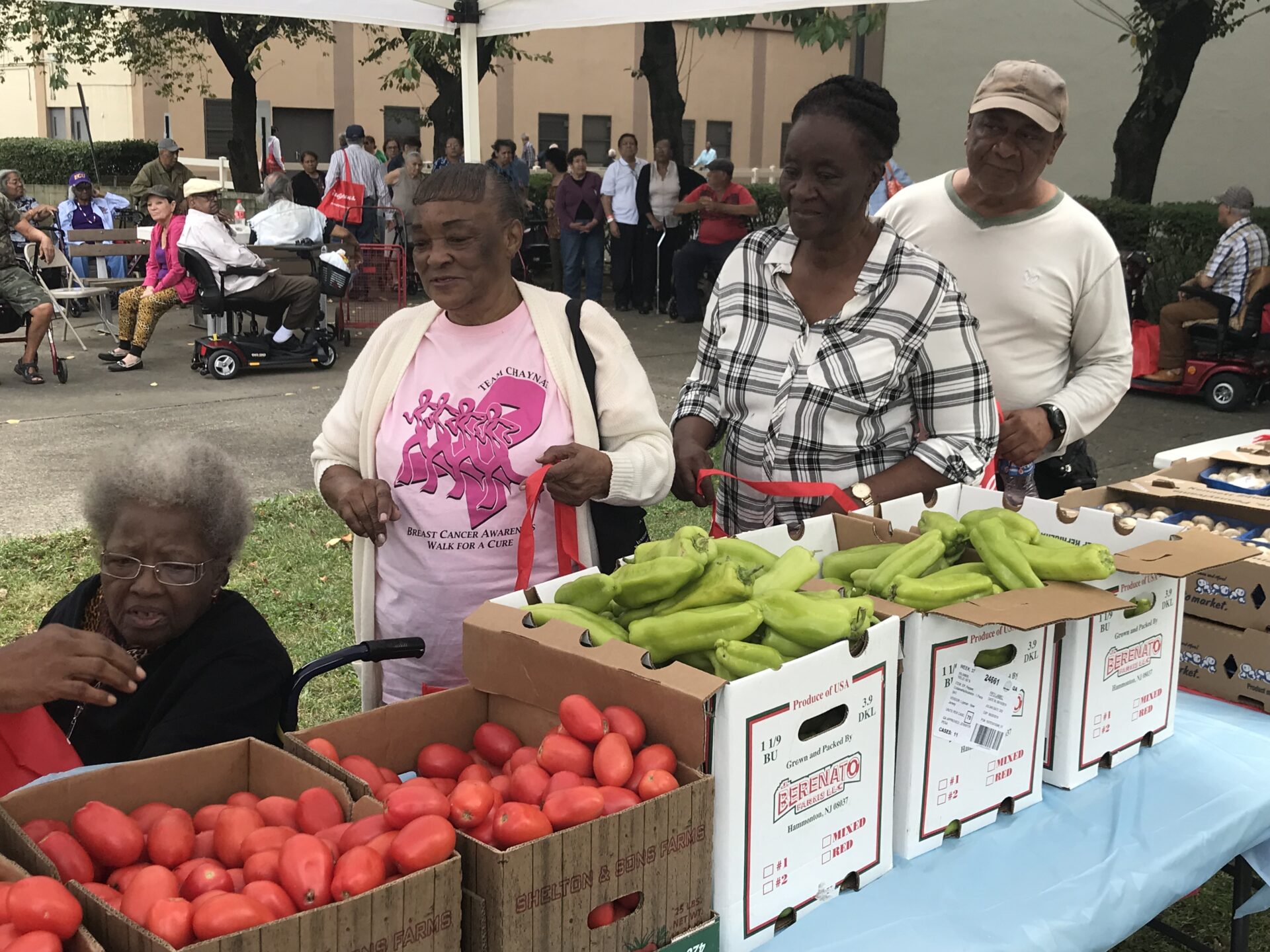
The Jersey Tomato varieties are bred for their taste and not for long-distance shipping, and will not last for weeks after picking. They are vine-ripened when picked and are best eaten within days of purchase. So aside from joyfully anticipating this delicious time of year, given their relatively short shelf-life, we know that donations of these homegrown gems will be plentiful. Within hours they will be on the tables of our recipient agencies and stocking our mobile markets, ensuring that every New Jersey resident has access to the best taste of the summer!


As New Jersey’s first and largest food rescue, our mission is to reduce food waste and provide healthy, nutritious nourishment to our food-insecure neighbors throughout North Jersey. We rescue millions of pounds of fresh food annually that would otherwise be wasted and end up in landfills. This contributes to climate change. We deliver it to partner organizations who support the nearly 1 million people in our area who need it most.

Together, we can reduce food waste in our home and make a positive impact on the planet. Every little bit of effort—no matter how small—leads to change.