

back-to-top
x
close

The New Jersey Office of the Food Security Advocate (OFSA) has published the New Jersey Food Security Strategic Plan.

The three-year plan outlines how the OFSA plans to coordinate statewide efforts to address the growing problem of food insecurity in New Jersey through a coordinated, cross-sector approach.

NJ_FoodSecurity_3Yr_StrategicPlan_010726_FINAL

“This is not a plan that tells New Jersey what to do. Rather, this is a plan that invites all New Jerseyans to see their food security work and everyday connection to the food system through a more holistic lens that acknowledges food insecurity as a highly complex, socio-economic issue,” said Mark Dinglasan, Executive Director of the OFSA. “This is the beginning of a journey to build a better tomorrow for New Jersey families.”

The plan has several focus areas:

Focus Areas
  • The Context of Food Security in New Jersey: This focus enhances and improves the exchange of information and access to improve the public’s awareness of food insecurity, optimize relief programs, and support data-driven decision-making.
  • Planning and Evidence: This describes the guiding principles, data, and evidence that informed the plan and explores the Six Dimensions of Food Security in New Jersey.
  • Strategic Direction: Outlines the plans focus areas and strategies, which help form a roadmap for advancing food security throughout New Jersey.
  • Accountability and Action: Defines what success looks like for the strategic plan and invites partners to use the plan as a call to action to help coordinate efforts statewide.
  • Strengthening Food Systems to Enhance Long-Term Stability: Includes improving the food supply chain to reduce food waste and enhance food security stability and sustainability, including sustainable farming practices and positioning food security efforts in climate action work.

The OFSA will be releasing a Implementation Tactics and Action Planning Toolkit in early 2026. This will provide guidance and practical tools for organizations to implement relevant strategies in their communities.


As New Jersey’s first and largest food rescue, our mission is to reduce food waste and provide nourishment to our food-insecure neighbors throughout North Jersey. We rescue millions of pounds of fresh, surplus food annually that would otherwise be wasted and end up in landfills. This rotting food emits methane gas, which contributes to climate change. We deliver this food to partner organizations who support the nearly 1.1 million people struggling with food insecurity in New Jersey.

Together, we can reduce food waste in our home and make a positive impact on the planet. Every little bit of effort — no matter how small — leads to change.

Related:
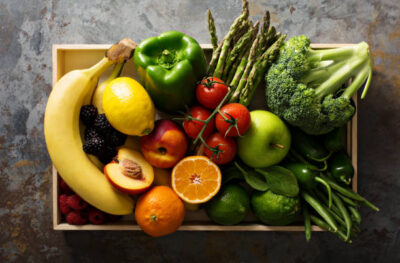
Organizers of the Winter Olympics in Milano Cortina, Italy are doing what they can to recover 100% of surplus food served in the Olympic Village and distribute it to vulnerable people. They are dedicated to a “zero food waste” approach.

This approach includes recovering surplus food to fight hunger and promote environmental sustainability, in accordance with the Food and Agriculture Organization of the United Nations’ Four Betters approach, which is part of the UN’s Agenda 2030 for Sustainable Development.

Food waste mitigation efforts were supported when more than 270 local mayors signed the Milan Urban Food Policy Pact in 2015 along with other local initiatives designed to support combatting food waste in and near the cities hosting the games, a story on Olympics.com reported.

As New Jersey’s first and largest food rescue, our mission is to reduce food waste and provide nourishment to our food-insecure neighbors throughout North Jersey. We rescue millions of pounds of fresh, surplus food annually that would otherwise be wasted and end up in landfills. This rotting food emits methane gas, which contributes to climate change. We deliver this food to partner organizations who support the nearly 1.1 million people struggling with food insecurity in New Jersey.

Together, we can reduce food waste in our home and make a positive impact on the planet. Every little bit of effort — no matter how small — leads to change.

Related:
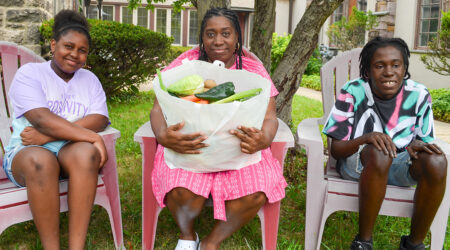
When LaToya talks about her children, her face lights up with love and determination. Her son, Sterling, is 22 and living with sickle cell disease, autism, and epilepsy. Her daughter, Praise, is 12, full of energy and potential. Like any mother, LaToya wants the best for her children. But the challenges of caring for her son’s complex needs while keeping food on the table are overwhelming — especially because Sterling requires a highly nutritious diet to keep his health stable.

The nourishing food LaToya receives from Table to Table is more than just groceries. It’s a lifeline. It means she can provide her children with healthy meals she otherwise could not afford. It means she can take a breath in the middle of her hectic days, knowing she has what her family needs to get through the week.

“When we get food from Table to Table, we always get a lot of healthy vegetables & fruits. It means nourishment. It means health,” LaToya said.

Read more about what we’re doing to rescue healthy surplus food into sustenance and deliver it to our hungry neighbors.

As New Jersey’s first and largest food rescue, our mission is to reduce food waste and provide nourishment to our food-insecure neighbors throughout North Jersey. We rescue millions of pounds of fresh, surplus food annually that would otherwise be wasted and end up in landfills. This rotting food emits methane gas, which contributes to climate change. We deliver this food to partner organizations who support the nearly 1.1 million people struggling with food insecurity in New Jersey.

Together, we can reduce food waste in our home and make a positive impact on the planet. Every little bit of effort — no matter how small — leads to change.

Related:
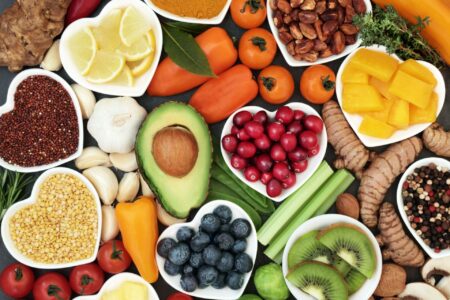
What foods are heart healthy? February is American Heart Month. It is a month dedicated to raising awareness about heart disease, the leading cause of death in the United States.

Table to Table takes pride in rescuing fresh, nutritious heart-healthy fruits and vegetables, including apples, broccoli, and carrots from our hundreds of food donors.

According to the National Heart, Lung, and Blood Institute, the following foods are a part of a heart-healthy eating plan:

  • Vegetables such as leafy greens (spinach, collard greens, kale, cabbage), broccoli, and carrots
  • Fruits such as apples, bananas, oranges, pears, grapes, and prunes
  • Whole grains such as plain oatmeal, brown rice, and whole-grain bread or tortillas
  • Fat-free or low-fat dairy foods such as milk, cheese, or yogurt
  • Protein-rich foods:
  • Fish high in omega-3 fatty acids (salmon, tuna, and trout)
  • Lean meats such as 95% lean ground beef or pork tenderloin or skinless chicken or turkey
  • Eggs
  • Nuts such as walnuts, almonds, and pine nuts
  • Seeds
  • Nut and seed butters
  • Legumes such as kidney beans, lentils, chickpeas, black-eyed peas, and lima beans
  • Oils and foods high in monounsaturated and polyunsaturated fats:
  • Canola, corn, olive, safflower, sesame, sunflower, and soybean oils (not coconut or palm oil)
  • Salmon and trout
  • Seeds (sesame, sunflower, pumpkin, or flax)
  • Avocados
  • Tofu

Read more about what we’re doing to rescue healthy surplus food and deliver it to our hungry neighbors.

As New Jersey’s first and largest food rescue, our mission is to reduce food waste and provide nourishment to our food-insecure neighbors throughout North Jersey. We rescue millions of pounds of fresh, surplus food annually that would otherwise be wasted and end up in landfills. This rotting food emits methane gas, which contributes to climate change. We deliver this food to partner organizations who support the nearly 1.1 million people struggling with food insecurity in New Jersey.

Together, we can reduce food waste in our home and make a positive impact on the planet. Every little bit of effort —no matter how small — leads to change.

Related: