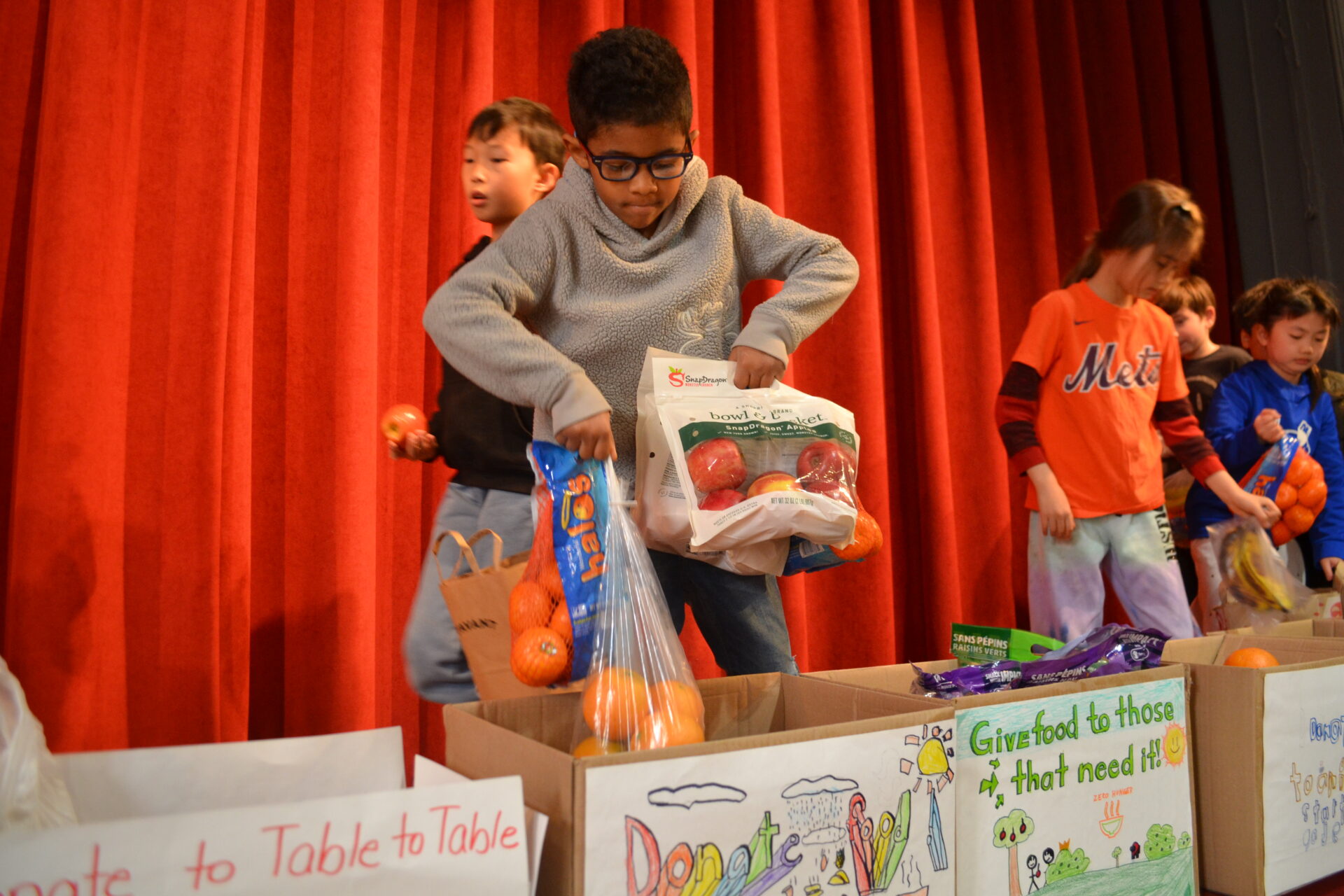
We sat down and had a conversation with Vice President of Operations Julie Kinner, who keeps our trucks on the road and volunteers rescuing food, about the I-Rescue app, and how you can use it to help deliver nutritious food and help feed our neighbors in need.
Tell us about Table to Table I-Rescue
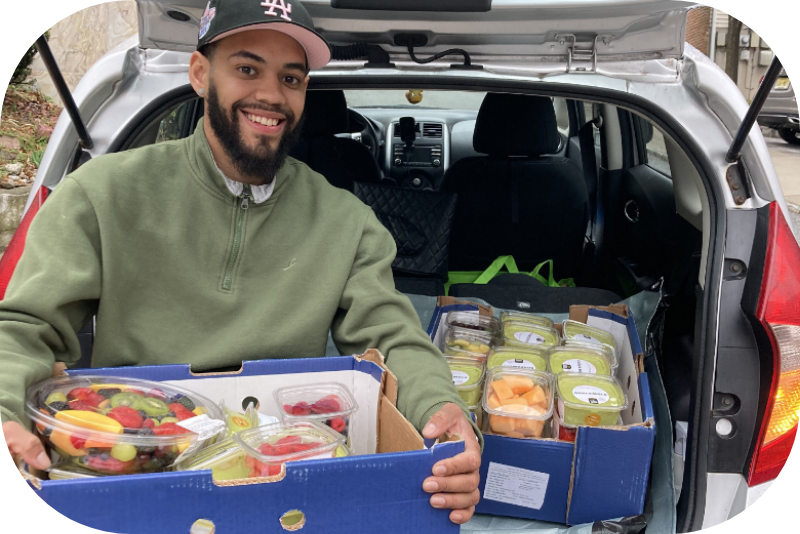
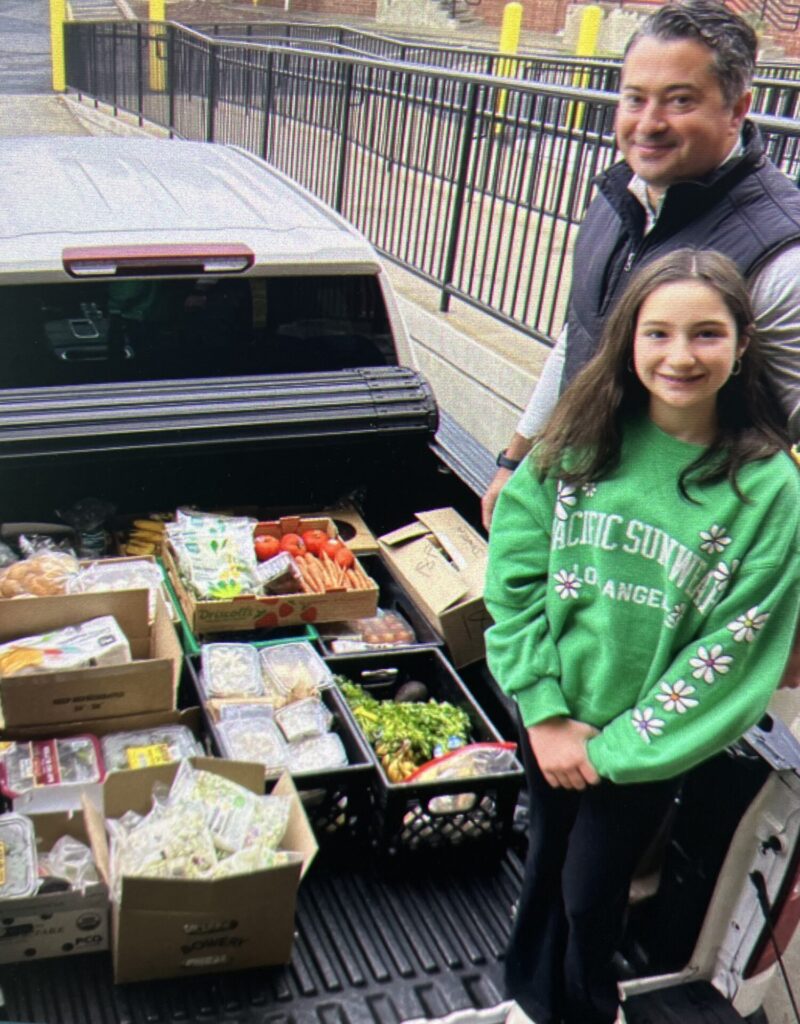
Table to Table I-Rescue is an entirely volunteer-driven app that allows people to pick up nutritious food from grocery stores, restaurants, and events that would otherwise be wasted and deliver it to our recipient partners who then distribute it to our food-insecure neighbors.
The idea of our App came about in 2020, when everyone was scrambling to provide the best solutions for the astronomically high hunger and food insecurity rates caused by Covid. We were contacted by the Russell Berrie Foundation, who shared with us some technology-based food rescue solutions they were seeing in other regions. After much research on the concept, Table to Table decided to partner with Pittsburgh-based Food Rescue Hero, a technology platform that enables a scalable impact on food waste, food insecurity, and climate change.
The Russell Berrie funded a grant for staff support and subsequent maintenance of the App. During this time, the Bergen County Food Access Task Force was also forming, and they stepped in to provide additional support. That’s how Table to Table I-Rescue was launched!
It’s been wildly successful! Since we launched, more than 350 volunteers have completed more than 9,600 rescues and delivered more than 2 million pounds of donated food that would have been thrown away.
How do I sign up to volunteer?
It’s super simple. Just download the Table to Table I-Rescue app on your phone to become a food rescue hero! You’ll complete a simple registration process and volunteer agreement, and then you can get started. The app walks you through every step!
Step 1: Download and Register
Step 2: Claim a Rescue (Turn on notifications, and check the app daily for available rescues)
Step 3: Pick up food within the designated time window (Address, contact person, and instructions are provided).
Step 4: Travel to receiving organization (We do all the “pairing” so you’ll know exactly where you’re delivering to).
Step 5: Deliver donation, and have someone at the recipient agency sign off on the delivery. Easy Peasy!
What do I need to become a food rescue hero?
You only need our Table to Table I-Rescue app downloaded onto your phone, a driver’s license, and an insured vehicle. We have high school students who are not able to drive yet but are asking their parents to drive for them. Families are signing up together and doing the rescues. Retired folks are taking on weekday rescues as part of daily errands and outings. It’s so great to receive pictures and stories from them. Each volunteer is truly impacted by the rescue and come back for more!
Where can I find rescues and how can I claim one?
All rescues are posted on our Table to Table I-Rescue app. You can find them on the “Available Rescues” tab, a map will be shown with one-time and weekly rescues, or you can switch to list view (in the upper right corner of the screen) to see available rescues in chronological order. Take a look at what works with your schedule and location, identify the rescue you’re interested in, click on “View Rescue” to see details, and then “Claim This Rescue.”
What happens after I claim a rescue?
All your claimed rescues will be moved to the “My Rescues” tab, which you can find on the top left hand-corner of the app. Once you are ready to begin the rescue you will click on “start,” then you will find all the necessary information to complete the rescue including address, points of contacts, estimated amounts, time, etc. The app will walk you through the whole process of your food rescue journey. But if you have any questions or face any issues you can call 551-255-6884. Please be aware that you can always go back to the “My Rescues” page to “Resume” your rescue if you leave the app for any reason.
What is the difference between a “one-time” and “weekly” rescue?
Weekly rescues occur on the same day, time, and frequency (i.e. every Monday at 10 am), and on the same route (donor and non-profit partner.) If you claim a weekly rescue as a volunteer, you can always request a “sub” if something comes up and you aren’t able to make it.
One-time rescues or pop-up rescues occur on an as-needed basis. These are not at pre-determined days and times. When you claim a one-time rescue, you’re committing your time for that one rescue only. You can always check the app for more rescues.
Can I volunteer just once, or will I need to commit to a schedule?
You are free to volunteer as often or as little as you would like. If you don’t want to commit to a set schedule, you can claim a one-time rescue. If you would like a set schedule, then weekly rescues are the right fit for you. You can also request a sub if you can’t complete a rescue.
Is there an age requirement to volunteer?
Volunteers of all ages are welcome to volunteer in our food rescue program. However, the driver must have a valid driver’s license, and a valid vehicle registration and insurance.
Do I need a large vehicle for food rescues?
No, a large vehicle is not required to complete a food rescue. Any car size is adequate to complete a food rescue. Before claiming a rescue, you can see the estimated amount of food that is being donated to help ensure your vehicle has the capacity to transport the donation. If you get to the donor location and there is too much food for your car, just let the app dispatcher know and we will schedule another rescue immediately.
If I run into a problem on a food rescue, who can I contact?
You can contact Kharin at 551-255-6884 during the week, and on the weekends, contact Rosalia at 551-352-0354. The same contact information is also displayed in the app.
We’re so excited for you to get started with Table to Table I-Rescue and join our growing team of Food Rescue Heroes!