back-to-top
x
close

By Violet Lazarus

RIDGEWOOD, NJ – Bergen County residents and businesses are still reeling from Ida’s destruction two weeks later. 

Bergen County’s food assistance and economic initiative, Feed the Frontlines, started a week ahead of schedule to help address the sudden increase in need. FEMA is deploying Disaster Assistance Teams throughout the county to help those affected apply for further assistance. Table to Table, North Jersey’s food rescue program, is faced with a surge in demand for their services, but has faced likely irreparable damage to their resources as well. 

“Without our trucks, we cannot deliver food,” said Ilene Isaacs, Executive Director for Table to Table. “Hurricane Ida had an overwhelming impact on Table to Table. This devastation is

affecting our organization far more than that experienced during Hurricane Sandy or even Covid.”

Julie Kinner, director of recipient relations and community affairs for Table to Table, said that the organization missed out on two days of deliveries because the area where their six refrigerated trucks were parked remained too flooded to access. The trucks are currently at the mechanic’s, but cannot be worked on until insurance adjusters can appraise the damage. 

Based on just looking at the vehicles, the mechanics said, the trucks are likely not salvageable. 

Table to Table is currently renting trucks to try and keep up with their usual routes, which is an expensive and complicated task since they require refrigerated trucks. 

Bergen County Commissioner and founder of the Bergen County Food Security Task Force Tracy Zur also lent the organization a van to help them with their pick ups and drop offs within the county. 

Kinner said Table to Table is hopeful that the insurance will cover the repair or replacement of the trucks, but if they need to be replaced, the wait will be long. 

“Before the madness in the world, it would take us six months to order a truck and actually get it. When we’re speaking to our truck leaser, he was telling us we can have another lease but we’re not going to get it until 2023,” Kinner said. “There’s just no trucks available.” 

In the meantime, Table to Table will need to continue to rent out trucks, and look for help from volunteers via their app. They are also seeking donations to help cover the cost of the trucks. 

Every dollar donated means the delivery of 10 healthy meals to a food insecure neighbor in New Jersey. 

Credit: https://www.tapinto.net/towns/ridgewood/

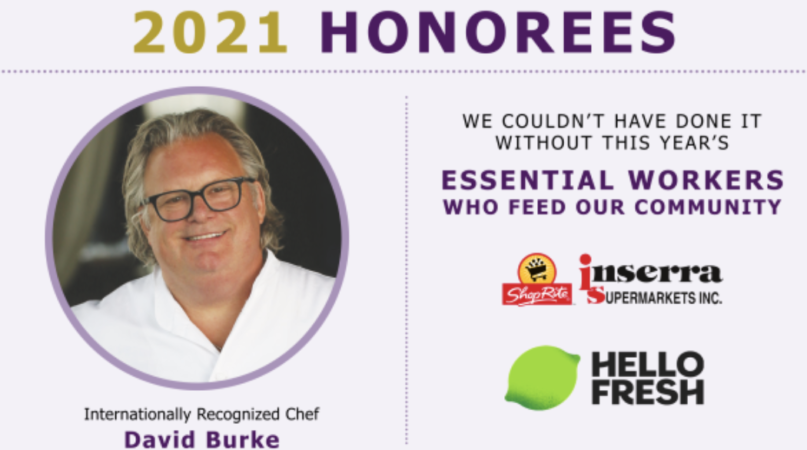
Hasbrouck Heights, NJ — New Jersey’s ‘Who’s Who’ can join Table to Table, New Jersey’s first and oldest food rescue program, at its 2021 Virtual Chefs Gala on Wednesday, September 22 at 6:30 p.m. Honorees include internationally acclaimed celebrity Chef David Burke, a trustee and supporter of Table to Table since its inception more than 20 years ago. Also honored will be the essential workers of the food industry of Inserra Supermarkets and HelloFresh, who are critical in feeding our community.

Presented by American Express, this exclusive, interactive experience features a delectable, 3-course meal curated by Chef David Burke and delivered to your door with special options for those out of the area. Plus, amazing travel, food and wine packages will be featured during the high-end auction hosted by Nicholas D. Lowry, who’s seen on Antiques Roadshow. Special support is being provided by American Airlines, Crestron, Inserra Supermarkets and Summit Associates. Purchase tickets here today!

“This year, our Gala honors the extraordinarily talented Chef David Burke for the more than 20 years of unwavering support that he so graciously has provided to Table to Table in helping us live out our mission to rescue fresh food and deliver it to organizations that feed our hungry neighbors,” said Ilene Isaacs, Table to Table’s Executive Director. “We also salute the food industry’s numerous essential workers from Inserra Supermarkets and HelloFresh who tirelessly masked up, stocked shelves, served customers and worked to feed our communities during the Pandemic.”

portrait of chef David Burke

2021 Chef Gala Honoree David Burke

Fueled by passion, grit and a knack for artful innovation, David Burke is one of the best known and most respected chefs in modern American cuisine. A leading pioneer in American cooking, Burke, a New Jersey native, is also recognized internationally for his revolutionary techniques, successful restaurant empire and his many TV appearances. Additionally, his altruism is as extensive as his professional accomplishments, especially as it relates to Table to Table, where for upwards of 20 years David has been a devoted trustee of the Northern NJ food rescue program. David has graciously and generously contributed his time, support and culinary expertise to increase the visibility of the organization and its mission. For this and so much more, Table to Table thanks you, Chef Burke!

2021 Chef Gala Honorees: Essential Workers of Inserra Supermarkets & HelloFresh

Dedicated, hard-working, essential workers in the food industry from Inserra ShopRites and HelloFresh took care of generously feeding New Jersey during the pandemic. When most were staying home, the teams at Inserra ShopRites and HelloFresh made sure that our community was fed. To all of those countless essential workers who went the extra mile, Table to Table salutes you! 

“During the height of the pandemic, which was especially devastating for people experiencing food insecurity, Table to Table provided 38 million meals in Northern New Jersey,” added Isaacs. “And, through the continued support and generosity of our sponsors and Chefs Gala attendees, we hope to feed even more of our neighbors,” Isaacs concluded.

To help Table to Table in their mission to eliminate food insecurity in Northern New Jersey, Donate Now! For more information on Table to Table, visit us at www.tabletotable.org.

About Table to Table

Table to Table, http://www.tabletotable.org, is a community-based, not-for-profit food rescue program that collects fresh and perishable food which would otherwise be wasted and delivers it to organizations that serve people experiencing hunger in Bergen, Hudson, Essex and Passaic counties in Northeastern NJ. With a fleet of refrigerated trucks, perishable food is picked up from commercial donors and delivered to more than 250 recipient organizations. Recipient partners include soup kitchens, homeless shelters, older adult programs, daycare centers, programs for survivors of domestic violence, after-school programs, and pantries serving the working poor. Food is delivered on the day of donation and is provided free of charge. Table to Table raises all its own funds every year, and last year delivered enough food for 38 million meals.   

Press Contact:

Maria Sinopoli, Director of Marketing

917-532-6148

msinopoli@tabletotable.org

Credit: https://www.tapinto.net/towns/west-essex/

Have a bit of a hero today we have to tell you about. It’s a nonprofit organization. Table to table. It’s the oldest food rescue in northern New Jersey. And it takes unused food that would otherwise be wasted. And it delivers it to more than 250 food pantries kitchens and shelters. With every dollar raised, food for ten healthy meals is delivered. It helps a lot of people. During the Pandemic last year, 39 million meals were given away. Now, Table to Table needs your help. Hurricane IDA destroyed its entire fleet of trucks. No trucks means no deliveries. If you would like to donate, log onto tabletotable.org and click on the orange donate tab on the top right of the screen. Table to Table, you are our hero of the day for giving back and helping to ease food insecurity. And if you’d like to nominate somebody for Good Day New York Hero of the Day, all you have to do is email us to gooddayhero@fox.com.

RIDGEWOOD, NJ – Bergen County’s volunteers can now help fight food insecurity and food waste, all with the help of an app. 

Table to Table, a food rescue program, takes food that would otherwise be discarded by restaurants and grocery stores and delivers them to those in need all over North Jersey. Usually, this process involves paid drivers that deliver roughly 5,000 pounds of food at a time, but now volunteers can help with the Table to Table I-Rescue app. 

“It involves volunteers in a way in which we’ve never engaged with before,” Julie Kinner, Director of Recipient Relations & Community Affairs of Table to Table said. “They connect with the donors – which is a gift, because then the donors see how thankful they are and how excited they are – and then they connect with the recipient agencies, and the volunteers really get thanked and they get to see that this food is going to good use.”

To help, volunteers download the app and answer questions regarding the area in which they live and the type of vehicle they have. They are also given the option to help with weekly pick-ups and drop-offs if there are any available, or if they would rather just make irregular rescues as they come up. Those who choose a weekly rescue can still request a sub through the app if they are not able to help one week. 

Table to Table I-Rescue is able to connect about 100 volunteers to roughly 35 recipient agencies, which has resulted in the redistribution of almost 10,000 pounds of food since the app’s launch at the end of April. Kinner says the organization is extremely happy with the app’s results, and they are on track to meet their goals. 

Table to Table has been delivering healthy, high-quality produce and meals to facilities for years by the truckload, but I-Rescue allows the smaller loads to be rescued as well. 

“They’re picking up food at the stores, from places like Whole Foods in Ridgewood or Sweetgreen in Hackensack, and they’re bringing it directly to places like Children’s Aid and Family Services.” 

As of right now, the app is only available for Bergen County rescues, but Kinner said they are looking to expand in the future.

“A lot of times these agencies aren’t used to receiving hot meals and things like that,” she said. “It’s a powerful gift.”

Credit: https://www.tapinto.net/

JON HURDLE, CONTRIBUTING WRITER

After record distributions in 2020, providers say economic damage will outlast pandemic

New Jersey’s providers of emergency food assistance gave out record amounts of food in 2020 as unemployment surged amid the pandemic, and they expect strong demand to continue this year even if the COVID-19 virus recedes as vaccines become more widely available.

The economic damage wrought by the pandemic is expected to persist long after infections drop because not everyone who lost their job will get rehired, and some businesses, especially in the restaurant and hospitality sector, will remain shut indefinitely.

That means the need for food assistance is likely to stay at its current high level or move even higher, executives from food-assistance groups say.

Hunger will outlast pandemic

“Even though the vaccine will ultimately be distributed and the pandemic itself will begin to subside, the economic effects of it are not going to subside,” said Ilene Isaacs, executive director of Table to Table, a nonprofit that distributes perishable goods to food pantries in Bergen, Essex, Hudson and Passaic counties. “Every projection is that the effects are going to be felt for a long time, and we’re gearing up for that.”

In 2020, Table to Table delivered enough food for 38 million meals — the highest number, it said, in its 21-year history. That was up from 26 million meals in 2019, and about a third higher than the goal for 2020 before the pandemic started. This year, the group is officially planning to provide enough food for 39 million meals, but Isaacs expects the total will be even higher.

Before the pandemic, there was a constant waiting list of about 60 agencies wanting food deliveries, and they will still be there even if everyone who got laid off during the pandemic miraculously gets their jobs back, she said.

“Even if it was a perfect world and everybody who lost their jobs got called back to work — which realistically we know is not going to happen — we would then go back to a situation where our waiting list continues to grow,” she said.

Jobless and hungry

New Jersey’s official jobless rate jumped to 10.2% in November, the latest month for which state data is available, according to the Department of Labor. That was 2.2 percentage points higher than in October, and about three times the pre-pandemic rate. By the end of November, the state had regained only 58% of the jobs lost since April, the department said. The jobless rate is watched by food-assistance groups as the best indicator of demand for food.

At Catholic Charities, which operates three food pantries, in Dover, Franklin and Paterson, demand rose by more than four times last year compared with pre-pandemic levels, said Chris Brancato, a spokesman for the group.

“There are more people out of work, and thus having a challenging time putting food on the table for their families,” Brancato said. “We have seen many people come to our doors for the first time, including small-business owners, people in hospitality, those in the restaurant business and from many other fields.”

He said demand surged from 5,000-7,000 people a month before the pandemic to a “staggering” high of 26,500 in November.

In Camden, Burlington, Gloucester and Salem counties, the Food Bank of South Jersey distributed 22.5 million pounds of food last year, up from 15 million pounds in 2019, said Marie Alonso, a spokeswoman. She said the number of people who are “food insecure” — those who don’t have consistent access to healthy food — surged as high as 60% of the region’s population last year. The food bank distributed more than 1 million children’s meals in 2020, more than double the number in 2019.

“COVID-19 introduced a dramatically altered South Jersey food-insecurity landscape, with thousands of additional households falling into poverty due to joblessness and economic hardship,” said Fred Wasiak, president of the Food Bank of South Jersey. He said more than 40% of the people who showed up for the bank’s food distributions in 2020 had never previously sought food assistance.

And in Monmouth and Ocean counties, whose economies have been especially hard-hit by the pandemic because of their dependence on the hospitality industry, demand has surged for food from Fulfill, a food bank that serves the two counties.

Demand for food jumped about 40% during the year, and the challenge was compounded by a surge in food costs of more than 400% because of supply constraints created by the pandemic, said Kim Guadagno, the group’s president. Her food bank is now serving about 215,000 people, up from 136,000 before the pandemic.

The cost of a truckload of food rose from $20,000 in February to about $65,000 in May, forcing Fulfill to rely heavily on the federal government plus an increase in individual donations in order to feed the increased number of people seeking food, she said.

The jobless rate in Monmouth County surged to 8.6% in November from 3.3% pre-pandemic, and in Ocean County it more than doubled to 9.2% from 4.0%. Both levels are expected to stay that way for at least the winter, sustaining the strong demand for food assistance, said Guadagno, the state’s former lieutenant governor.

“People don’t believe that Monmouth and Ocean counties have hungry people,” she said. “Now, not only do we have hungry people, we have hungry children, and that’s the part that should strike everybody.”

Shuttered schools can’t deliver free meals

The increase in childhood hunger has been worsened by the pandemic-driven closure of schools, which fed eligible students breakfast and lunch, Guadagno said. In response, Fulfill has given students backpacks of food to last them over a weekend; demand for those was 77% higher in December than it was a year earlier.

She predicted more restaurants will close over the winter, local unemployment will jump and that will result in an increased demand for food assistance. “I think the darkest days are still ahead of us,” she said.

At a weekly food pantry in Englewood supplied by Table to Table, director Dionisio Cucuta recalled a client who tearfully explained to him why she was driving her new Mercedes to pick up food that she could not afford to buy.

Cucuta said he greets everyone who comes to collect food, and he noticed that the woman had her head down while waiting in line in her car.

Mercedes Benz doesn’t deter hunger

“She said, ‘I’m feeling kind of horrible and embarrassed because everybody’s looking at me in this beautiful car, and I’m thinking that people want to know what I’m doing here lining up for food. The only reason I’m here is that my husband lost his business and went belly up, and lost everything, and we have three children in the house that we don’t have food for,’” Cucuta said.

He said he explained to her that he asks no questions because he figures that anyone who spends hours waiting in line for the food pantry — called Table to Table Tuesdays — to open is genuinely in need.

“Anyone who is going to sit there and wait for food really needs it,” he said.

Credit: https://www.njspotlightnews.org/

donated fresh meat and daitry in boxes
volunteers gathered around table to hand out free food

#92 Great.com Talks With… Table to Table

Confusion surrounding expiration, sell-by and use by dates is ubiquitous. Unease spurred by fear of moldy bread or curdled milk lead to billions of pounds of edible food thrown in landfills; 100 billion pounds is thrown away every year in the United States alone. In this episode we spoke with Julie Kinner from Table to Table about how unused food from grocery stores, distributors and restaurants is given life and going to people in need. 

“90% of what we pick up is perishable“

Soup kitchens and food pantries alike are supported by government aid in conjunction with individual sponsors. While standard food boxes furnish canned food and non-perishable items, fresh produce, milk and meat is largely lacking from the diets of many community members. Julia Kinner emphasizes how hunger is widespread and isn’t always necessarily visible.

Listen to the whole interview to find out how your day-to-day actions can combat food waste and hunger simultaneously in your local community. You can also read more about Table to Table’s beneficiaries or apply to volunteer. Funded without any government assistance and supported by volunteers, Table to Table is emblematic of an organisation designed by and for the community. 

Want to learn more about Table to Table? You can subscribe to their newsletter, checkout their news section, consider making a donation and follow them on Facebook, Instagram, LinkedIn and Twitter.

Credit: https://great.com/

Great.com Talks With… Table to Table

Table to Table Interview

Across American food supply chains, juxtaposed between farms and households, more than 40% of food for human consumption is wasted. Some organisations are stepping in to mitigate loss of this nearly 100 billion pounds of raw product.

Table to Table diverts outdated, bruised and unwanted food – otherwise destined for landfill – to food insecure New Jersians in four major counties of the state. 

Find out how you can reduce food waste in your local community and support efforts to feed residents of New Jersey struggling to put food on their table.

Listen here or find us on your favorite podcast app.

Credit: https://great.com/great-talks-with/a-reminder-that-food-is-not-garbage/

BY JESSICA R. ROBLES


Earlier this year, camera drones from national news outlets panned over thousands of automobiles in line for hours at emergency food distribution in Texas and California. Covid-19 had arrived, and its impact on Americans’ day-to-day lives was devastating. In a remarkably short time, a staggering number of Americans found themselves struggling to put food on the table.

Closer to home, The New York Times reported long lines at a food pantry in Summit in its April 30 article titled “Food Lines a Mile Long in the Nation’s Second-Wealthiest State.” Before the pandemic, according to the Times, Summit’s Grace Pantry has seen 100 families every Tuesday. Now, the number had risen to 515 families. In Atlantic County’s Egg Harbor, the prospect of 30 pounds of food attracted so many vehicles that there was road traffic for nearly a mile in three directions. In Park Ridge, reported The Star Ledger in June, vehicles filled the parking lot, then spilled out into the street at the TriBoro Food Pantry. Many patrons waited for over an hour even before volunteers arrived.

Whether from an affluent commuter town in Union County, an urban center or surrounded by some of the wealthiest zip codes in Bergen County, New Jerseyans are among the more than 51 million unemployed Americans needing food; many of them laid off due to the Coronavirus pandemic.

Despite being one of the wealthiest states in the country based on median income, New Jersey is projected to experience a disproportionate increase in food insecurity due to the pandemic. According to “Covid 19’s Impact on Food Insecurity in New Jersey,” a report published in September by the Community FoodBank of New Jersey, residents are projected to see a 56 percent increase in food insecurity, a rise that far outpaces similar projections for neighboring Pennsylvania, Delaware, and New York. More than 1.2 million New Jersey residents are expected to be food insecure in 2020, with 431,000 newly food insecure this year.

Fortunately, here in New Jersey, organizations like Table to Table are stepping up to help feed residents who may be jobless, have low incomes, or just be anxious and weary from the effects of Covid-19-and are experiencing food insecurity as a result. Table to Table is a nonprofit food rescue organization that has been around for 21 years. During this pandemic, the organization has seven refrigerated trucks on the road, picking up food that would have been wasted from grocery stores, catering facilities, food purveyors, and meal kit providers. Volunteers and staff deliver the food to agencies directly feeding the hungry through soup kitchens, shelters, daycare and senior centers, and other locations in Bergen, Hudson, Essex, and Passaic counties.

donated fresh meat and daitry in boxes
fresh vegetables and fruit

Julie Kinner is Table to Table’s recipient relations and community affairs director. She has been with Table to Table since the beginning, starting as a volunteer, then working part time, and finally
employed full-time for nearly a dozen years.


“The ‘community affairs’ part of my job allows me to talk about Table to Table to anyone who will listen. I speak at schools, Chamber of Commerce meetings, Rotary Clubs, etc. I love what we do, and I love telling everyone about it!” The “recipient relations” part of Kinner’s job allows her to work with many Table to Table partners that receive food in Northern New Jersey. From application to delivery, she’s with those partners every step of the way.

More than 1.2 million New Jersey residents are expected to be food insecure in 2020, with 431,000 newly food insecure this year.

SOURCE: “Covid 19’s Impact on Food Insecurity in New Jersey”,
Community Food Bank of New Jersey, 2020


“Knowing that the food I am helping to see get delivered is going to go into people’s homes and onto their dinner tables makes this very personal to me. A pastor thanked me a long time ago by saying, “We aren’t just feeding their stomachs, we are feeding their souls.’ That has stayed with me all these years.”

Covid-19 has created “a new normal” that, for many, is likely here to stay. Before the pandemic, Table to Table had 250 agencies that depended on the organization to help them provide food to the people who needed it the most. Due to social distancing practices and guidelines, this past spring the number of agencies was slashed to just over 70.

Kinner says, “Many of the agencies [were run] by seniors. Mostly volunteers. They were scared to come out. Heck, in the beginning everyone was afraid to come out. But the seniors especially.” The food-rescue organization intended to deliver 27 million meals in 2020. As of mid-October, Table to Table already delivered 30 million meals. In other words, Table to Table has had to do a whole lot more with a whole lot less.

“The beginning was a challenge. I would love to say we were prepared, but we were not. We rely on our incredible donors as our food source. And if you remember, the grocery store shelves were empty. They couldn’t give us what they didn’t have,” says Kinner.
“Thankfully, our food donors truly are amazing. They knew there was a growing need in the community and they really stepped up. Then the agencies closed. So many of our food pantry partners are run by senior citizens. They closed almost immediately. Families in the Newark Public Schools receive a large amount of food from us and, once the schools closed, that source of food for the school families was gone. It took a couple weeks, but we found more partners and more donors. Some of the volunteers from the schools were even able to open pantries out of their local churches and get the food to those school families and other members in the community.”

According to Kinner, Covid-19 changed their operations essentially overnight. “In mid March, [Executive Director] Ilene Isaacs closed Table to Table’s office [in Hasbrouck Heights]. There are eight of us there and overnight, like so many others, we shifted to working from home.” For the nonprofit’s drivers, however, it was a different story.

“They certainly could not work from home; they were essential. We were able to cut their days down from five to three, while still receiving a full week paycheck. Then we started stocking up on masks, gloves, hand sanitizer, wipes, anything we could find. When the grocery stores ran out of all those things, we put the word out on social media that we needed help.”

The Department of Health and Human Services in Jersey City supplied Table to Table with cases of antiseptic wipes and The WE Project, also in Jersey City, supplied masks, gloves, and hand sanitizer.


Credit: ediblejersey.com | HOLIDAY 2020/WINTER 2021