
back-to-top
x
close

With summer on the horizon, who doesn’t salivate at the thought of a juicy slice of watermelon, or that first, crunchy bite into an ear of fresh corn?  Yet unfortunately, many of our neighbors have no such frame of reference.  Some have never experienced the tastes and smells that for us are synonymous with warm weather and carefree days. And for others, the memory is so far in the past that it has faded.

Table to Table was founded with the belief that everyone, regardless of income level or living situation, deserves a fresh, nutritious meal at least once a day. To that end, since 1999 we have made sure that more and more of the people in need in our community receive food that not only satiates, but also contributes to overall good health. And over the last several years, in particular, promoting the joys and benefits of fresh produce has been a driving mission for our food rescue organization.

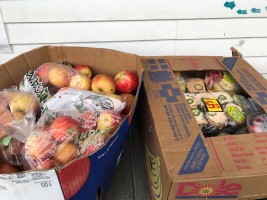
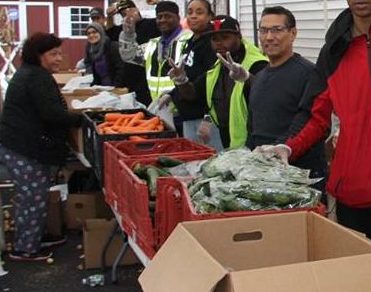
In the spring of 2014, with the support of the Healthcare Foundation of New Jersey, partnership with ICC’s Family Success Center and generous donations of exquisite fresh produce from HelloFresh, we began regularly sharing the bounty and benefit of fresh fruits and vegetables at a free, weekly mobile produce market in Newark’s Ironbound.  Now in our 4th year, the number of families we serve at the market from April through November continues to increase exponentially.  To ensure that the produce being distributed, especially if unfamiliar, finds a place at each family’s table, Inserra Supermarkets provides nutritionists who educate participants on the nutritional benefits of the items they receive, offering tastes, cooking suggestions and recipes.

The success of this pilot market has led to the opening of another location this season.   In partnership with Bessie Green Community and with the support of the Healthcare Foundation of New Jersey, the Washington Park section of Newark has something new to add to the rich culture and beautiful churches that define the area – a free market where different varieties of fresh fruits, vegetables and other healthy foods are made available to the most vulnerable area residents.

With our markets in full swing, we celebrate another sign of spring, one essential to our world of food rescue – our annual Dinners of Distinction.   Our Chefs Gala on May 9th and Gala d’Italia on May 23rd are delicious and enjoyable ways to ensure that our neighbors have access to the same vitamin rich and nutrient dense foods that we all need to live healthy lives.  The success of these events enables us to maintain and grow our service and markets throughout the communities we serve.

Spring has arrived and summer is in the air. Join us in making sure that everyone has the opportunity to share in the bounty of these long-awaited seasons.  Visit www.tabletotable.org to learn more.

By: Julie Kinner, Director of Recipient Relations & Community Affairs

We have four seasons here at Table to Table.  Summer, Fall, Winter and Events Season.  I can’t remember the last time I looked at a tulip without thinking about how we could use it in a centerpiece.  This is my 20th events season with Table to Table (including 2 years with Share Our Strength).  20 years of amazing honorees, pig centerpieces, incredibly generous restaurants, delicious food and wine, giving volunteers, beautiful auction items and tear jerking speeches from Claire.

So many wonderful memories from so many events.  Like when Anthony Bourdain read from his brand new book, Kitchen Confidential, about servers recycling the bread basket and all at once our guests pushed away the beautiful bread baskets donated by Balthazar.  Or when Sara Molton looked around at all of our incredible restaurants during the Food & Wine Spectacular hosted by Napa Valley Grille in the Garden State Plaza and said, “There’s some great food here in NJ.  I’m going to have to come over the bridge more often!”  When Lidia Bastianich was our honoree, the men could not get enough of her.  Every man in the room wanted their picture taken with her.  She was gracious and much loved and each person had a story to tell her while their pictures were being taken.   André Soltner loved listening to one of our supporters tell him that she ate at his restaurant, Lutèce, every night in the 70’s.  The dishwashers used to smuggle dinner out the back door for her and a friend.  The chef laughed and laughed. 

The best part of any event, is when the unexpected happens.  David Rosengarten once offered to join the winners of a dinner in Providence as an added bonus to the live auction.  Mr. Modell jumped to the podium one night, to auction off his own seats to a Yankee game.  Michael Chiarello donated wine from his own vineyard to an auction, our own David Burke added a dinner for 10 guests up on the roof of his restaurant and the Channel 7 Morning Crew auctioned off personal tours of ABC.   The Nieporents’ are always surprising us with a dinner at Nobu and Bâtard which go quickly on the auction block.  The most amazing unexpected auction item was the time Emeril Lagasse was our honoree.  As the live auction came to a close, he took the microphone and announced that he had something to offer.  He would come to the winner’s house to cook…then David Burke joined him…then Peter Kelly.  Before the night ended Chefs Lagasse, Burke and Kelly were cooking in the home of one of our lucky and generous supporters, and it was our biggest night ever!

So here we are again.  Event Season.  Restauranteur Charlie Palmer is our honoree at the Chefs Gala and Comedian Mike Marino will be joining us at the Gala d’Italia, our tasting event.  Invitations are being printed, volunteers are ready to stuff and stamp, auction items are being delivered to the office, swag bag items are being donated, chefs are sending in their recipes for the cookbook, centerpieces are being decided on and speeches are being written.  The buzz in the office will quickly be moving to Edgewood Country Club and Montammy Golf Club.  Twenty years is a long time, but I still look forward to this season and all the excitement that surrounds it, year after year.  It’s our Spring!

In 1996, The Bill Emerson Good Samaritan Food Donation Act was signed into law.

Why is the Good Samaritan Act important to us?  According to the EPA, approximately 38 million tons – or $218 billion worth of food – is wasted each year.  That’s up to 40% of produced food in the United States that goes to waste.  All of that waste and still over 41 million Americans struggle to put food on the table.  And of that 41 million, one million of our own New Jersey residents are hungry.   There is not one county in New Jersey where someone does not struggle with hunger.

The Good Samaritan Act encourages food donations that would otherwise be wasted by protecting all good faith donors from civil and criminal liability should the donation later cause unintentional harm to its recipient.  The law also gives uniform federal protection to donors who may cross state lines.   The law protects individuals, corporations, organizations, associations, wholesalers, retailers, restauranteurs, caterers, farmers, gleaners, nonprofit feed programs and more who act in good faith.  Basically, the law protects all our donors and it protects us.  That’s pretty important.

We take food safety very seriously.  It’s our job to take it seriously.  We only use refrigerated trucks to pick up donations.  Our drivers are ServSafe trained and they carry laser thermometers, testing random donations with the pull of a trigger.  The recipient agencies that we deliver to are inspected by their local Health Departments and have valid certificates. We ask that either a volunteer or a staff member at each agency complete and pass a food safety course.  Our donors receive a list of criteria to properly prepare food-safe donations, such as freezing meat before or on the expiration date and only donating packaged items in their original packaging.  Lastly, our donors are told that discarding food that does not meet our criteria is not a waste; they are actually protecting the at-risk hunger community that we help feed.

Table to Table delivered enough food for 19 million meals in 2017.  An astonishing number.  Numerous donors opened their refrigerators to us, knowing that we would deliver their excess food safely to soup kitchens, after school programs, senior centers, homeless shelters for men, women and families, veterans programs, food pantries, churches, HIV programs, group homes, rehabilitation programs, summer camps, re-entry services, housing groups and neighborhood resource centers.  With our safety measures and the Good Samaritan Act, donors will help us deliver 20 million meals this year.  Now that’s incredibly important!

BY: Dan Fiore, Photographer

“Expect nothing, appreciate everything”.  My mom must have said that a thousand times to me growing up and that saying has stuck with me every single day of my life.

Recently, I had the opportunity to spend the day with Emily and the Table to Table team to photograph their work in action. Traveling with this team was an enlightening journey and what I observed that day was one of many moments that put mom’s quote in perspective.

I left the house that morning thinking what a great day it was going to be because of 3 things; first, I was going to spend the day with my favorite charity, Table to Table.  Second, I was going to photograph all day (which is one of my favorite things to do as a photographer).  And lastly, I was going to have a volunteer day off from work!

As we picked up and delivered fresh food throughout the day, we traveled to places like New Hope Baptist Church and the Ironbound Community Corporation in Newark. As we unloaded the truck and spent a little time getting to know folks, I was able to see kindness, caring, faith, compassion, hope, smiles and gratitude; as a photographer, one frame at a time.

While my camera caught some of the most moving images I have ever photographed, I also saw first-hand the importance and impact that Table to Table makes every single day for so many people in need of fresh food.  From witnessing excitement and the sign of relief on the faces of those watching the truck come down the street, to seeing so many on what appeared to be an endless line (in sweltering heat) to receive this fresh food.  It’s their only chance for access to this type of food and it’s food worth waiting for.

I will never forget the day I spent with Table to Table and I’ll never forget what Mom said.  Like many of us, wise words come to light on occasions like these.

With the start of the new year, it’s pretty typical for many people to make a resolution to help get the year off to a great start.  Some make a commitment to do things like “work out more” or “make better financial decisions”.  Others make the pledge to “quit smoking”.  Or maybe do a few more good deeds for others.  Now wouldn’t that feel nice?

Last January, a survey was conducted to determine the most common resolution for the New Year.  Ever wonder?  It turned out to be the choice to eat healthier or lose weight.  For most of us, when it comes to fulfilling this commitment, we gear up and head straight to the food store where the healthy options are plentiful.  We choose fruits, vegetables, protein and whatever else we need to keep our hungry bellies satisfied in the coming weeks.  We commit to “stick to it” because it’s the choice we’ve made to do our body better and we know that when we eat good, we feel good.

But let’s put this one in perspective.  Our resolutions reflect a choice.  It’s a choice we can make, or break.  And while we do our best to become our better selves, there are many who simply can’t.  They don’t have the choice to decide if they are going to start the year off right by eating better because they don’t know when their next meal will be.  Or what it will be.  Being hungry means more than just missing a meal.  It can be debilitating.  It causes suffering, poor health and slows the progress in many other areas of development, like learning and productivity.  Table to Table’s mission to rescue fresh and nutritious meats, produce, and dairy products that would otherwise be wasted not only feeds, but also improves the health and development of hungry people of all ages.

More than 1 million people in New Jersey do not have enough to eat.  But for many of these people in our region, they can resolve to eat food that provides the vitamins and nutrients that will not only stave off hunger, but illness and diseases as well that worsen due to the lack of nutritious, fresh food.  Every day Table to Table rescues fresh, wholesome food that otherwise would have been discarded and delivers it to not-for-profit organizations that feed hungry people in Bergen, Passaic, Hudson, and Essex counties.  Deliveries are made to a wide range of organizations such as daycare centers, pantries, shelters, soup kitchens, programs for women and children who are victims of domestic violence, senior adult centers, substance abuse rehabilitation centers, and programs assisting the working poor. One shelter in Hoboken has told us that “there is no one that is served who wouldn’t choose a banana over a doughnut.”  A satiating choice that provides our body with the fuel it needs to do our best work.

Let’s start the new year off and resolve to do better.  Feel good knowing that you have that choice to make. And while making improvements in your own lifestyle, consider our most vulnerable neighbors and how when we work together we can make their new year a healthier one too!

By: Kimberly Bustamante

It’s 7:30 a.m. Wednesday and rush hour is in full force. We are smack in the middle of the chaos of bumper-to-bumper traffic as it winds its way along spaghetti strings of highways leading to the George Washington Bridge. We are in Fort Lee, NJ – a 3 square mile city that wraps around the New Jersey side of the bridge. The views of the NYC skyline are amazing, especially as the sun was rising.

With a population density of almost 14,000 people per square mile, Fort Lee is one of the densest places in the State. We are on our way to a Supermarket – one of the many businesses who donate perishable food to Table to Table.

Table to Table is a community-based food rescue program that collects perishable food from supermarkets, chain restaurants and food distributors, and then redistributes it the same day to over 100 non-profit organizations such as: food pantries, homeless shelters, agencies for victims of domestic violence, senior adult centers, soup kitchens, substance abuse and rehabilitation programs, medical day care facilities, and churches. The program currently operates in Bergen, Essex, Passaic and Hudson counties.

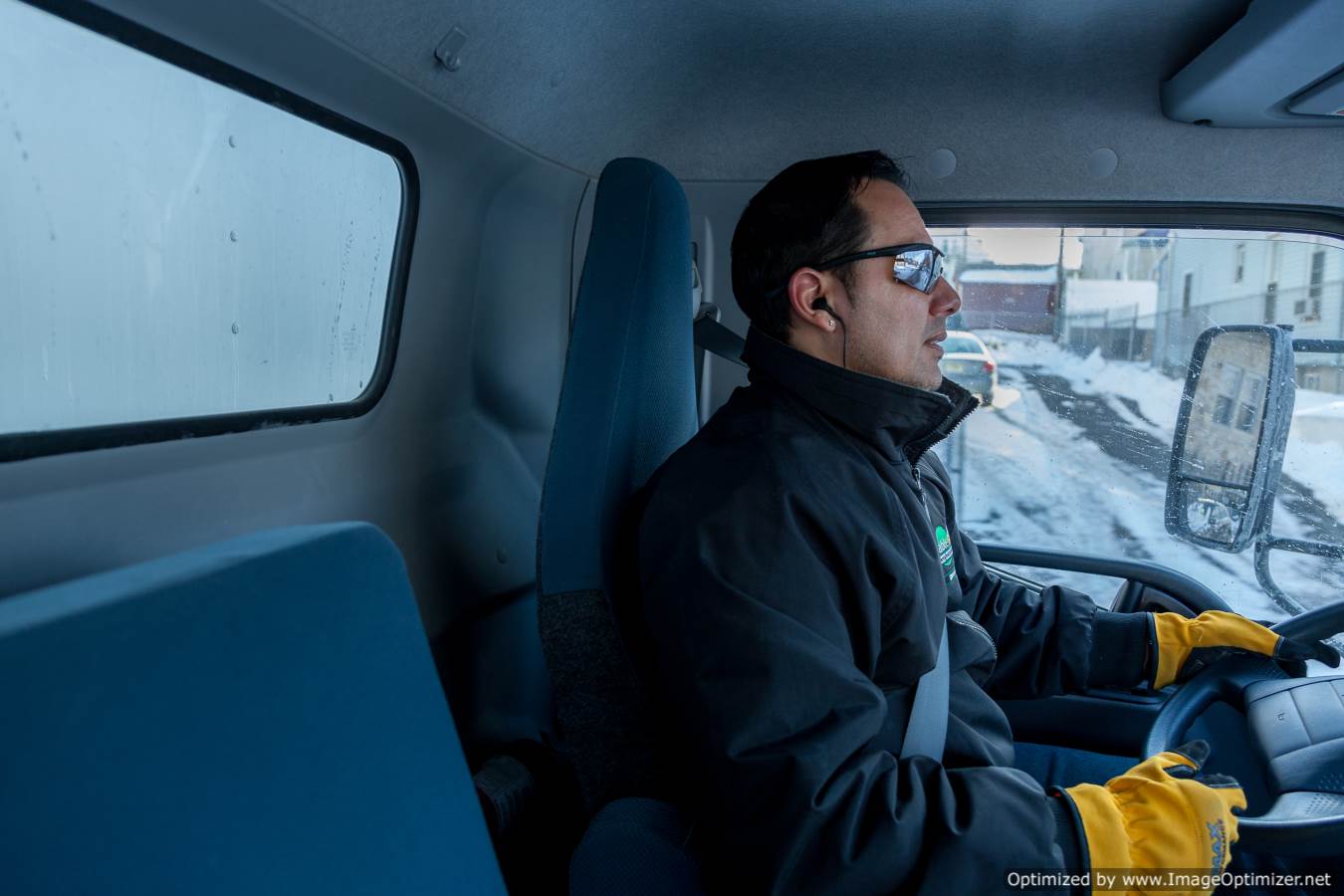
I was riding one of the Wednesday trucks with Carlos. Table to Table has a fleet of 6 refrigerated trucks which pick up and drop off perishable food six days a week. During my time with Carlos I learned a lot about the program. Up to 40% of food in the US goes uneaten and typically ends up thrown away. Much of that food is still good to consume. For example, supermarkets and food distributors pull food for a variety of reasons. Incorrect anticipation of consumer choices and demand may lead to overbuying. Manufacturing and distribution issues can result in food being unused and unconsumed. Even weather conditions can have an effect. All of these factors contribute to good, quality food being thrown away. It’s heartbreaking to see large dumpsters being filled with nutritious food that’s been pulled from shelves because, for example, the produce is blemished. Especially if you consider that rescuing just 15% of that edible, nutritious food would feed 25 million Americans each year.

Food pantries play their part but typically focus on boxed and dry goods and have limited capability for collecting and distributing perishable food. That’s where Table to Table comes in. Focusing exclusively on rescuing wholesome, perishable fruits, vegetables, meats, and dairy, they redistribute it the same day to needy people.

During my day with Carlos we ventured to a good dozen cities throughout several counties and I was really intrigued by the diversity of locations for both picking up and dropping off the food. Some were densely populated and traffic-suffocated cities like Fort Lee or poverty-stricken and substance-abuse laden neighborhoods like Passaic.

These were juxtaposed against the affluent, quiet, rural beauty of forests and reservoirs in northeastern NJ townships such as Ringwood and Wanaque, where the population density drops from Fort Lee’s 14,000 people per square mile to 1,400 people per square mile. There were pick up and drop off locations in each of these types of areas, reminding me that food insecurity haunts every community. Throughout the State, over 1 million residents is considered food insecure, meaning they lack consistent access to enough food to live healthy lives. More than 1/3 of these are children.

On our Wednesday schedule, most of the drop-off locations were churches who ran food pantries and one women’s shelter. Each driver has a set schedule each day so they get to really know the route, the donors at the pick-up locations and the coordinators at the recipient drop off locations. Everyone was very happy to see us and I was surprised at how generous the food donors were!

As an organization, Table to Table relies solely on fundraising and donations to raise the money needed to run the organization. They partner with a host of large corporations and work hard to gain the support of hundreds of local companies and generous individuals. They choose not to seek any government funding, which allows them the leeway to skip charging fees to the organizations receiving their food. This can be a significant cost savings to those non-profits, who can then reinvest that saved money into other services for their clients.

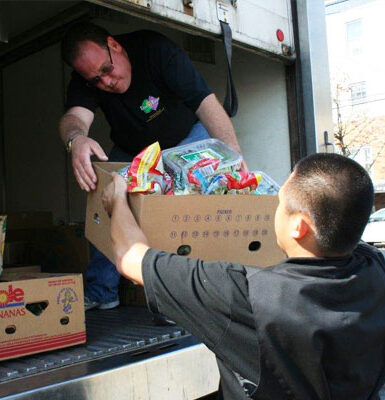
The day was filled with lifting and moving boxes of food onto and off the refrigerated truck while spending time catching up with the donor and recipient representatives. I’m not sure how helpful I was with the manual labor but Carlos was a friendly and gracious guide and answered my never-ending questions.  As I think back upon my day, I am touched by both the number and variety of donor organizations and the purpose-driven generosity of the receiving organizations who are focused on helping support the food insecure. It’s wonderful to see such community-based action.

It finally feels like fall here in Northern New Jersey and the time of year that we traditionally set aside for expressing thanks is right around the corner.  While, of course, we feel fortunate each and every day for the good fortune that comes our way, this is the time when we bundle it all up and express our sincerest gratitude.

In a world of change, there are those who support and inspire us to take on the challenges that face our communities.  It requires the compassion and commitment of many to rescue and deliver enough food in one year to provide 18 million meals to feed our hungry neighbors.  Sponsors, donors, volunteers, our staff and drivers make the day-to-day operations possible. But to remain responsive to the needs of people whose struggles continue to grow requires a greater vision and responsiveness on the institutional level.

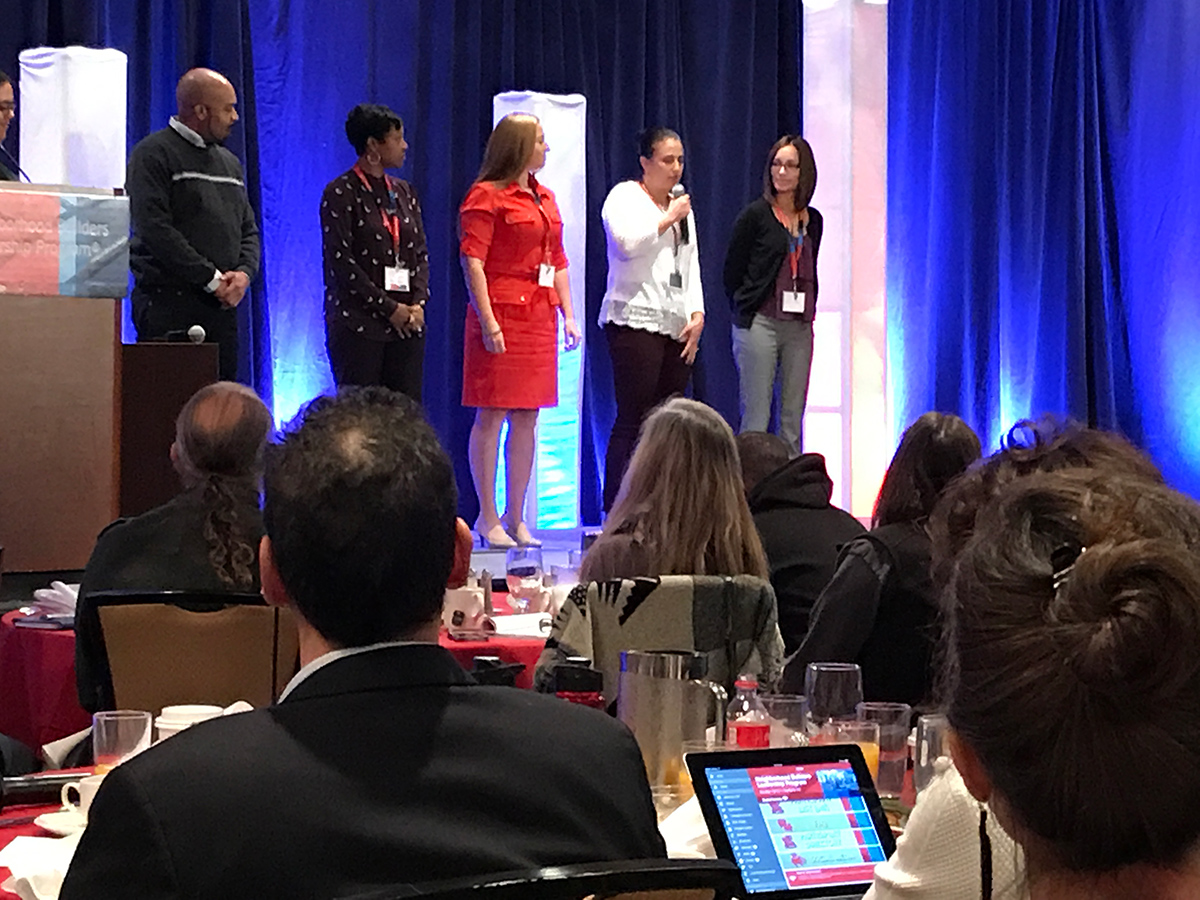
In an earlier blog, we gratefully announced that Bank of America had awarded Table to Table a significant monetary grant and entrance into their Neighborhood Builders program.   As you might know, Neighborhood Builders is the nation’s most substantial philanthropic investment in nonprofit leadership development.   Out of 700+ applicants, just 62 organizations are chosen each year and we are honored to be one of them.  As our organization enters its next stage of development, this opportunity couldn’t have come at a better time.

We announced receiving the award in January and talked about the first session of the program in March which focused on organizational foundations that include leadership, sustainability and the ability to tell our story.   As we wrapped up our third and final session just this month, we focused on overcoming obstacles in fundraising, the value of peer coaching and setting up positive outcomes by learning approaches that impact funding, relationships, and leadership.

One of the standout themes in these sessions was leading in challenging political times and how nonprofits are working toward solving social problems at the community level.  The big question being; what are the changes in approach to building an inclusive economy?  Nonprofit leaders are going to be defining big ideas, innovations in fundraising, and entrepreneurship as ways to change the story and change the world – or at least our corner of it.  Capturing and developing compelling stories of the communities, families, and neighbors we serve is a dramatic narrative that we can share to create a greater understanding of how an inclusive economy helps us all. The sessions were intense and packed with information that will prepare us for the challenges ahead in our ever changing world.

Neighborhood Builders speaks to the commitment of Bank of America to have a long-term impact on communities by developing organizational readiness.  It also speaks to the importance of our work, bringing healthy, nutritious food that would otherwise go to waste to the people who need it most, here in Hudson, Bergen, Essex, and Passaic counties.

Thank you to everyone who supports our mission and who understands the joy and hope that they help us bring with each delivery.  From donors like Bank of America to the elementary school child who empties her piggy bank into one of our Bag a Lunch bags, we thank you for the decision you have made to share your abundance – and your hearts – right here in this community.   Although the calendar reflects that it’s that time of year to give thanks, we are indebted to all of you every single day our trucks make a delivery that nourishes the young children, single moms, veterans, and senior adults who are waiting to share in their bounty.

Roughly one in seven people in New Jersey does not have enough food to eat. One in seven! For a company that focuses on bringing foods from around the world to tables across the U.S., this is unacceptable. We recognize that it takes many hands working together to address this issue, here in our home state and across the country. The work that Table to Table does to get fresh, nutritious food to those most in need is vital and we are proud to partner with them.

Fresh and prepared food that isn’t used at restaurants and grocery stores would go to waste if Table to Table didn’t rescue and deliver it to organizations that feed people throughout our region every day. Our business focuses on those familiar products that live in the grocery aisle and in your pantries, so a direct product donation doesn’t fit with their food rescue model, but that didn’t stop us from getting involved.

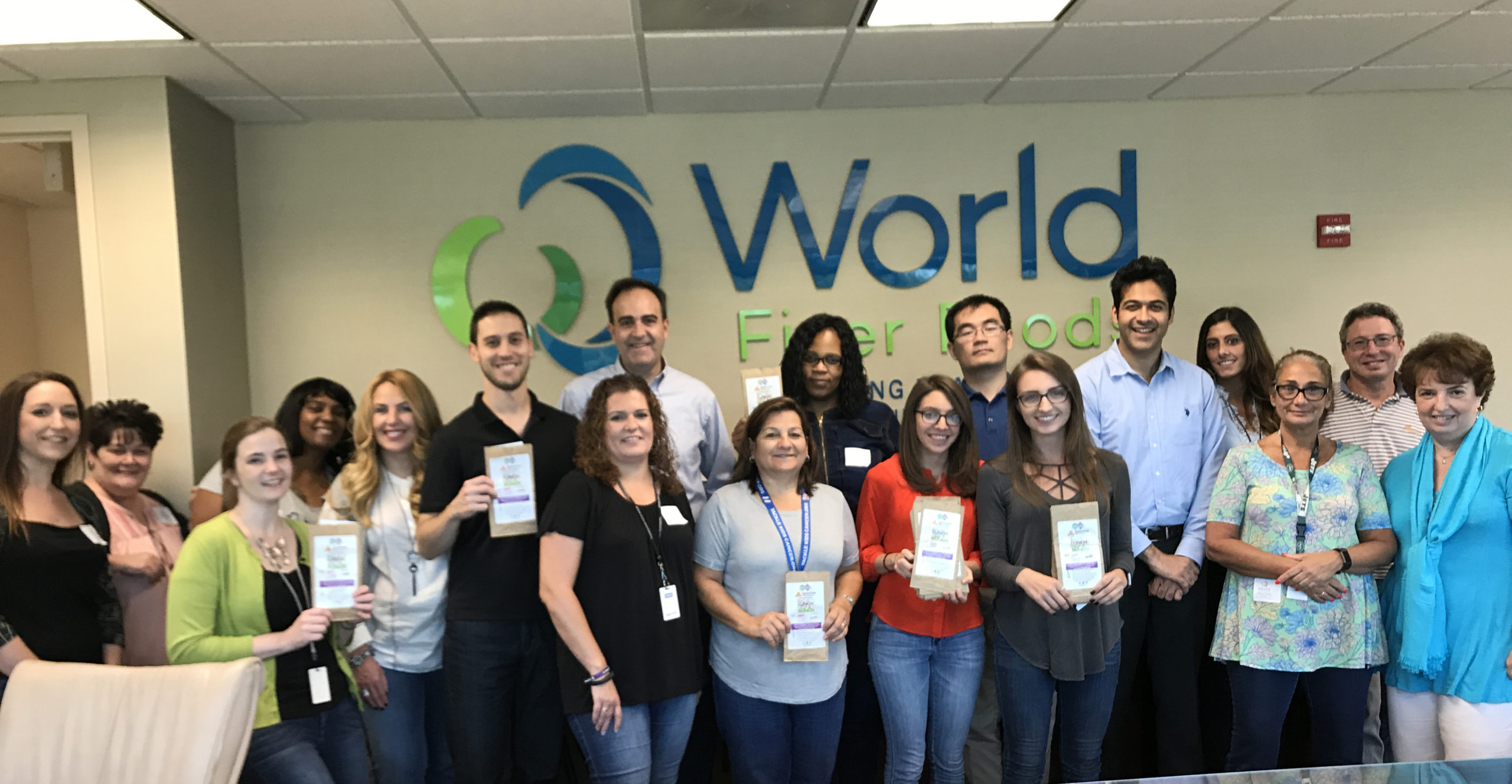
Among the ways that we partner with Table to Table is through creating World Finer Foods’ “Casual for a Cause” dress-down days. This allows our employees to make a $10 donation to the organization and wear jeans to work. It’s an easy way for employees to contribute, especially if they forgot to pick up the dry cleaning or don’t feel like ironing that day (and really, who ever does?).

In a world where casual dress has become more accepted, but professionalism is still key in the business realm, this program is a perfect fit to do good and be comfortable doing so.  It also is an easy way to build community within our workplace as it’s a visible reminder that we’re working together to feed those in need. The funds go directly to supporting food rescue and hunger relief efforts–and it’s a program that so many employers in our region could easily implement. Our “Casual for a Cause” days contributed over 7,000 meals in the first four-months of our participation in the program.

How else does your favorite pair of jeans result in feeding our community? Only through the work of Table to Table. We’re proud to work with them and hope you’ll do the same.

Who doesn’t feel better after helping someone out?  Whether it’s a neighbor, a family member, or a complete stranger, the act of helping satisfies longstanding social and survival instincts. Carrying over those desires to serve others into the workspace benefits not only the individual, but also the company, and the community.

The reasons are obvious; it’s good for business, donations are tax-deductible, and it can work as a marketing initiative, but there are greater paybacks to consider when you add giving to your business model.

One of the most significant benefits to becoming a sponsor, supporter, or volunteer is the culture it can create within your organization. Giving back as part of your corporate culture can set the tone for your business as community-based, regardless of size, to prospective and current employees. As an employee, there is a greater sense that co-workers, managers, and owners are connected and will be there to support one another through the bonding created during philanthropic projects, thus, resulting in a more significant investment in their job.

While it may feel difficult to get started, some simple steps will contribute to creating an environment of giving. The first step is WHY. The decision to add charitable giving must start at the top if it is to succeed down the ladder. The purposes to give back are numerous.  It can be as simple as identifying with a cause due to personal experience such as a family illness or supporting the neighborhood you came from, to something that feels unimaginable in this day and age, like hunger.

As soon as WHY is determined, the second step is to determine HOW to give back.  Some ideas are:

  • Create a product/service where a portion of profit benefits a charitable organization. Both employees and customers can feel good about this one.
  • Donate a portion of proceeds of an existing product/service.
  • Select a time frame – monthly, quarterly, annually – for donations. Run promotions during those times for employees/customers.
  • Leverage relationships. Once you’ve identified to the organization(s) you’d like to support, reach out to those you know professionally (and personally) who you think would believe in the cause as well. Garner their involvement.
  • Leverage regular communication channels. If your organization has a newsletter, social media, or a blog, use those arenas to promote your charity of choice and help them build community awareness.
  • Participate in events. All nonprofits organize fundraising events and all events are multifaceted. Talk to the charity and find out what areas your employees can support.

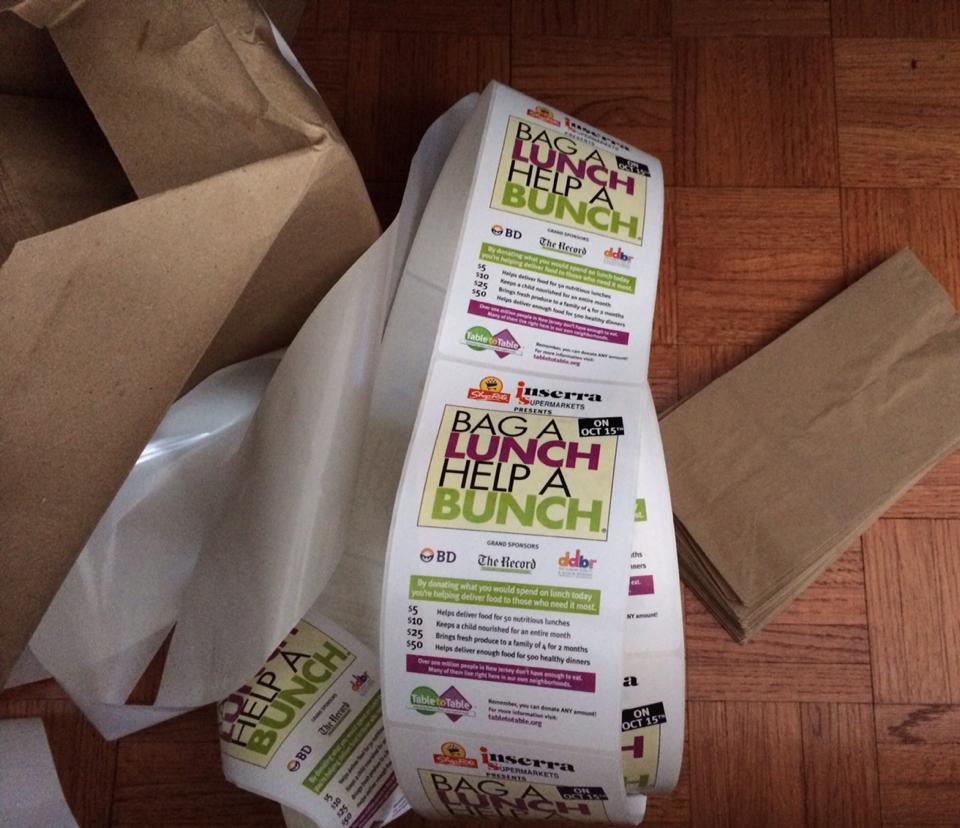
Like all nonprofit organizations, Table to Table holds many fundraising events throughout the year with varying levels of involvement.  Some are ticket purchases to our golf outing or food and wine events; some are ad buys for our cookbook.  We always have envelopes to stuff and room for volunteers at our Mobile Market in Newark.  But our ever-growing favorite is Bag a Lunch, Help a Bunch®.  It is the greatest opportunity for companies and schools to fight hunger in a measurable and meaningful way.

The Bag a Lunch, Help a Bunch® program is a grassroots initiative that asks students in schools and employees in businesses to donate the equivalent of one day’s lunch money to help Table to Table fight hunger in our communities.  It provides a simple, fun, ready-to-go program that results in a huge impact. 

What kind of impact?  Here are just a few examples: 

$5 helps deliver more than
50 nutritious lunches

$10 keeps a child nourished
for an entire month

$25 brings fresh produce to a
family of 4 for 2 months

Bag a Lunch, Help a Bunch® easily fits into the HOW question.  Want to involve employees in some or every part of the process?   As a company or school, everyone can participate in this fundraiser, from engaging employees by assembling materials prior to running the program, to organizing teams in an effort to compete for the most money raised.  Table to Table even supports outstanding achievement for teams!

Wondering about the WHY?  Here it is….

  • Because 1 in 4 NJ residents don’t have the resources necessary to provide food and housing
  • 1 in 5 kids don’t know where their next meal is coming from
  • Over 500,000 people living in the four counties we serve are food insecure

No matter how old, we are affected by hunger; babies don’t have the nutrition to develop fully, students don’t learn, adults aren’t productive, and the elderly can’t stay healthy.   Just $1 can help Table to Table get more than 10 nutritious meals into those communities that need it most.

We are here with answers to any questions you have about adding charitable giving into your business or school.   Want to participate in the Bag a Lunch, Help a Bunch® program on October 18th?  Contact Emily Force by 9/22/17 at eforce@tabletotable.org or 201.951.9798.  Giving back through Table to Table has never been easier! 

As we put a wrap on July, we realize summer will be coming to its inevitable end.  Not just because it’s hot here in Northern NJ, it’s more because Back to School sales are popping up everywhere!  Now is the time that we see the outdoor furniture section become entirely converted to a large display of notebooks, pens, backpacks and folders.  And then we realize there is a new crop of freshman getting ready to head off to college.   A new world awaits them – new ways of learning, new social interactions and, potentially, food insecurity.

The rate of food insecure students is currently growing among college campuses.  The classic cliché of surviving on ramen noodles (referenced in nearly every piece of research for this piece) is a reality for 22% of college students who have spent a portion of their past 30 days hungry.

32% percent of those students impacted said the issue affected them academically in the following ways:

  • Lack of focus, concentration, energy
  • Emotional distress
  • Academic struggles
    • Missed classes
    • Lower test scores
    • Poor grades
    • Dropped out

The fact is, the demographic of college students has changed; many are working, they are older, (the average age is 24 at Bergen Community College), some are retraining and some are struggling, post-recession middle-class parents.  “Folks are overtaxing themselves to be able to come to college.  Part of it is just the burden of the college education and the cost of living is a lot,” said Kerri Willson, who runs the Rutgers Student Food Pantry. “And then I also think what we have in our mind as the stereotypical image of who a college student is, is not a reality anymore.”  College tuitions have risen, yet financial aid has not matched the pace.  Students are not eligible for the Supplemental Nutrition Assistance Program (SNAP) benefits unless they work at least 20 hours per week or participate in a work-study program.

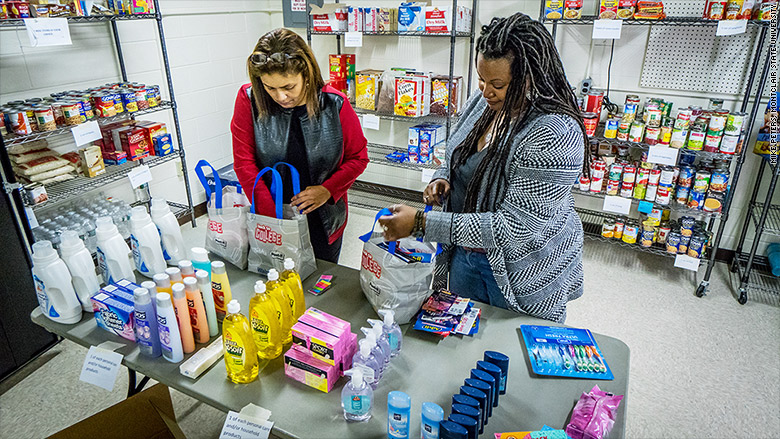
Through some recent studies*, six New Jersey colleges and universities have responded with on campus food pantries and 398+ nationally have opened to date. Montclair State University, Rutgers University, Bergen Community College, Rowan University, Stockton State University, and Caldwell University all have food assistance programs.  Stockton State has a food voucher program; all programs are set up to be discreet recognizing that shame and stigma keep many from asking for help. The College of New Jersey is also exploring ways to aid food insecure students and staff (often eligible and welcome at campus pantries).  Many food insecure students also face housing insecurity, so some of the pantries include personal care items, coats, and clothing as well.   On a single day in December, 33 students visited the food pantry at Montclair State, taking bread, cereal, milk, spaghetti, canned vegetables, and personal items like shampoo and soap.

Along with opening food pantries, campus food recovery programs can aid students by collecting some of the estimated 169,000 pounds of food wasted annually.  While still not a priority focus of these programs, Table to Table has made inroads, working with the Food Recovery Network and The Campus Kitchen at St. Peter’s College in Jersey City to not only provide fresh, nutritious meals to the community, but also to the campus. Food rescue remains the clearest, most cost-effective approach to helping resolve food insecurity and food waste.

*October 2016 by Wisconsin HOPE Lab

Image:  Fatima deCarvalho (left) and Sonja Tilman help run Montclair State’s food pantry. Photo by CNN Money.