As a food rescue organization, we are continually made aware of the challenges people living in underserved communities face each day. And good nutrition ranks high on the list. Aside from having limited access to fresh and healthy food choices, the neglected areas in which they live tend to lack educational resources related to nutrition.
According to a study from the Food and Nutrition Service of the U.S. Department of Agriculture, strong and well-planned programs centering around nutrition education have proven to be substantially beneficial when food choices are made. The research shows that nutrition and health education prompted increased consumption of healthy foods, including fruits, vegetables and dairy products, among low-income elementary school students and seniors.
While our mission here at Table to Table is to rescue and redistribute healthy food to our neighbors in need, we are always aware of opportunities to enhance the educational component of our program. For example, Inserra Supermarkets generously send a dietary team to our fresh produce markets in Newark, where they provide valuable information to those who receive the vitamin rich foods we deliver. Tasting an unfamiliar vegetable and learning the many ways it can be prepared makes it fun and delicious to incorporate new things into the family diet.
Nutrition education and access to healthy food truly DO work hand in hand, encouraging folks to make better choices while leveling the playing field and increasing their shot at good health.
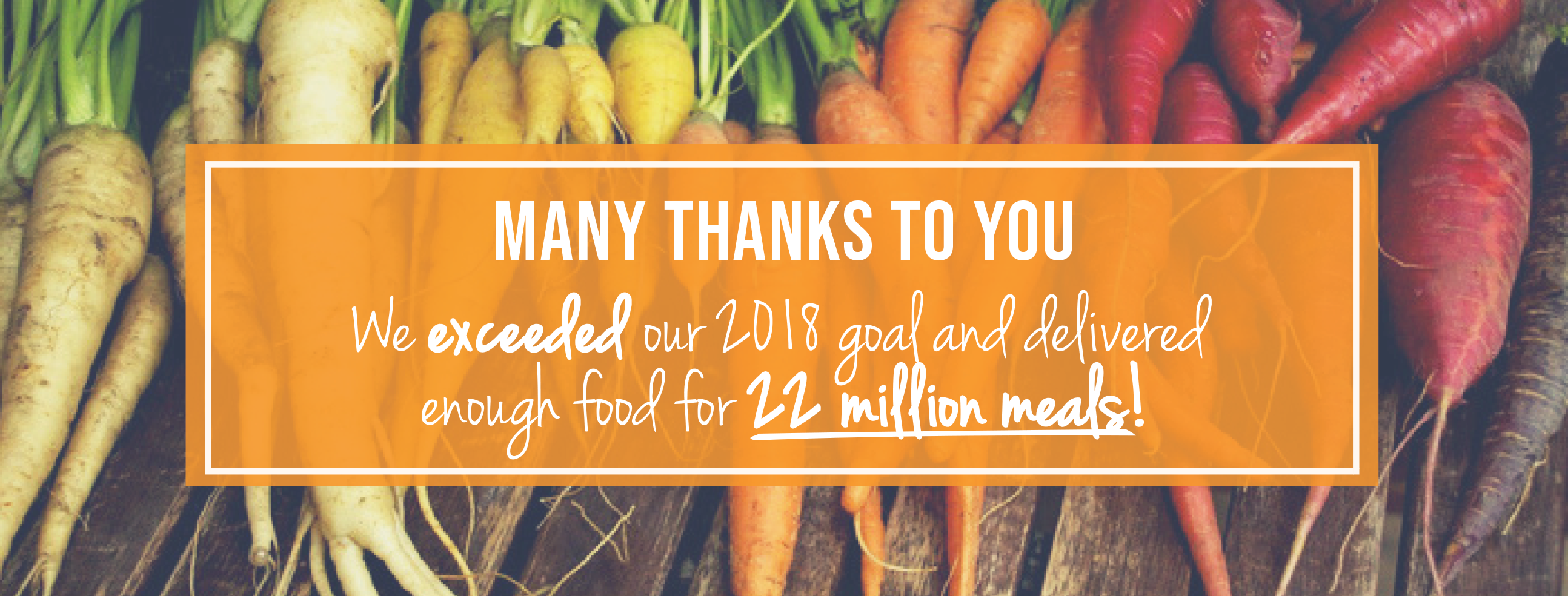
Last year, our modest fleet of refrigerated trucks rescued and redistributed enough fresh food for 22 million meals. In other words, over 14 million pounds of food that would have ended up in a landfill. That’s a lot of food saved to feed families, seniors, teens and veterans of Essex, Passaic, Bergen and Hudson counties.
So how did it get to them? Through partnerships with 165 agencies who provide countless programs to aid those in need: 99 food pantries, 27 soup kitchens, 26 Newark schools, 20 neighborhood resource centers, 19 after school programs, 16 senior programs, 11 housing groups, 7 group homes…the list goes on and on.
Here are just a few programs that describe how this much needed food is shared.
In Paterson, we deliver to Good Shepherd Mission, a faith-based drug and alcohol rehabilitation program that also acts as a homeless shelter. They offer two meals a day to the residents in the program and to the homeless. A hearty breakfast and a hot dinner are so much more than just food. These meals teach the men that they are safe and cared for at the Mission, allowing them to recover from their addictions, and move on with their lives in a positive manner.
In Newark, we deliver to four, “hub schools”: Central High School, George Washington Carver Bruce Street Elementary, Mount Vernon Elementary and Malcolm X Shabazz High School. Each Friday we deliver 4-8 pallets of fresh produce to each school. The student and teacher volunteers then divide up the food for other Newark schools as well as keeping some for the families in their own school. Who best to know which family has a need than the children’s teachers? The schools have found this food to be more than a meal. These donations bring families back into their schools and in turn they are becoming more involved with their student’s education. “The food pantry has had a positive impact on the community by providing healthy food choices for families. This initiative has actually bought families into the school and then engages them on additional opportunities on how to improve student progress.” – Mr. Naseed Gifted, Vice Principal, Central High School. Caregivers involved with their children…we couldn’t ask for anything more wonderful.
In Englewood, Dion, a volunteer football coach, helps to run a feeding program out of Calvary CDC, a small church with an incredible heart. Each week Dion, a Vietnam Veteran, works with volunteers, many of whom are young students, to create meals for seniors and shut-ins, in the Englewood area. Each of his volunteers are trained in food safety and many are from the cooking program at Bergen Community College. They deliver about 250 meals after preparing the food all day in the kitchen. Dion has big plans for the program. He wants to start a before and after care program for the kids in Englewood and wants to be able to provide hot meals to them each night. When he is ready, we will be too. We will bring more produce, meat and perishables allowing him to serve more of the neighborhood that he loves and cares for.
By the time this blog is published, that 165 agency number may change. Each day we receive calls from agencies that are losing their lease or are not able to raise enough money to stay open. These places are run by volunteers who are committed to neighborhood and their neighbors. They will help a senior walk home with their bag of food or take in a sick child so the single parent can go to work. Some even pay for coats and other necessities out of their own pockets when one of their neighbors are in need. Any time an organization closes, our hearts break for the neighborhood and for those volunteers, yet we know there are others on the waiting list ready to take their place.
On February 1st, we will be working with UCC Newark to open our 3rd Mobile Market at West Side High School in Newark. We are thrilled to have this incredible opportunity to bring food to another school in a neighborhood that has such a great need. Then, in April, we are beyond excited to be expanding our presence in Paterson and opening our 4th Mobile Market. In partnership with the Paterson Task Force and with financial support of Impact 100 Garden State, the market will open every Tuesday from April to November on the Hilltop Haven property.
22 million meals. A lot of food. The goal for 2019 is 23 million. As the goal grows, so does the need. Each day another agency calls desperate for the ability to feed their neighbors. You can hear it in their voice. They want to help, they want to make a difference. Deacon Bullock at UDT in Newark once told me, “we aren’t just feeding the stomach, we are feeding the soul.” We couldn’t agree more.
Each year, during a 24-hour period in the last 10 days of January, homeless advocates throughout the US count the homeless population in their state. This initiative, the Point-in-Time (PIT) Count, provides valuable data for agencies and non-profits who offer services to people who are homeless. The PIT Count not only produces an annual count of homeless individuals in our country but also provides data reflecting the causes of homelessness, its composition, and its corresponding health-related issues (such as physical & mental disabilities and substance abuse).
On Wednesday, January 23, 2019, New Jersey will conduct its annual PIT Count throughout the state’s 12 counties. During that one night, volunteers from agencies serving the homeless will tally the number of individuals in shelters and those in un-sheltered locations. According to the 2018 PIT Count, 9,303 homeless individuals were counted statewide, an increase of 9% from the prior year. Essex County had the highest homeless count in the state (24%) followed by the second highest of 9% in Hudson County. These are two of the four counties served by Table to Table.
How do the results from this annual report help us to better address the needs of the homeless population in our 4 counties? In general, people who are homeless face many nutritional challenges and information from the PIT Count helps us to more fully understand these issues. A significant portion of the fresh food we provide is delivered to the city of Newark in Essex County where, as mentioned, the homeless population is disproportionately large. To meet the needs of these individuals, we have modified the type of food we deliver. Taking into consideration their lack of kitchen and storage facilities, we provide nutritious, fresh options that are ready-to-eat and packed with vitamins and minerals to offset their unavoidably erratic eating habits. We have begun to see progress in the ways that many who are homeless now choose and use fresh produce.
The ability to communicate with people who are homeless is frequently limited due to the prevalence of mental disabilities and varying literacy levels, preventing us from providing the educational component present in our other markets. Rather than offering recipes and food preparation instruction at the Bessie Green Market, a project funded by Healthcare Foundation of NJ that targets homeless people in Newark, nutritional guidance is geared toward making healthier and more nutritious choices from the food available to them. Despite some limitations, the enthusiasm we witness for the weekly fresh food we provide is evident. After biting into a fresh carrot from the market a recipient was heard to comment, “Now I remember what a carrot tastes like!” Although we know Table to Table can’t completely eradicate hunger and homelessness in the counties we serve, we feel we’re making a dent in the problem, and through the delivery of fresh nutritious food, we are filling a niche that is often lacking for those who need it most.
As the end of the year approaches, we feel gratitude for our own good fortune and are moved to try to make a difference in the lives of those less fortunate than ourselves. American generosity dramatically increases in the time period from Thanksgiving to New Year’s. Yet it’s important to note that “giving back” is not restricted to the holiday season, and is something much appreciated and relied upon by every not-for-profit organization all year long.
We are fortunate to have supporters who help the people in need in our communities in extremely creative ways. Whether it’s through a weekly charity night at Biddy O’Malley’s Irish Gastropub, when a portion of an evening’s proceeds is contributed to Table to Table, or a Thanksgiving lunch provided by Sharp to their employees in exchange for a donation to Table to Table, awareness to the problem of local hunger is raised along with much-needed funding.
Examples abound from corporate, business, and school partners, a few of which are highlighted below:
Movado holds a “Treat Day” at one of their corporate locations where desserts are provided for employees during an afternoon break. Instead of a purchase, employees are asked to make a donation.
“Casual for a Cause” dress-down day is held by World Finer Foods where employees make a donation and receive vouchers allowing them to wear jeans to work for a day.
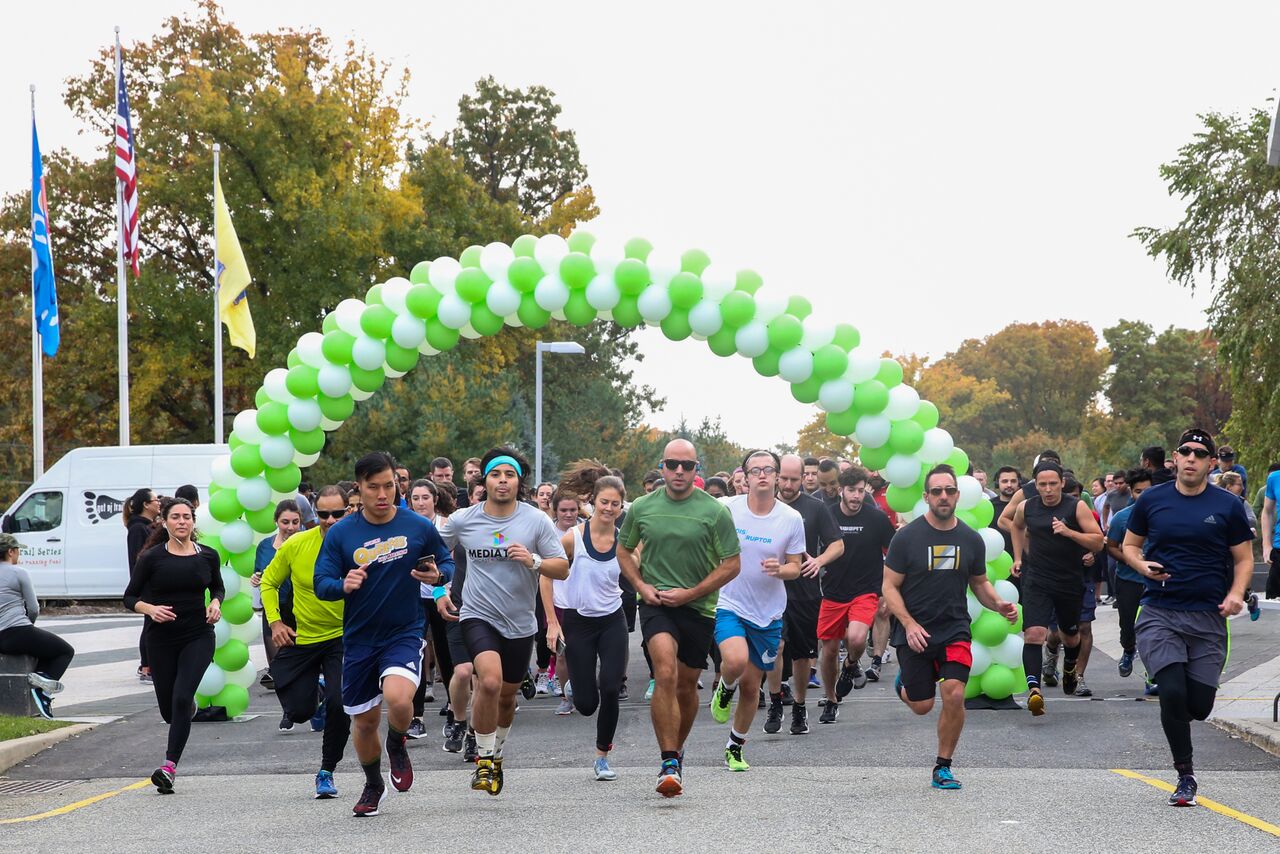
CNBC has a 5K race to raise awareness to the problem of food insecurity in our communities. For each employee participating in the race, CNBC makes a donation to our organization.
Five teachers at Our Lady of Mt. Carmel School in Tenafly motivated students to participate in Bag-a-Lunch Help-a-Lunch by challenging them with a fundraising goal; if reached, these teachers would sleep in tents in the school parking lot for a night. Not only did the school far surpass their goal, but the students also learned about food insecurity in their communities.
Helping others can be fun, a morale boost and, those who give typically receive back more than their financial investment. Are you or your workplace looking to support a cause or share a particular skill? Reach out! It will be most welcomed, not only during holiday time but anytime during the year. There’s not a non-profit organization around that can survive without its supporters. We know this at Table to Table and are greatly appreciative of the efforts of so many who help us all year long.
Happy Holidays!
Here at Table to Table, we’re accustomed to last minute windfall food donations – so no one even flinched when 13,000 pounds of butternut squash was offered to us by one of our donor produce distributors. Our staff and drivers jumped into action to accommodate this wonderful bounty, and plans went into motion to distribute the product to the recipient agencies we serve in Bergen, Essex, Hudson and Passaic counties.
Let’s start from the beginning with some facts about the now ubiquitous butternut squash. Requiring a long growing season, seeds are planted in late spring and mature squash are harvested in the fall. Its thick, tough outer skin and firm flesh contributes to its long storage of several months. Butternut squash is grown in almost every state in the US, with Michigan, New York and California growing the most. Nutritionally, it is a good source of fiber, and vitamin A, and has more potassium than a banana (which helps maintain a healthy blood pressure). The butternut’s versatility and many uses has resulted in its jump in popularity in recent years.
From the farm, the crop ends up being sold in a variety of ways – its path to Table to Table most likely takes it through a wholesale market, in this case, Hunts Point Market in the Bronx, NY, where it is bought by our donor. Having sold all they were able to sell to their customers, and not wanting to store the remainder in their warehouse, the produce distributor donates the remaining squash to Table to Table to be used locally by our neighbors in need.
Once we get the call our first step is to determine which of our 168 recipient agencies can use whole, raw butternut squash. From past experience, our staff is able to single out those agencies who can distribute the product to families and to facilities where food preparation is offered (agencies providing food for people who are homeless or who those without access to a kitchen, would not be candidates for this donation).
Shortly after this recent butternut squash donation, we reached out to a few recipient agencies to ask how it was used by their constituents. Hunger Free Bayonne distributes fresh produce weekly, and heard quite a bit of feedback from those who received the squash. The most popular methods of preparation keep it simple – toss cubed squash with olive oil, herbs, and salt and pepper, and roast in the oven until browned and cooked through, or make into soup either as a creamy, pureed one, or a hearty, chunky one by adding assorted vegetables.
Another recipient agency we serve is Bright Side Manor, a non-profit assisted living senior housing facility in Teaneck. Hugo Medrano, Director of Food Service, prepares the squash in a number of ways, the most popular roasted with olive oil, garlic, salt and pepper, or baked with brown sugar, cinnamon and butter. And at the yearly fall Harvest Fest at our Mobile Market in the Ironbound section of Newark, we can always count on an innovative usage for the butternut squash.
Aside from the variety it adds to the diets of the people who receive our food, there is quite a bit of fun and challenge involved for the Table to Table staff when unexpected donations are received. Not only is it rewarding to be able to rescue perfectly good food from going to waste, but we welcome the opportunity to be able to provide this abundance to the families, children and seniors in our area that can use it the most. We never know when the next unscheduled donation call will come our way. Whether it’s cooked hams or frozen turkeys we’re always ready and waiting.
Now what do we do with that ton of papayas that just came in????
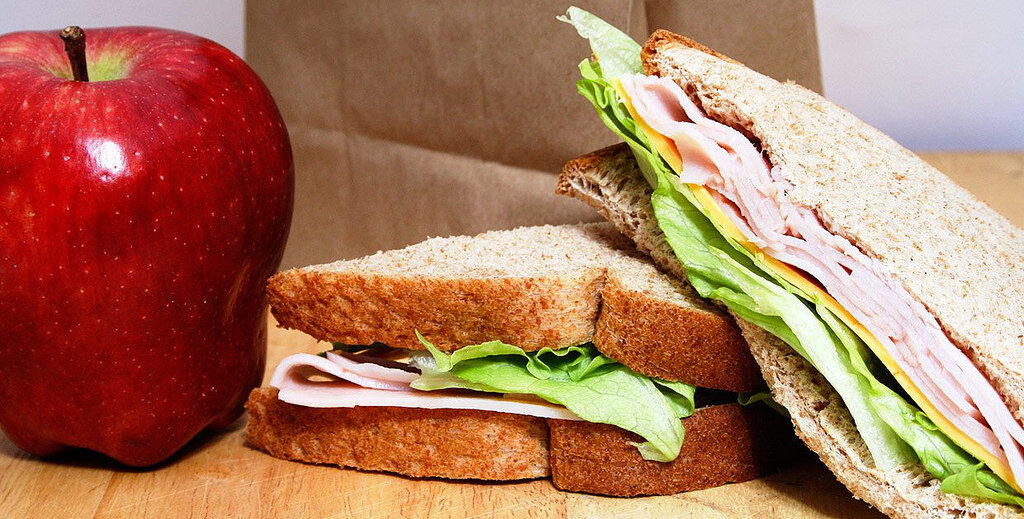
Here at Table to Table, the return of fall signals the launch of our Bag a Lunch, Help a Bunch initiative and brings up a topic we all can relate to – lunch. Whether you prefer a grab & go few morsels on the run, a brown-bagged sandwich brought from home, or a sit-down 3-course affair, lunch serves to quiet midday’s growling stomach. Maybe you’re a “let’s do lunch” type of person who loves to take a break and spend a few leisurely hours lunching with friends or networking with business associates. Or are you of the belief that it’s a waste of precious time in a busy day? Lunch can serve to either re-boot your energy after a half day of work or have you yearn for an afternoon nap.
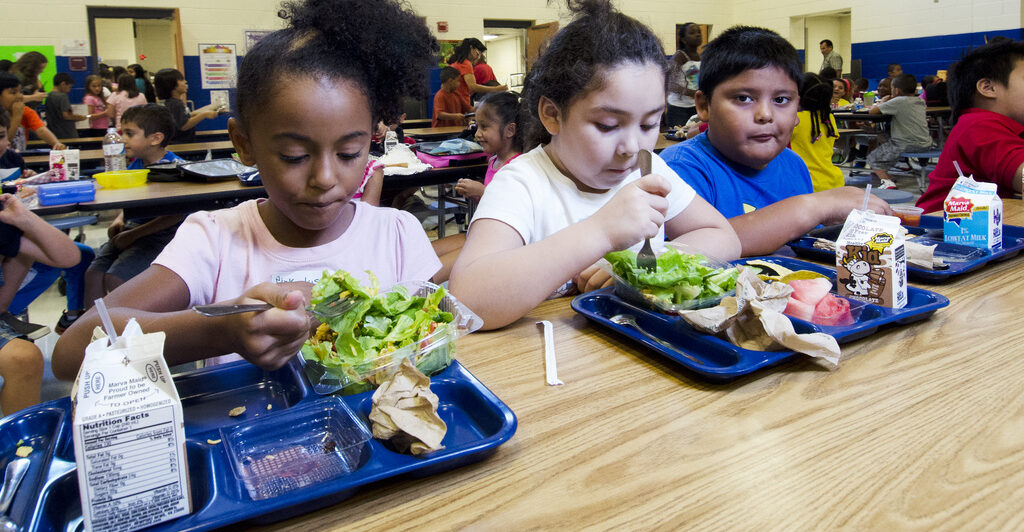
And then there’s school lunch – an important component of the school day – but often a source of angst for both parent and child (remember “trading” lunches with a schoolmate, and hearing Mom’s disappointment when you confessed at home at the end of the day?). For schools with cafeterias allowing children to choose their selections, the question – “What did you have for lunch today?” – followed by “Not mac and cheese again!” – resonates with parents. Regardless of their choice, lunch at school is important and at least we know our children are eating something of nutritive value and do not return to class hungry. The lack of an adequate midday meal can have serious effects on a child’s academic performance. Studies have shown that children in schools with lunches provided from a healthy meal vendor not only show an improvement in their schoolwork but these students are also less likely to be tired, are more attentive in class, and retain more information.
This brings us to our Bag a Lunch campaign, a fun and easy program increasing awareness to the problem of hunger and food insecurity in our communities. Run in schools and companies throughout northern New Jersey, it helps us provide lunches (and breakfasts and dinners!) to children in need, while serving as a teaching tool for those participating. According to Ho-Ho-Kus Public School Principal, Dr. Alexis Eckert, the Bag a Lunch program “teaches children how to pass goodness forward” and helps develop a child’s sense of responsibility, compassion, and kindness, and serves as a way they can “give back”. The campaign provides more than just lunch – it enables us to rescue enough food to provide 4 million (of the 20 million) meals we will deliver this year to those who need it most.
The staff at Table to Table has witnessed some very special things each year as the Bag a Lunch envelopes from participating schools are opened. Handwritten notes from children sometimes accompany the change collected from piggy banks. While it can be tedious counting all those pennies, it clearly illustrates the power of a simple lunch!
With Labor Day only a few days away, it seems most of us are divided into 2 camps – those who can’t wait for the return to a schedule and routine, and those who dread the approach of this holiday and the “unofficial” end to summer. For the children and families in NJ, Labor Day signals the beginning of the school year, and for those children who are food insecure, it thankfully marks the return of consistent breakfast and lunch provided to them at school.
There are over 400,000 children in NJ who receive free/reduced price school lunches – with 40% residing in the counties served by Table to Table (Bergen, Essex, Hudson, and Passaic). Half of all surveyed educators reported that hunger is a serious problem in their classrooms, leading to poor concentration on schoolwork and to classroom disruptions. In recent years, the introduction of the school breakfast program has been gaining popularity, especially when offered at the beginning of the day to all students in the classroom (known as “Breakfast after the Bell”). Surprisingly, this program has not only benefited those children in need, but also those from higher-income families whose parents can afford a small fee for breakfast at school and are pleased to know that their children are receiving a nutritious meal each morning.
Despite the effectiveness of breakfast and lunch school meal programs, NJ’s schools have been slow to jump on board, citing various reasons including space and time constraints, staffing and cleanup costs. We can understand the position of the schools – beyond providing a good education so much more has been added to their responsibilities. But we can’t ignore the importance of good nutrition for childhood development. The consequences of poor nutrition are well-documented – decreased intellectual and emotional growth, poor academic performance, and a higher risk of chronic health problems, especially for children living in poverty.
Because healthy, nutritious food is so critically important, Table to Table makes sure to deliver the fresh food it rescues year-round, focusing on programs serving families with children and continually providing the 3 most requested items – fresh fruits and vegetables, dairy products, and lean proteins. Through the consistent and reliable delivery of this food to our mobile markets, day-care and after-school programs, urban schools, youth programs and housing groups, we help alleviate the hunger insecurity experienced by these children. Regardless of your position on the approaching holiday, you can be assured that families in the programs we serve are receiving the healthy meals they need to thrive during every season of the year.
By: Iyanah Vemuri,
Rising Senior at Gill St. Bernard’s School, Gladstone NJ
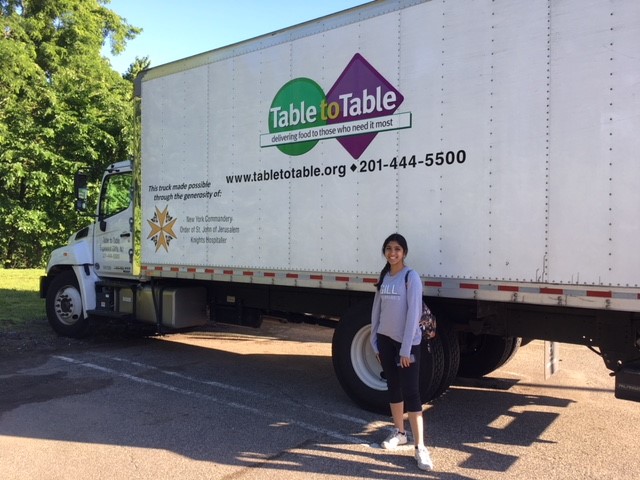
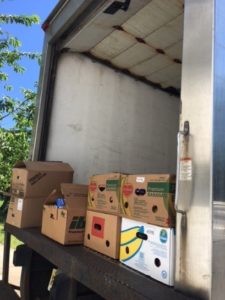
Last month I spent the day on one of Table to Table’s trucks as we drove around Bergen County, New Jersey. Starting the day at 7:30 a.m. at the ShopRite in Lodi, my mom and I met up with Carlos, and we made our way through the early morning traffic to many of the county’s ShopRites, Acmes, Paneras, and Trader Joes’. At each of these stops, we went to the back of the stores and collected boxes of whatever food was still good to eat, but about to be thrown out: fruits, vegetables, meats, and packaged goods, and these boxes were stored in the refrigerated back of the truck.
After collecting this food, we stopped at both a home that provides food to 100 families and a shelter for single mothers. Both of these locations distribute food to those in need. At the shelter for single mothers, we were allowed to go inside and meet the lady who started this amazing home in Paterson, New Jersey.
The US Hunger Relief Organization states that 41 million Americans go hungry each year. Just in the state of New Jersey, 1 in 10 people struggle with hunger, and the state would need about $495,839,000 more in order to meet these food needs. That is why it is shocking to learn that about 40% of the food produced in America is thrown away each year, according to the Natural Resources Defense Council.
Grocery stores often throw food away because too much was manufactured or it is getting too close to the sell-by date, even though food is only unsafe to eat past its use-by date. Unfortunately, a lot of food, especially fruits and vegetables, are not bought due to external blemishes, and what cannot be sold is thrown out. That is why Table to Table collects this food from New Jersey grocery stores and chain restaurants and delivers it to local organizations to distribute to the hungry.
My day with Table to Table taught me just how severe the poverty problem in America is. Though there are many different organizations that collect funds to help the hungry in America, Table to Table is collecting and donating perfectly good food manufactured for our grocery stores that would otherwise be thrown out. I feel so lucky to have spent the day with such an amazing organization, and was truly touched by my conversations with both Carlos and with the organizations receiving and distributing the food.
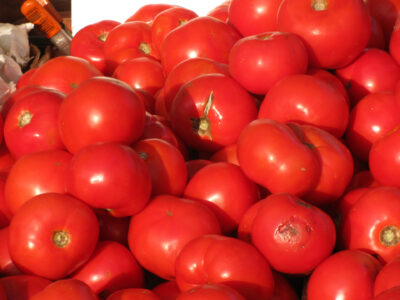
For some of us, memories of a thick slab of a home-grown Jersey Tomato, just-picked and still warm from the sun, on soft, sliced bread with a bit of salt and pepper, and a smidge of mayo brings back lazy, hot summer days from our childhood.
The sweet and tart juicy tomato we remember was most likely the Rutgers Tomato, a high-sugar, high-acid variety from the 1930s. But do today’s Jersey tomatoes taste the same?
It turns out the classic Jersey Tomato we remember was not a single variety but actually an array of varieties that did well in New Jersey’s climate and range of soil types. The end result was a sweet and tangy, flavorful tomato available throughout our growing season depending on the ripening rate of the variety. A favorite variety, the Ramapo, was introduced by Rutgers in 1968.
Although having a loyal following, it was judged too soft for long-distance shipping and commercial seed producers discontinued the production of the variety. Rutgers continued to produce small batches of the seed until they finally found a commercial seed producer who was willing to produce an amount they could afford. The Ramapo seed was re-released in 2008, 40 years after its introduction and enthusiastically welcomed by local growers and gardeners alike. Rutgers’ “Rediscovering the Jersey Tomato Project” researches what makes a tomato tasty and has brought back long lost favorite tomato varieties along with conducting tomato tastings and communicating with gardeners and farmers on growing delicious tomatoes.
The Jersey Tomato varieties are bred for their taste and not for long-distance shipping, and will not last for weeks after picking. They are vine-ripened when picked and are best eaten within days of purchase. So aside from joyfully anticipating this delicious time of year, given their relatively short shelf-life, we know that donations of these homegrown gems will be plentiful. Within hours they will be on the tables of our recipient agencies and stocking our mobile markets, ensuring that every New Jersey resident has access to the best taste of the summer!
Together, we can reduce food waste in our home and make a positive impact on the planet. Every little bit of effort—no matter how small—leads to change.
By Ellen Nash Christman
As my children are heading into their final weeks of school, I am so grateful for the “routines” they have had with their meals throughout the school year. We are fortunate to have a foodservice provider at their school who cares deeply about nutrition and health. Cereal and fruit in the morning, they love their healthy lunches, and dinner is always a lean protein and lots of vegetables. We are bracing for summer, though, when routines get thrown out the window.
In addition, all too often over the summer months in homes with both parents working, many children are often left to nutritionally fend for themselves. This is compounded by less consistent exercise in the warmer weather and usually more TV and video games.
Children of all socio-economic backgrounds tend to gain weight over the summer because of a lack of organized activity, fewer structured meals, and greater exposure to sugary and fatty foods. If children from families with the resources to provide nutritionally balanced meals during the school year have their diets compromised during the summer months, imagine the impact on children who typically have access to healthy food choices only through their school breakfast and lunch programs. Here in New Jersey, where 1 out of 4 children live in poverty, summer can mean more junk food and far less opportunity for regular healthy eating.
Here’s the good news in Northern New Jersey for the summer of 2018. Table to Table offers a free, easy solution to feeding hungry children healthy and nutritious food throughout the entire summer. Their parents simply need to visit one of the 140 agencies we serve in Essex, Passaic, Bergen and Hudson counties.
Our fresh produce, fruit and lean meats are rescued from stores like Shoprite and Whole Foods, and distributors like HelloFresh, and delivered, free of charge, to many programs that serve NJ’s children. We also have established weekly mobile markets, where families of all sizes can pick up fresh, healthy produce every Friday at two Newark locations.
As the “official” start to summer begins, keep in mind the 5,4,3,2,1 Rule recommended for children:
5 servings of fruits and vegetables per day
4 full glasses of water
3 servings of low-fat dairy (pending allergies of course!)
2 or fewer hours of screen time each day (this includes tablets, computers, television, video games)
1 hour of physical activity per day
Summer does not have to mean poor nutrition for any of our children. Make summer fun and healthy so that even though school is out, nutrition stays in.