back-to-top
x
close

Recent news that France will enforce a strict food rescue law that mandates all grocery stores donate unsold food to charity has caused quite a stir. According to The Guardian, the law will require:

  • All grocery stores and supermarkets to donate excess food to a charity
  • Large markets (4305 sf or larger) to sign formal agreements with non-profits by July 2016
  • All food must be sent to charities and in “ready to use” condition
  • Stores must discontinue the practice of destroying food, often done by pouring bleach in food bins.
  • Food too unsafe to eat will be donated to farms for compost and animal feed

It is a zero tolerance measure that will include fines up to $83,000 US and possible jail time. Future measures will likely require schools to donate excess food, and education measures are expected for homes, schools and businesses. In February, France moved to have “best by” dates removed, as they are confusing to consumers and completely arbitrary and determined by the manufacturer.

The fact is in 2012, the European Union and the United Kingdom began looking at a number of ways to reduce food waste, setting a goal of decreasing it 50% by 2020. To date, the UK has implemented an extensive campaign to increase public awareness and has had quick gains. Avoidable household waste has been reduced 18% in just 5 years and 53 food retailers and brands having signed a resolution to reduce waste in their facilities all through education.

There’s been a call for a similar law here in the US since the announcement of France’s law. It’s good to know some states are already addressing food waste head on. California, Arizona, Oregon and Colorado all have laws allowing tax credits for companies that donate left over food to state food banks. A California Farm to Table program has saved 17 million pounds of potatoes since 2010. The EPA is rolling out a plan nationally, Food: Too Good to Waste, that is currently up and running in Seattle, Iowa City, Oakland, and Honolulu, to educate consumers on how to reduce waste.

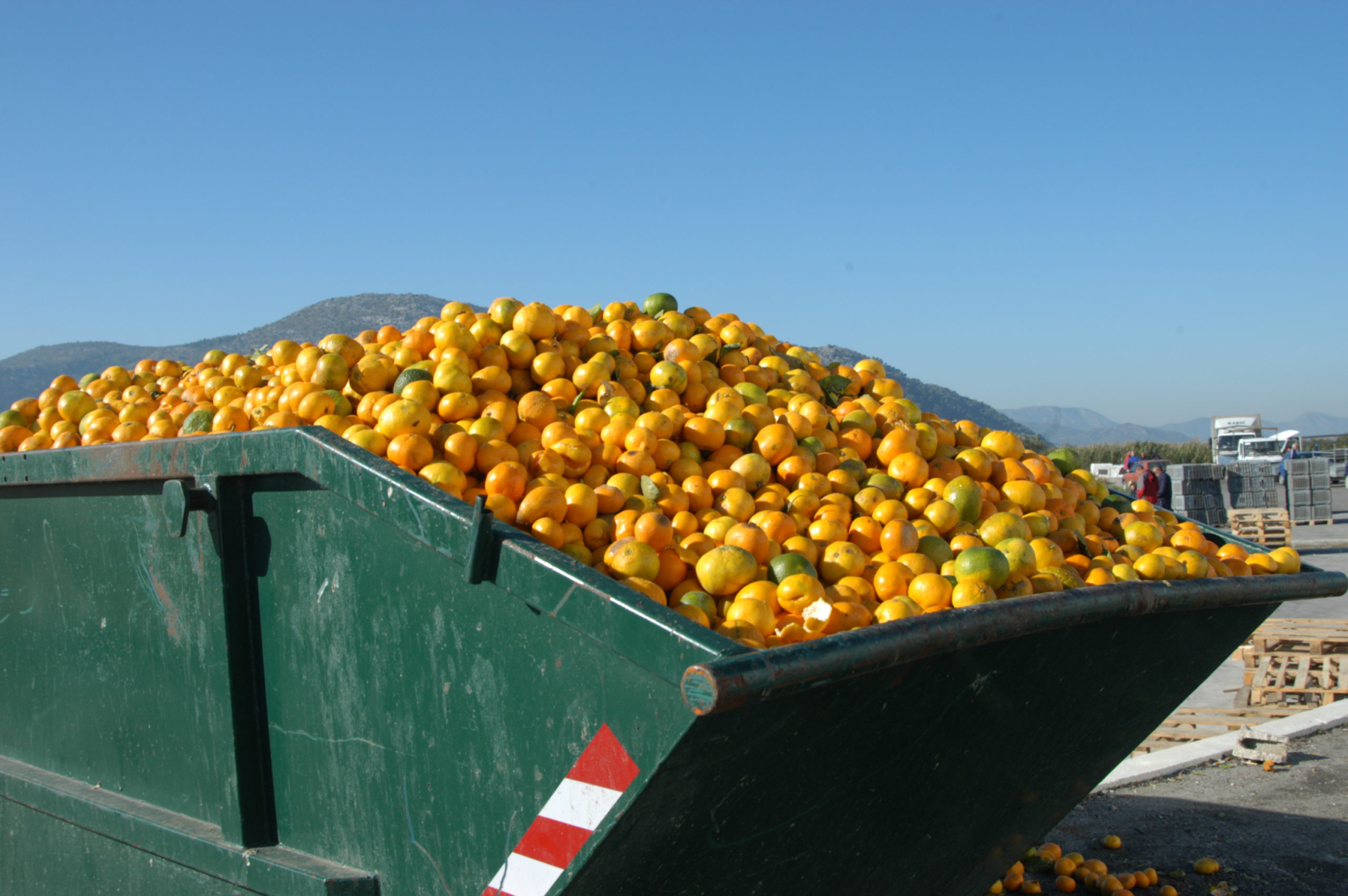
While many organizations, companies and even state governments have taken it upon themselves to participate in food rescue and donation efforts to organizations like Table to Table, the truth is that an estimated 40% of the food in the US is wasted. The US produces enough food for every person on Earth to eat 2700 calories per day. Yet, worldwide 842 million people go to bed hungry, 14.3% of American households are food insecure (2013) and $165 billion of unused food is thrown away. More food takes up space in landfills than paper and plastic, 35 billion tons in 2012. If just 15% of that food was rescued it would feed 25 million Americans. Saving 30% of our food would nearly eliminate food insecurity all together.

As a top producer of food in the world, the US must address a number of food waste challenges. There are at least 8 spheres of inefficiency within our food supply chain, three of them; retail, food service and household make up 50-60%. While food waste in grocery stores and supermarkets make up about 10% of the total, their practices directly affect households in the food waste cycle. Consumer consumption is where 40-50% (some estimates are as high as 61%) of the losses in food come from annually. Americans waste, on average, $1600 per year per household (family of 4) on food in our refrigerators that is left to rot or is mistaken for rotten. The sell-by, best-by and use-by dates on foods as in the EU and UK, are created by the manufacturers and cause confusion for consumers. In the US the dates have no federal regulation other than to use a month and a day, the year as well if the food is frozen, when dating food. Stores will often get rid of items 2 to 3 days prior to a sell-by date just to avoid confusion, which contributes in a significant way to the waste numbers. It’s estimated that food retailers discard $2300 worth of perfectly good food daily. Of course, all that waste means higher food sales for the food industry so there is little incentive to make changes to how food is ordered.

To be fair, sales aren’t the only driving force behind dating and discarding food arbitrarily. Creating a sense of unlimited abundance in the aisles, displays, and prepared foods counters meets the consumers’ demand that a store be well-stocked and provide the best of the best. In order to accomplish the appearance of abundance about 1 in 7 truckloads of perfectly good, perishable food is thrown away.

Then, there is the problem of abundance and the plate. Restaurants contribute to the food waste problem in similar ways to grocery stores in an effort to appear more lavish. Large plates and glassware need more food to make them look full, a phenomenon called the Delboeuf Illusion. To make the plate appealing, portion sizes are 2 to 8 times larger than the FDA or the USDA recommend. Pizza grew 70% in calories from 1982 to 2012; the Caesar Salad doubled in calories and the innocent chocolate chip cookie has quadrupled. These growths don’t just contribute to our waists but to our waste as well. Sadly, fuller plates lead to more leftovers as 17% goes uneaten, 55% of that is not taken home and instead thrown away.

Fast food isn’t any better. Freshness standards at fast food chains contribute largely to the waste seen in this category. McDonald’s standard for french fries is 7 minutes then they are thrown away, burgers can sit for only 20 minutes. Time limits like these contribute 10% of their total waste. In New York City, 29.4 tons of organic garbage is picked daily, the bulk of it is half full fast food containers.

We’ve always seen food donation and food rescue as a sensible solution here at Table to Table, so much so, we’ve been working at it for 15 years and over 90 million meals. Donating to food rescue programs will make a difference in turning the tide of food waste in this country. So much more can be done in the grocery store, restaurants and at home. Kudos to the French, the European Union, the UK and the many, many corporations and organizations that make reducing food waste a priority. With thought and planning we can save our environment while at the same time providing fresh and nutritious food for everyone.
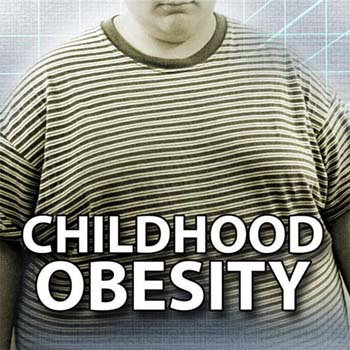
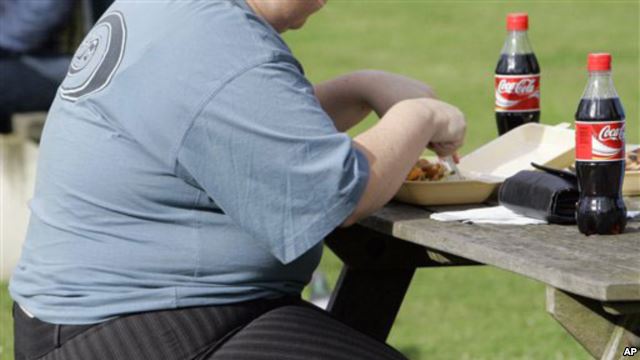
Who doesn’t love chubby cheeks on a child? Just have to give them a loving squeeze. But when does cute and chubby become overweight and obese for a child and how does being food-insecure play into the issue?

For one thing, obesity is an epidemic our country is fighting and losing. When it comes to our children and teens, more than a third are overweight and one-fifth are obese. Not only are nearly 35% of adults in the US obese, but 21% of kids ages 6-19 are, as well. That’s a 30% increase in the obesity rate in just 30 years – up from 7% in 1980. Obesity is defined as having excess body fat, the result of “caloric imbalance” – too few calories expended for the amount of calories consumed – and is affected by various genetic, behavioral and environmental factors. Lower diet quality (i.e. fast food and sugary drinks) puts kids and teens at risk for obesity and some very adult diseases with the same healthcare costs and stresses on families and communities.

The list of diseases that are linked to childhood obesity is staggering and could be avoided either completely or until much later in life. According to the Centers for Disease Control and Prevention (CDC), 70% of obese children are at risk for cardio vascular disease. The list below reflects other diseases formerly attributed only to adults that our children are now experiencing:

  • High Cholesterol, High Blood Pressure
  • Pre-diabetes, where blood glucose levels indicate a high risk for developing Type 2 Diabetes.
  • Bone and Joint Disease, Osteoporosis
  • Sleep Apnea
  • Menstrual Irregularities
  • Higher Risk of Injury
  • Cancer, particularly breast, colon, thyroid, endometrial, pancreas, kidney, esophagus, ovary, melanomas and Hodgkin’s Lymphoma
  • Poor Dental Health like more cavities and gum disease
  • Iron Deficiency

For children entering adolescence, poor diet can lead to the following concerns that set a stage for physical and emotional health as adults.

  • Delayed Puberty
  • Nutrient Deficiencies and Dehydration
  • High Instances of Social and Psychological Problems
  • Stigmatization and Poor Self-Esteem
  • Eating Disorders

Even when these adult diseases to not affect an obese child, they remain more likely to become sick, recover more slowly and will be hospitalized more often. There are higher incidents of headaches, stomach aches, colds, ear infections, and fatigue amongst food insecure children and teens. While overweight and obese, these kids are still malnourished and will be less likely to perform well in school or concentrate and, tend to exhibit more behavioral problems like aggression and anxiety. Being hungry and under- nourished makes it difficult to play “nicely” with others. But really, when you’re hungry, who can?

There are a number of studies that look at childhood food insecurity and obesity and the way, despite being contrary to intuitive thinking, the two coexist. There is strong evidence that food-security, quality of diet and access to fresh nutritious food are paramount to the growth and well-being of kids. We need an outcry against the food industry that, according to the CDC, spends $1.6 billion marketing sugary, low nutrient, high fat foods and beverages to kids. The reason? The lower cost of production equals big profits for processed food manufacturers. On average, children are exposed to 5,500 unhealthy food commercials in one year. Conversely, only 100 marketing messages for healthy foods are made in that same timeframe. Research shows that this impacts food choices and diet. The fact is, “junk food” will not make you feel full, requiring more foods that are likely to be full of empty calories.

By supporting organizations that supply healthy and nutritious food to families in low-income areas that cannot provide them for themselves, we can help curb food-insecurity and obesity in both children and adults. Helping our neighbors access fresh foods like fruits and vegetables, meats, and whole grains benefits everyone by reducing food waste, reducing food prices and reducing healthcare costs. Share your knowledge of how Table to Table rescues fresh, nutritious food that would otherwise be thrown away and delivers it to those who need it most…it’s an easy way to support our neighbors.

For more ways to help click here.

We’ve all thought it. “How can someone who is hungry or needy be overweight? Clearly, they’re eating something.”

It’s true, but these diametrically opposed concepts make more sense than you might think. It seems counter-intuitive yet some of the highest populations of overweight/obese individuals live in low-income communities.

Obesity rates among US adults are at 34.9% or 78.6 million citizens, 40-59 year olds have the highest rate of obesity at 39.5%. Medical costs for obesity, nation-wide, are $147 billion and obese adults have annual medical costs that are $1429 higher than normal weight adults annually. In New Jersey, the obesity rate was 23.7% in 2011, by 2030 it is projected to be 48%. Weight-related diseases will go up 10 times by 2030. NJ will see the highest increase in health related costs to 34.5% in that timeframe.

You want more numbers? They really make the point. Here you go…in NJ over the next 20 years there are projected to be:

971,383               new type 2 diabetes cases
2,087,173            new coronary heart disease and stroke cases
2,177,679            new hypertension cases
1,418,265            new arthritis/musculoskeletal disorder cases
308,039             new obesity related cancers (breast, colon, endometrial)

And while all Americans face similar challenges when it comes to health and lifestyle; we are all subject to the same influences of a sedentary lifestyle and over-sized food portions, victims of it really. So it’s easy to question what distinguishes this group of people. Low income individuals face a number of additional issues that create the link between food insecurity and obesity. In addition to the systemic issues below, those facing poverty often work longer hours and have multiple jobs, eat on the run and have less time for physical activity.

  • Fewer Resources and Access to Nutritious Affordable Food.
    • Low income neighborhoods do not have full service grocery stores or even farmer’s markets where low cost fruits, vegetables, low fat dairy and whole grains are available for purchase.
    • When transportation is limited or non-existent, families are forced to purchase groceries at convenience stores or bodegas where nutritious options are limited, low quality and expensive.
    • Poverty and food insecurity are associated with lower food expenditures, low fruit and vegetable consumption and lower-quality diets due to the low cost of energy-dense foods (foods composed of refined grains, added sugar, and added fats) and may be reinforced by the palatability of sugar and fat that make up most of these foods. They just taste better than healthier options and are made that way intentionally.
  • Cycles of Food Deprivation and Overeating
    • Skipping and stretching meals when food is scarce and overeating when food is available contributes to weight gain.
    • These cycles can lead to a preoccupation with food and cause metabolic changes that promote fat storage like yo-yo dieting.
    • Feast or famine among women is a direct predictor of obesity in children. The strongest and most consistent evidence of this connection is in low-income women.
  • High Stress Living
    • Financial and emotional pressures of food insecurity, low wages, lack of healthcare, poor housing and transportation, community violence, along with so many other stresses, through research, have been shown to be linked to obesity particularly when the stress is chronic.
    • Sleep deprivation requires more calories to keep going, energy-dense foods provide that fullness and quick pick-up but the lack of nutritious food and physical activity keeps stress levels high.
  • Higher Rates of Exposure to Obesity Inducing Products and Marketing
    • Low income households are exposed to more marketing and advertising for products like sugary drinks, fast food, television and video games that encourage less activity and unhealthy food options than any other demographic.

Illness like type 2 diabetes, heart disease, arthritis and cancer disproportionately burden those with limited resources, racial-ethnic minorities (except Asian-Americans) and the poor. These diseases are largely preventable by addressing the above issues, including the reduction of regular physical activity, also shown to be a result of lower-income neighborhoods.

Without access to healthy food options, managing weight and lifestyle become nearly impossible and the implications are life-threatening. By helping to provide more nutritious food options to lower-income individuals and families we have the opportunity to reverse these projections. Working to lower the BMI of New Jerseyans by just 5% would save in health care costs by 7.4% or $1,391,000,000 by 2030.

The decks are certainly stacked; Government agencies are struggling to find ways to assist the increasing need. This post is part one of two addressing obesity and food insecurity. Next month we’ll explore how children are affected by the phenomenon. Fortunately, organizations like Table to Table are introducing new ways to level the playing field and get fresh, nutritious foods into areas where they’re needed most. We will be sharing with you the details of our newest project, designed to directly bring much needed fresh produce into the neglected areas of Newark. Visit www.tabletotable.org to learn more about who we are, who we help and how we do it. Like us on Facebook for more information about our Newark project, spring events and ways you can help.

You’ve got a dollar and you want to help someone with it. Is that possible? Every not-for-profit out there will tell you, “yes!” But we have all heard stories about donated funds being spent on things other than an organization’s program – out of control expenses such as the inflated salaries of the people who are doing the fundraising. Add to that news about people appearing to represent charities but instead benefitting themselves, and the impact of your dollar can seem elusive.

As a sophisticated donor, you can take a number of steps to ensure that your dollar goes where you want. If you’re in New Jersey, you have a choice of over 60,000 not-for-profit 501(c) (3) organizations with a total income in 2013 of around $67.8 billion. In Bergen, Essex, Hudson and Passaic counties there are 17,621 not-for-profits bringing in $19.9 billion. How can you make that dollar have the greatest impact?

The first step is simple – follow your heart. Think about what cause speaks to you most. The environment? Homelessness? Education? Animal welfare? Hunger? What gets you fired up? Once you’ve identified a cause that matches your core beliefs, decide where you want your donation to have the greatest impact. Regionally? Nationally? Internationally? Do you want to support a large charity or a small one, a new one or a well-established one? Feeling engaged with something meaningful to you and your family is the first important step. Otherwise, it’s just a dollar, whereas committing to a cause and a charity makes you a partner in change.

Now that you’ve narrowed down the organization that matches your vision, do your homework. There are a number of resources available to donors to help investigate and research the multitude of organizations willing to take your dollar. They review 501(c)(3) charities, provide advice on how to navigate the not-for-profit world, and use sophisticated measurement tools to rate charities. They can be very valuable to you. Visit these sites as you consider your giving options:

Charity Navigator *
Guide Star *
Give Well

Here are some points they recommend you consider as you conduct your research:

• Confirm the Organization’s Status – The label 501(c)(3) indicates tax-exempt status by the Internal Revenue Service. This is a basic designation and ensures that the charity meets the federal definition of a not-for-profit.
• Review the Mission Statement – Determine if the goals and progressive achievements of an organization match with your ideals and desire to partner long term.
• Accountability and Transparency – Understand where your dollar is headed. While not-for-profits are businesses and have legitimate overhead expenses, at least 70% of the money they raise should be going to the services the organization provides.
• Review Recent Financial Statements – Ask to see organization’s financials. A transparent organization should be ready, willing and able to discuss their finances, share information and provide literature about their work. Rock solid financials, transparent spending, executive compensation and the percentage of revenue that goes to services should be talking points for a charity.
• Compare Like Charities – Different types of work impact operating costs. Comparing an animal welfare charity to a food rescue charity would be unfair to both as their operating costs will be dramatically different.
• Trust Your Instincts.

Once you’ve done your due diligence and chosen an organization you feel you can truly support, give thought to concentrating your giving. If you have another dollar you’d like to share, give it to the same organization. Although in business this would be counterintuitive when you consider that diversifying minimizes risk, with charities – concentration can do more to bring about change. Spreading your donation dollar too much dilutes its potency. If you’ve chosen an organization that matches your vision, meets your standards and is well-run, your dollar will have greater impact when you commit to it long-term. In doing so, you become a partner in your chosen charity’s efforts to effect change. Making a long-term commitment to an organization allows you and them to develop a relationship that encourages growth, minimizes resource waste and allows for real success.

It’s an amazing and gratifying feeling to be part of helping your community, whether it’s local or global. The feeling is even better when you can confidently stand behind your chosen organization. These tips and tools can help you find the best place for you and your dollar.

*Table to Table Inc, is proud to have maintained its Charity Navigator 4-star rating for five consecutive years and rank as the second highest Human Services programs in the entire state. We’ve recently been recognized by the GuideStar Exchange as a Gold Level Participant Agency, a category representing less than .001% of the registered not for profits in the country. We welcome the community to ask any Table to Table employee or volunteer about what we do and how we do it. And as for that dollar you have. When donated to Table to Table you will provide 10 meals for a hungry neighbor. Clearly, you can make a difference with just a single dollar.

What happens when you simply cannot afford the rising cost of food?

According to the Food Research and Action Center (FRAC) the cost of eating a meal at home went up 1.7% nationally from April 2013 to April 2014. When food costs rise, and budgets stay the same or decrease, there isn’t much room for individuals and families to have a healthy meal.

In 2013, FRAC calculated that 14.1% of all residents in Bergen, Essex, Hudson and Passaic counties (nearly 17% if the more affluent Bergen County is removed) have difficulty providing meals for their families. That’s nearly 400, 000 people in the counties Table to Table serves –as many people as the total population of Cape May, Hunterdon, Warren and Salem counties combined.

These statistics are not just about the cost. Understanding the elements of good nutrition is complex, so much so that there are thousands of blogs, magazines, TV shows and media dedicated solely to helping the most educated navigate making proper choices. You can see why many participants of feeding programs, who do not have the knowledge, time or money to prepare the healthiest items, are forced to make the choices they do.

And it’s not just the economics of providing a healthy meal that is of concern. Individuals and families who are not properly nourished suffer from the deterioration of neural function, lower verbal fluency, diminished problem solving skills and lack of motivation. Poor nutrition in infants has been linked to lower cognitive function and intelligence.  When you are hungry you can’t develop, grow, learn, remain healthy or work productively.

When food prices rise and assistance programs are incapable of covering the cost, it creates a need for the community to step in and fill the gaps. No individual or family should have to wonder where their next meal is coming from.  Especially when the solution is as simple as saving food that would otherwise be thrown away.

If you would like to learn more about the organizations Table to Table delivers to, visit our How We Help page. For information about what you can do, visit our Join The Fight page or contact us at info@tabletotable.org.  Without you, we cannot address these vital issues nor can we continue to improve the health and well-being of our neighbors.

Let’s talk about love. Let’s talk about violence. Let’s talk about how the two do not go together and how violence creates a pattern of destructive actions that women and their children must take in order to survive. We’ve all heard the facts about domestic violence; here are some you may not have read before:

  • Women with disabilities are 40% more likely to experience partner violence (especially severe violence) than women without disabilities
  • 10 million children are exposed to domestic violence each year
  • Boys who witness domestic violence are 3 to 4 more times likely to perpetrate intimate partner violence
  • Domestic Violence is the 3rd leading cause of homelessness among families

It’s easy to see how Strengthen Our Sisters founder, Sandra Ramos, moved herself out of semi-retirement when she arrived in Ringwood, NJ in 1987. As an advocate in the 70s (she opened the first Women’s Shelter in North America), she was called upon and responded to the need for safe housing in the rural area of Upper Passaic County. With a group of dedicated women, Sandra set about starting a shelter for abused and homeless women.

Sandra and a Board of Directors officially founded Strengthen Our Sisters of Upper Passaic County in 1990. Since then, they have been dedicated to their mission to break the cycle of domestic violence, poverty and abuse by restoring balance and harmony through individual empowerment.

Today Strengthen Our Sisters not only provides services for women of domestic abuse and their children, but the surrounding community as well. Deeply steeped in the idea that empowerment comes from education and preparedness, Strengthen Our Sisters provides a great number of programs for the women that include; computer skills, GED, job training, and pre and post-natal education for new mothers. The Cars for Success program refurbishes donated cars for use by the women to transition to work from welfare. The Day Care, Pre-School and Food Pantry are available to the entire community.

A wider range of services including a 24-hour hotline, emergency shelter, counseling, legal and social advocacy, support groups, parenting sessions, communication skills development, stress management and self-esteem building, and more, are components of the program. This team is dedicated to helping women and their children find their way out of situations of crisis, doubt and danger.

The greatest achievement for the women of Strengthen Our Sister is the “Pass It On” theme of the shelter where the women, past and present, remain part of the circle of support created to help effect positive change, assertiveness, independence and self-sufficiency on the lives of these families.

Table to Table in NJ provides a reliable source of fresh, nutritious food for the food pantry nourishing the resident women and their children along with hundreds of low-income families, senior citizens and people with disabilities. The dairy, meats, fruits and vegetables that are delivered are essential for growth, development and staying healthy.

Table to Table has worked with Strengthen Our Sisters for more than five years. We could not be more in awe of the wonderful work done here. For more information on Strengthen Our Sisters, visit their main site www.strengthenoursisters.org. For more information on Table to Table and our food donation program in NJ, visit our main site! www.tabletotable.org.

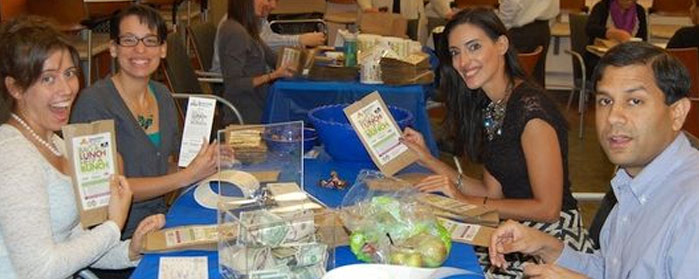
We did it!  Our community joined together to make this year’s Bag a Lunch, Help a Bunch campaign the most successful one to date.  Northern New Jersey has been aflutter with our trademark brown lunch bags as more individuals and numerous new schools and companies took part in this annual fall initiative.

We thank all who donated over $50 to the program and are thrilled to announce the winner of this year’s Give More – Get More promotion.

John Coleman of Paramus Catholic HS
will choose four premium Broadway show tickets to see either Motown or If/Then

Many thanks to John and all who so graciously supported this program. And remember, although the Give More – Get More drawing has come to an end, schools and companies that wish to compete for the top ten status still have the opportunity by submitting their team results no later than midnight, Wednesday, December 10, 2014.  Take a sneak peak at the contenders to date! Official winners will be announced on our website.

Top Contenders
CompaniesSchools
1. Crestron Electronics1. HoHoKus Public School
2. Takasago2. Edith A. Bogert Elementary School
3. Hudson City Savings Bank3. Paramus Catholic High School

Every day more families line up at food pantries and shelters waiting for our deliveries.  And every week we receive more and more calls from agencies requesting our fresh, healthy food.  Your support of programs like Bag a Lunch, Help a Bunch enable us to answer those calls with a YES!

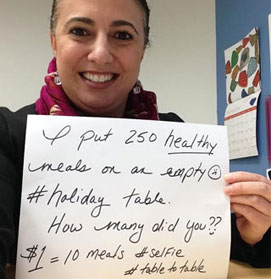
Participate in our selfie promotion by making a donation to Table to Table and talk it up by creating a sign like the one pictured here. Post it on your page with the hashtags #selfie, #tabletotable and tag @TabletoTable. We’ll add you to our photo album. Don’t forget the number of meals you can provide during the upcoming holidays at 10 meals per $1 donation!

Copy this to your status:
Table to Table can rescue enough fresh, nutritious food to serve 10 meals to hungry families in Northern NJ for every $1 we receive. This #holiday support the cause by donating to www.tabletotable.org/selfiedonate and post this message with your #selfie and #TabletoTable. A short video works too. Copy and paste this to your #selfie post and share!

The holiday season is a time when many think about ‘giving back’.  More and more people donate money or volunteer at soup kitchens and food pantries. There are so many ways to contribute and when we learn that “1 in 5 children lives in poverty in New Jersey”, it’s hard to enjoy our own plentiful dinner while knowing that our neighbors are going without any dinner at all.  

At Table to Table in NJ, we count on volunteers and donations all year round, but holiday time presents a need for more food donations and increased funding for its delivery. The agencies that we partner with work extremely hard throughout the holiday season to ensure that no one goes without a meal and a warm place to stay. So we must pack our delivery trucks with nutritious food and hit the streets to fill their refrigerators.  Snow, rain or shine!

Want to help us this season?  Here are a few ways:

Volunteer by Holding a Fresh Food Drive

We have received more calls for food than ever this year and with a little creativity, you can help us meet the need. The single most effective way to help outside of donating money is to hold a fresh food drive.  You can do this at your office, school or even your place of worship.  It’s rewarding to do and can be very successful at this time of year!  Want to talk about it?  Drop Emily a note at eforce@tabletotable.org and she’ll help guide you through the next steps.


Donate


The holidays are a perfect time to make a gift in someone’s name. Table to Table is one of the most cost efficient non-profit organizations in NJ, and we put every donated dime to good use. This year, you can help feed a family through our donation program. For every dollar you donate we will deliver enough nutritious food for 10 meals!  We are also offering holiday cards this year.  By selecting a Table to Table holiday design you can send warm wishes while helping feed our hungry neighbors at the same time!


Become a Food Donor or Sponsor

If you own a grocery store, restaurant or food establishment and want to help a local organization in your area, we are always in need of donating partners.   Anthony at amath@tabletotable.org can answer any questions you have about food donations.

And, of course, we treasure the wonderful relationships we have established with the corporate partners who help fund our organization. From workplace giving to event sponsorships, there are so many ways to get involved. If you’re interested in becoming a partner, please reach out Edith Fiato at efiato@tabletotable.org.
To learn about all the ways you can help this holiday season, please visit our home page and go to “Join the Fight”. Then do just that – join us and help the families in our community who need it most!  Together we will serve our hungry neighbors dinner and dignity every night!