
back-to-top
x
close

It’s true, giving is good for the soul.  Important to know as we enter the Season of Giving where financial contributions to any number of nonprofit organizations can have a lasting impact on the good they’re able to accomplish as well as a lasting impact on personal well-being. Mahatma Gandhi once said “The best way to find yourself is to lose yourself in the service of others.”

And there is great truth to it. Psychologists found, in a survey of over 600 Americans, that spending money on others led to greater happiness at all income levels. There are psychological health benefits and social health benefits of giving. Research shows humans are intrinsically social and generosity is a survival instinct. Without caring and looking out for one another, we would have died out long ago. Personal happiness keeps us personally healthy and taking care of others keeps society healthy.

We examined some of the benefits of giving and put together this list of how and why charitable donations work to create a happy, healthy and well-rounded life, for individuals and for society as a whole

Volunteering versus Giving

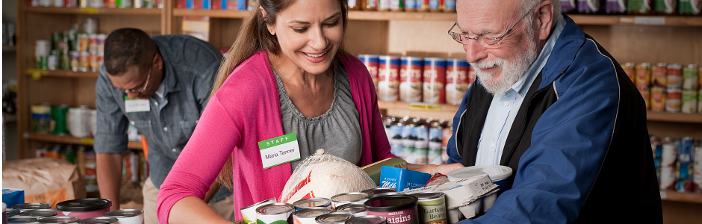
We all have that image of standing behind the soup line, serving those less fortunate or packing boxes to be delivered to those in need.  But not everyone can find the time in these scheduled to the minute days. The truth is, giving monetary gifts help organizations in measurable ways. Often nonprofits can make a dollar stretch farther and put it to use for operations beyond the front lines, where much of the work happens. At Table to Table, we’ll turn $1 into 10 meals. Giving in any way that personally works, whether time or money, improves the lives of many and should feel equally good!

More Meaningful

Donating to a charity by attending fundraisers creates opportunities to meet new people who believe in the same cause. That can infuse our everyday life with more meaning. Been stuck in a rut, whether personally or professionally? Sometimes the simple act of giving can reinvigorate our lives by allowing us to see beyond our own problems. Each season we see first hand how coming together at sponsored events with like-minded people increases our donors’ happiness with and connection to our food rescue mission.

Knowing Whom the Gift Will Help

Child sponsorship programs have been putting this to use longer and better than anyone and, while the commercials showing poor children living in squalor can be uncomfortable, putting a name and face to the cause gives a big emotional boost. Donations are 60% greater when there is a name, age and picture of someone who will benefit from the donation. This is called the identifiable victim effect; we care more about the one person we know compared to the numerous others that are just numbers. When donating to Table to Table, every cent is going to your local community and potentially to neighbors you see on the street everyday.

No Strings Attached

Making a donation to get something in exchange for a material item can limit the altruistic high. Making a purchase that gives to a charity makes us feel better about our purchase but can decrease overall happiness. Gifting with no strings attached or tangible trade off will maximize the meaning of the gift and increase the level of happiness and satisfaction.

The holidays have always been a time of reflection and giving, even amid the chaos of the season. Nonprofits, like Table to Table, rely on charitable gifts to continue our work of bringing healthy, nutritious meals to our communities and neighbors. Donations keep our six refrigerated trucks on the road year round, in all types of weather, to bring food to our neighbors. There are no snow days, no sick days, no time when we’re not solving problems to remediate hunger and to serve those who need help putting food on their families’ table.

We are grateful for the caring support of our donor community and we wish everyone a season of love, health and good fortune. Thank you for taking this journey with us throughout this year and beyond. Happy Holidays.


This year National Hunger and Homelessness Awareness Week is November 12th through 20th and it’s no coincidence that it’s the week before Thanksgiving. It’s the perfect time to reflect, give thanks, and think of others as we enter the holiday season. Many of us make charitable contributions and gifts during this time of the year. Our compassion rises as we take stock of what we have, recognize those who have helped us throughout the year, and acknowledge those in need.

At Table to Table we are beyond grateful for our donors every day. Without them and their long-term commitment to making the lives of our hungry neighbors in northern New Jersey better we could not have rescued more than 15 million meals last year. And without the donated funds used to replace one of our old, small refrigerated trucks with a larger one and our van with a full size truck, we could never achieve the 16 million we are committed to for this year.

As we head into the holidays and wrap up our annual Bag a Lunch, Help a Bunch initiative for 2016, we want to offer our gratitude with some insight. Our trucks pick up nutritious fresh and perishable food in the morning and deliver it that very same afternoon. They start early, sometimes 4 or 5 am, and finish around 4 pm. Surely it’s not hard to imagine the chaos a down truck can wreak on a packed, tight schedule of pick-ups and deliveries. Not to mention the costs of keeping 5 trucks on the road filled with gas, properly insured, safely maintained.

But we’re lucky to work on a multi-lane road, with assistance that comes in a multitude of ways.  We are supported with food donations, donated services, and financial contributions. Bag a Lunch is a grand undertaking with about 200 schools, companies and organizations working to raise awareness and money. It’s not just about asking folks to share their lunch money and brown-bagging lunch for the day – it involves so much more.

Well, really, it involves those bags! Each bag that we mail out to potential donors or bring to organizations that participate is touched 4 or 5 times; it’s labeled, stuffed, labeled again, sealed, and stamped. That work is done by volunteers. Another group of volunteers packs up the bags and delivers them to participating schools and companies running the campaign. Once they are filled, our office staff opens and counts everything that is returned. The effort is massive, and again, we get support on both sides – those giving funds and those sharing their time.

If you’ve received a Bag a Lunch bag in the mail, your child’s backpack, or at your work, you’ve seen some of our donors listed. Our Presenting Sponsor, Inserra Shoprite Supermarkets has been a long-term and ardent supporter of Table to Table. They provide food from their stores, funds for operations and participate on our board and committees. Dunkin Donuts and Becton Dickenson are Premium and Grand Sponsors of Bag a Lunch, respectively. And they are joined by Supporting Sponsors, The Children’s Place, PNC Bank, Takasago, American Airlines, and Hackensack Meridian Health. Without them, this program would not have near the impact it continues to have.

This year several companies supported us by volunteering to label and stuff more than 36,000 bags. Suez N.A., Provident Bank Administrative Offices, Unilever, Movado Group, World Finer Foods, CBRE, Fidelity (Paramus office) – all pitched in. Volunteers at Tenafly Presbyterian Church sealed and stamped the bags, once again providing the invaluable help they give us each and every year.

You can see the levels and depth of support we receive for just one drive. Multiply that throughout the year!  For those who have been a part of any event or campaign we held this year, we’d like to take this time, during this month of gratitude, to say Thank You! To each of you who has made a donation, stamped and labeled an envelope, ridden on a truck, provided resources, became a sponsor, bid on an auction item, hosted an event, or supported us in any other way – you have helped to keep our trucks on the road feeding children, senior adults, veterans and struggling families in our community.  And you have made the lives of our most vulnerable neighbors a whole lot better.

Is pizza junk food? There can be whole food ingredients involved but it’s so good can it possibly be good food too? Many of us have asked the same question.

According to Wikipedia, “Junk food is a pejorative term for food containing high levels of calories from sugar or fat with little protein, vitamins or minerals. Use of the term implies that a particular food has little “nutritional value” and contains excessive fat, sugar, salt, and calories.”

A good exercise, as we exit Ovarian and Prostate Cancer Awareness Month and enter Breast Cancer Awareness Month, might be a quick look at how junk food relates to cancer and obesity. After all, obesity has associated links to the following cancers:

  • Esophagus
  • Pancreas
  • Colon and rectum
  • Breast (after menopause)
  • Endometrium (lining of the uterus)
  • Kidney
  • Thyroid
  • Gallbladder

According to the Cancer.org website: “A projection of the future health and economic burden of obesity in 2030 estimated that continuation of existing trends in obesity will lead to about 500,000 additional cases of cancer in the United States by 2030. This analysis also found that if every adult reduced their BMI by 1 percent, which would be equivalent to a weight loss of roughly 1 kg (or 2.2 lbs) for an adult of average weight, this would prevent the increase in the number of cancer cases and actually result in the avoidance of about 100,000 new cases of cancer.”

Since we’re in the throes of pink ribbons, it’s worth noting the site points out that the obesity-breast cancer link is stronger for post-menopausal and Caucasian women. The excess weight leads to higher levels of estrogen for this group, increasing the breast cancer risk. It also includes a statement that weight loss increases the likelihood of prevention. So there is good news.

Where to start? We know junk food is bad for us and we should eliminate the empty calorie, low fiber, zero nutrition items from our shopping lists and dining out options as much as possible. The how to is a little trickier, so let’s look at ways to manage the grocery store and the menu.

  • Start with Fruits and Veggies. Ever notice as you enter a grocery store it’s through the produce section? No? That may be the first change to make. It’s a great place to start your shopping. In fact, for the healthiest shopping trips, walk the perimeter of the store. Fresh produce, meats, and dairy are always around the edges and where you’ll be inspired to create healthy meals.
  • Make a List. Meal planning for the week or a few days at a time and having a list of ingredients needed for those meals will help keep you on track and away from the processed and junk food.
  • Avoid the Frozen Food Aisle. Unless you are stocking up on plain frozen veggies and fruits, avoid this aisle and its frozen meals, like pizza. They are loaded with sodium –  often several days’ worth. Pre-make dinners and store them in the freezer for quick, healthy meal options. This infograph provides guidelines for food storage in the freezer, which is helpful since you’ll be eliminating preservatives in your home cooked meals.
  • Bigger Isn’t Better. It might be a bargain for your wallet to super-size your order.  But it’s no bargain for your health. Skipping the super-size should be a no-brainer. You increase the fat content, calories, sugar, and sodium the larger the size. You will be just as satisfied with a smaller portion since no, a larger portion is not going to keep you full all day. We’ve all fallen for that lie. (wink, wink)
  • Soda Does Not Hydrate. It is important to stay hydrated for a number of health related reasons but make a smarter choice and select skim or low-fat milk, unsweetened iced tea, seltzer, or water. High-calorie, sugary beverages will add on the pounds. Do not choose diet soda, it confuses the body and may contribute to weight gain and to bladder cancer.
  • Choose from the Light or Healthy Options. Most restaurants offer special sections and items on their menu that are prepared with fewer calories and fat.
  • Say No to Sauce. Mayonnaise, tartar sauce, some spreads, sour cream, gravy, “special” sauces, and salad dressing all have additional fat and calories. If you must indulge, ask for the dressings on the side. Don’t use as much as the restaurant would add. The goal is to have sauce leftover.  Salads are a healthy option, especially with a healthier dressing; try olive oil, a little sea salt, and lemon juice to enhance those greens.

These are some simple changes we can all make to live healthier lives. We have access to grocery stores, farmers’ markets, wholesale and discount clubs, and a variety of dining out options that include healthy choices and whole food ingredients. We have the means to make those decisions.

Low-income communities are challenged to make these changes and that leads to a higher incidence of cancer and other related health issues. These communities often exist in a food desert where there are few place to purchase healthy options and the breath of choices that most of us enjoy is limited. They work multiple jobs to cover expenses and lack the time it takes to shop and prepare a meal. Low-income families face a form of yo-yo dieting we don’t think about, where there are cycles of overeating when SNAP benefits are renewed each month and then deprivation at the end of the month as funds run out. Through our Mobile Market in the Ironbound section of Newark we are helping families with great healthy food choices that enable them to create nutritious meals each day. Table to Table has been providing vegetables, fruits and herbs to the 500+ families who attend the market each week from April through November. Learn more here. Oh, and in answer to the original question, when using the right ingredients, pizza is not junk food!

By Tom Comiskey, Regional President, M&T Bank

M&T Bank believes deeply in supporting the communities where we operate, and we are committed to the people and organizations that work to improve our communities.

That is why we’re thrilled to be a corporate sponsor of Table to Table and support the good works they do to help feed needy families in the Northern New Jersey area. In 2014, over 1 million New Jersey residents were living in food insecure households, and Table to Table has done a tremendous job decreasing that number by partnering with local grocery stores and purveyors to make fresh, nutritious foods available to those in need.

Theirs is a noble pursuit, and we’re proud to continue our support, which is part of a wider commitment M&T Bank has made to New Jersey. We support a range of nonprofit charitable organizations, recently awarding $615,000 to 45 deserving organizations here in the Garden State. We look forward to continuing our relationship with Table to Table and helping them extend their presence in New Jersey.

Packing a Healthy School Lunch

That’s right boys and girls, another school year is about to begin here in Northern New Jersey. You’ve received the school supplies list, shopped for the first day of school outfit and squeezed in that last bit of summer vacation at the shore. Or, for those of us raising athletes, you’ve begun the carpooling to practice merry-go-round. All systems seem a go for the start of the new year.

But, and we spend a lot of time thinking about this, what about the food? That daily “what to pack for lunch” grind starts too. How can you keep it fresh, nutritious, interesting and all in a brown paper bag or insulated lunch box?

Onsite cafeterias make lunch available but, school lunch requirements aren’t what they should be and, if your kid is like ours, they’re buying the chocolate cake and that’s it. Or maybe some tater tots. But education and sports and keeping a growing mind and body going for 9 to 10 hours requires more. How can we help our kids get what they need nutritionally and keep ourselves sane? There are some tips out there to help us begin to answer this age old question.

What a Brain Needs to Develop

Set your kids up for success by packing lunches that are going to support brain development. Nutrition is important during this critical developmental stage and it affects cognitive function and growth. Aim to get a variety of the following basics into your kids and they’ll thank you when they’re in their 30s:

Choline: This nutrient helps to support memory stem cells deep in the brain and impacts how the brain communicates with the body. It can be found in easy to pack foods like yogurt, lean beef, broccoli, cauliflower and tofu.

Omega-3 Fatty Acids: These healthy fats are important for brain and eye development and are a mood stabilizer. Again, yogurt is a good source along with nuts and seeds (see school policy on packing these or save them for an after school snack). Eggs, which also have choline, along with tuna, salmon, shrimp and scallops are excellent sources of Omega-3 Fatty Acids.

Complex Carbohydrates: Carbs have been vilified recently but, for developing children, complex carbs provide fuel for the brain and differ from simple carbs that are essentially sugar. Complex carbohydrates release into the brain and body slowly, providing a steady boost of fuel. This is where whole grain breads and crackers come into use – along with brown rice – another good source.

Greens: Leafy greens, specifically. Greens have high levels of folate, a form of Vitamin B, and other vitamins that are important for memory and eye development. Kale, lettuce and spinach are tops in this category along with broccoli and beans. Folate is added to a number of other foods like breads and cereal.

Vitamin D: So hard to get and its importance has only started to surface. Vitamin D is necessary for brain and body development but also to alleviate depression and attention deficit hyperactivity disorder (ADHD). It is essential for bone health and the prevention of osteoporosis and rickets, and is vital in treating conditions like diabetes, high blood pressure, obesity, asthma, bronchitis, skin conditions and a number of auto-immune diseases. Not found naturally in very many foods, it is added to milk and cereals. Sunlight is the best way to get Vitamin D, which then regulates other minerals in the body. Some foods that contain Vitamin D are eggs (particularly the yolk), mushrooms, dense fish like tuna, and sardines. Supplements may be necessary along with regular testing for appropriate levels.

Water: Simple, right? Kids need water to stay hydrated.  Without it they become listless, forgetful and unfocused. Many children are unknowingly suffering from dehydration and that can lead to false hunger and poor food choices. That goes for us adults too.

Getting the Kids Onboard

The number one way to get your children on board with what’s for lunch is to get them involved. By taking them with you to the supermarket, having them help pack their lunch box, and letting them choose the fruits, vegetables and other snacks that acknowledge their likes and dislikes, you will foster variety in their diets while helping to boost their nutrition and add sophistication to their palates.

Have your child bring home what they don’t eat for a week so you can see what they like and don’t like. A surefire way to ultimately eliminate food waste, make sure they’re not going hungry, and monitor that they are getting the nutrition they need.

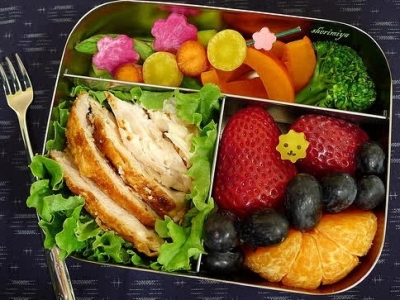
Make it easy and interesting. Use portion size containers, different shapes for fruits or sandwiches. Make food easy to handle and free of extra effort like peeling.

Sharing Nutritional Information

One of the best ways kids learn to eat well is by modelling their parents.  Speak with your children about the benefits of the foods they’re eating. Table to Table has begun this conversation in the Ironbound section of Newark. Our very generous donors provide us with a wide array of fruits, vegetables and herbs, some of which our recipients may never have come in contact with. But when parents bring this produce home and incorporate it into their daily meals, kids learn what different foods can do for them and how routine it can become to incorporate a variety of healthy and appealing choices into their diet. Working with dieticians at the Mobile Market, recipes, meal ideas, and nutrition tips are all shared on a regular basis. With access to fresh food and a little education on its benefits and preparation, the future of food insecure families can be much smarter, brighter, and healthier. Happy School Year, everyone!

It’s getting harder to for a lot of people to move and get going in the morning. Parts we’ve forgotten about are stiff and achy.  America is aging in big numbers and the impact is huge. Baby Boomers are in the thick of hitting retirement age with a projected 50% increase of 60 year olds by 2025. That’s a lot of achy joints.

But physical problems are not the only ones seniors are facing. Many are finding themselves food insecure, regardless of whether they live on their own or in a household with other non-seniors. In the US in 2014, 3 million (9%) households with seniors age 65 and older experienced food insecurity and 1.2 million (9%) households composed of seniors living alone experienced food insecurity. New Jersey’s rate for senior food insecurity is 8.4% of the total population; 7.8% live at poverty levels (2014).

Seniors are at-risk, resulting from fixed incomes and challenges that range from a lack of transportation options, mobility problems and other medical issues. As they age, it becomes more likely that on a regular basis, seniors will have to choose between medication and food. Seniors show higher rates of heart disease, high blood pressure, depression, heart attack and asthma. And poor nutrition can be a causative factor for all of these.

Fortunately, there’s the Commodity Supplemental Food Program (CSFP), which began in 1968 initially to improve the health of low-income women and their infants and children.  It provides supplemental food, information about good nutrition, and a link to health care. Since 1982, the program’s focus expanded to include low-income elderly citizens. CSFP is part of the Food and Nutrition Service (FNS)/U.S. Department of Agriculture. They distribute food and funds to states rather than food vouchers that programs like WIC provide directly to participants. Since those who are eligible cannot participate in both the CSFP and the WIC at the same time, the CSFP has largely become an agency providing for the low-income senior community, aiming to improve health and nutrition.

For seniors living in participating states, food packages are provided for those meeting eligibility requirements. Currently, 39 states including NJ, the District of Columbia and two Native American Reservations offer CSFP benefits. Participants must reside in the state to benefit from the program and meet the established income limits for this population, which is to be at or below 130% of the Federal Poverty Income Guidelines. Funding in 2012 in NJ was $209,368 and 2,931 low-income elderly residents were served.

A variety of foods are provided to help to create a balanced diet, however, it is not intended to be a complete diet. Packages supplied by the New Jersey agency include foods such as nonfat dry and ultra-high temperature fluid milk, juice, farina, oats, ready-to-eat cereal, rice, pasta, peanut butter, dry beans, canned meat, poultry or fish, and canned fruits and vegetables. USDA maintains a List of Foods Available for CSFP.

Table to Table helps bridge the nutritional gap in the diets of a large group of low-income seniors through regular deliveries to our recipient agencies. How can you help senior residents of NJ eat a healthier diet and reduce having to choose between medication and food, fight obesity, and improve their health? Spread the word about programs like CSFP, check on senior neighbors, relatives and friends – you be shocked by who is in need – and support organizations like Table to Table. With the increasing number of Baby Boomers retiring, we are obligated to supply more nutritious, fresh food to our agencies that care for senior community members.  According to our Director of Recipient Relations, Julie Kinner, “90% of our agencies serve seniors in one way or another. With the aid of this generous community, we will always be there to help feed them.”

Do. Not. Throw. That. Away. That milk, meat, egg, pasta, leftover is probably still safe to eat…really. That date on your food container has nothing to do with food safety. You will not expire if your expiration date has passed. Comforting, right?

The fact is, there is no standard or regulation to food labeling. Back in January we posted a blog on the meaning of food labeling dates, where we explained the current labeling system that is generally geared toward letting the retailer know when to remove items from shelves. Forward thinking food retailers work with food rescue organizations like Table to Table to bring this perfectly good food to families and communities that do not have access to healthy, nutritious ingredients. Communities in large cities that are food deserts, like Newark and Paterson, find it difficult to get access to food. According to the Healthy Food Financing Initiative (HFFI) Working Group, a food desert is a low-income census tract where a substantial number or share of residents has low access to a supermarket or large grocery store. Food rescue helps to mitigate the need with the help of retail partners.

Despite the Good Samaritan Law’s protections and some individual state laws regarding donating food passed the package dates, the confusion around date labeling hinders both the consumer, retailers, manufacturers, restaurants and other would-be donors from succinctly managing their food costs and food waste. But it appears help is on the way.

The current administration set a 2030 goal for the US to reduce food waste by 50%, a new bill proposed in May by Rep. Chellie Pingree of Maine, who introduced The Food Labeling Act, along with Sen. Richard Blumenthal of Connecticut, proposes a more uniform labeling system to help confront the issue of consumer confusion and will help consumers have a better understanding of the safety of their food.

“Contrary to popular belief, expiration date labels often don’t indicate whether food is still safe to eat. As a result, we are tossing massive amounts of perfectly good food in the trash,” says Dana Gunders, author of the Waste-Free Kitchen Handbook and Senior Scientist at the Natural Resources Defense Council. “This bill will help clarify the true meaning of the dates on food labels… so we can keep more on our plates and out of the landfill.”

This new system, which would be regulated on a national level, would have just two labels; one that indicates when food is at its highest quality, and another that indicates when the food is no longer safe to eat. So simple! The bill would also require the Food and Drug Administration and the U.S. Department of Agriculture to compile a list of products that should have expiration dates, including deli meats, unpasteurized cheeses and prepared foods that could become unsafe if kept too long. The act would also prohibit states from preventing stores or manufacturers from donating products for which the quality period has passed. This puts more food in the hands of those in need by allowing food rescue organizations access to more food. Table to Table delivers food to our agencies the same day it’s picked up giving our recipient agencies ample time to prepare and serve it.

The bill is simple in structure but acts on a number of areas in the food supply chain. It is supported by large food companies like General Mills and Campbell’s, top chefs like Tom Colicchio (2001 Table to Table honoree) along with many others, nonprofit organizations, retailers, and legislators. It’s an impressive collaboration. If passed, companies would have two years to comply with the new standards.

Reducing food waste and giving nonprofit organizations, like Table to Table, access to more of the perfectly good food that is thrown away daily will go a long way to reducing food insecurity. As benefits for programs like welfare and SNAP are cut, under-served communities will need our help more and more. Feeding neighbors is essential to health and well-being and our future, and this small change in food labeling, will have far-reaching impact. We look forward to working with our partners to bring more good food to the communities and families we serve.

When we hear celebrity chef and food waste in the same sentence around here, we think Spring Events and Dinners of Distinction. To that point, Chef Douglas Rodriguez was the honoree at our Viva Latino! on May 24th – so we were all ears on May 25th when we started hearing about celebrity chefs making the rounds of Washington, DC lawmakers to discuss Food Waste. Chefs, along with large food companies, academics, food producers and nonprofits, met with 22 members of Congress and attended the first ever full hearing of the House Agriculture Committee. Each communicated the same message: we need to address the $200 billion food waste issue in the US and we need to start immediately.

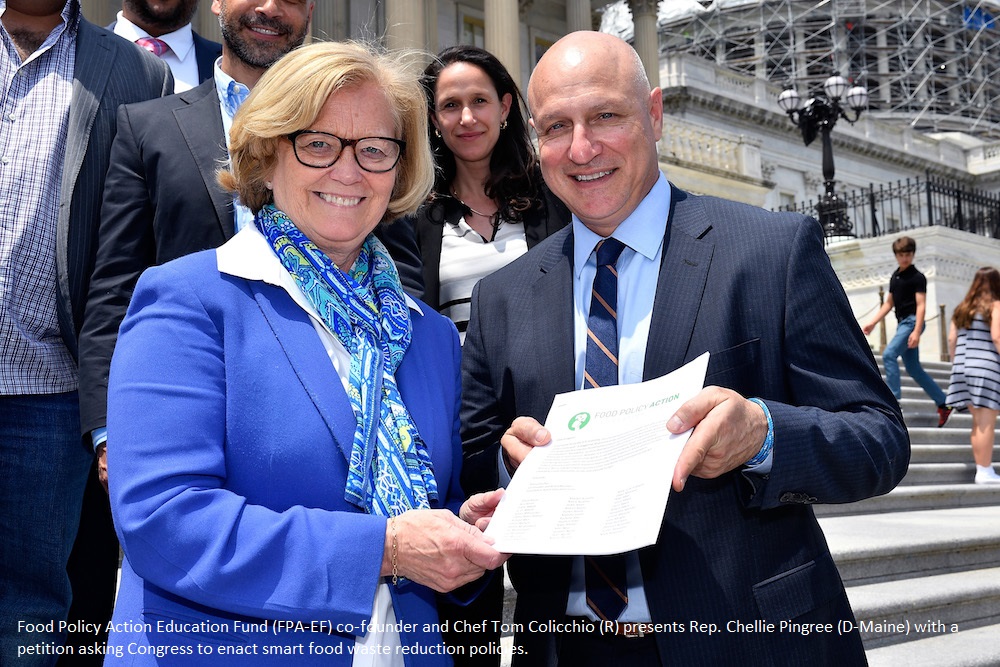
The award-winning chefs and food waste advocates joining FPA-EF (Food Policy Action – Education Fund) co-founder, Tom Colicchio, were: Chefs Victor Albisu, Mourad Lahlou, Spike Mendelson, José Andres, Amy Brandwein, Patrick Mulvaney, Steven Satterfield, and Kevin Sbraga; along with COPIA CEO Komal Ahmad, NRDC Senior Advocate JoAnne BerkenkampWasted Food author Jonathan Bloom, NRDC Scientist and Waste Free Kitchen author Dana Gunders, MissionPoint Capital Partners Managing Director Adam Rein, FPA-EF Executive Director Claire Benjamin DiMattina, and Jesse Fink of the Fink Foundation. They presented Rep. Chellie Pingree (D-ME) with a 4000 signature petition asking Congress to enact smart food waste reduction policies. Rep. Pingree is the co-sponsor of a bill to standardize food labeling and hosted a dinner that evening with, of course, food that would have been discarded for any number of reasons like size or shape or age.

Testimony in the hearing referred to ReFED, an organization fighting food waste, and the roadmap they created to reduce food waste and its impact by 20% within the next decade. (The USDA/EPA issued a nationwide target of 50% reduction by 2030, last year.) Rethink Food Waste Through Economics and Data’s (ReFED) Roadmap to Reduce U.S. Food Waste, released in March, details 27 cost effective, feasible and accessible solutions to reach the goal.

Some of the ideas presented have been bounced about for years, but now this roadmap lays out the most effective ones, relating them to the impact they can have on hunger and the environment. If implemented, the value of these solutions could be:

$10 Billion of Economic Value
1.8 Billion Meals Saved
1.6 Trillion Gallons of Water Saved Annually
$5.6 Billion Annual Consumer Savings
$1.9 Billion Annual Business Profit Potential
18 Million Tons of GHG Emissions Reduced annually

The 3 top actions identified to help reduce food waste are:
Consumer Education Campaigns
Standardized Date Labeling
Packaging Adjustments

“As chefs, it’s in our best interest to make sure safe, edible product does not go unused. We are here to help Congress understand that it’s in our country’s best interest to do the same. I am happy that so many chefs and leading experts are here with me today to help drive positive, bipartisan change.” said Tom Colicchio of “Top Chef” fame.

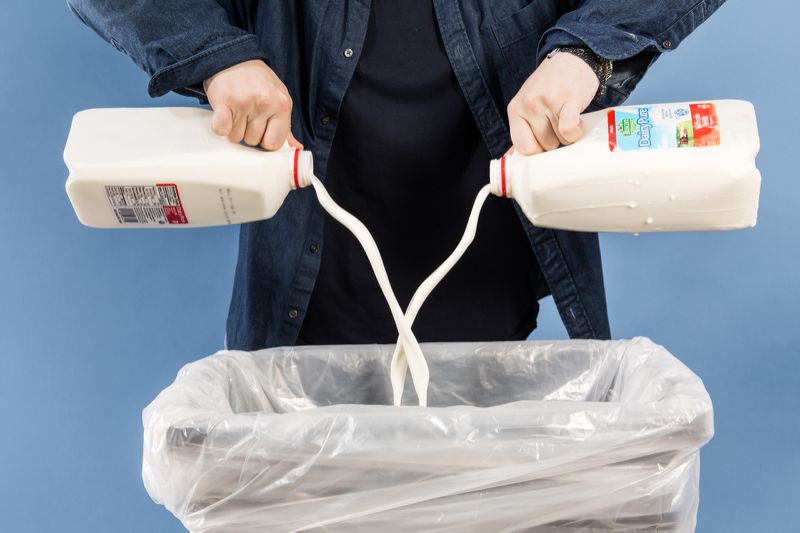
Food waste has been discussed in this blog at length, but the fact remains, 40% of food in the US is thrown away. While 50% of the food in restaurants is thrown out, the bulk of that 40% is generated in homes around the country. Somewhere in the neighborhood of 70% is home waste. Think about how that wasted food also wastes resources like water, energy, fuel, and contributes to greenhouse gas emission through the methane gas emitted by rotting food. Take it a step further and consider that 60 million tons of food is thrown away while 1 in 7 Americans (1 in 5 Children) are food insecure.

We’ve all done it, thrown away food because we were unsure if it was safe, forgotten about it and grew a science project, or ordered too much for dinner and didn’t even eat the leftovers doggie-bagged home. Each of those behaviors eats away at our resources from food, to water, fuel, soil, atmosphere, and people. Tom Colicchio said. “We applaud the House Agriculture Committee for leading the charge and working across the aisle to reduce food waste, which will reduce hunger, bolster the economy and help farmers. Reducing food waste today can make a huge positive difference for our food system tomorrow.” When nonprofits like Table to Table are on the same page with large food companies, chefs, food waste and environmental advocates and legislators, the impact we will have improving the lives of everyone in our society is maximized.

See that pretty apple? It looks like it’s right out of a picture book, just the right shade of storybook red. So many of them too, all looking perfect stacked up waiting to go home with you.  Or that bag full of sunny yellow lemons, smiling from a bowl on your kitchen counter. And that stalk of dusty green Brussel sprouts, like a wand of miniature lettuce heads, waiting to be sautéed or steamed to nourish us with vitamins and beta-carotenes.

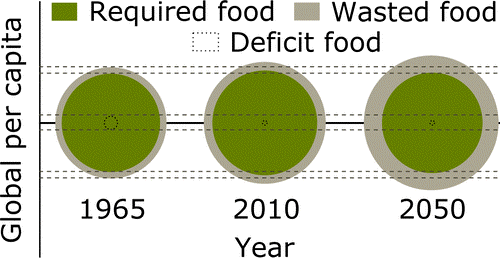
But that shimmering land of fruits and vegetables in our fairy tale holds a dark secret and it’s time to bring it to light. Our perfect garden is changing our climate and there’s little time left to stop it. In a study published last month by the Potsdam Institute for Climate Impact Research, projections for global food loss/waste were considered in conjunction with associated emissions. Their analysis revealed that although food requirements have changed minimally over the past 50 years, food surplus has increased by 65%, with agriculture accounting for 20% of global greenhouse-gas emissions in 2010.

The eating patterns of the Western world contribute to the increase in greenhouse-gas emissions. The image below shows how food waste has grown versus nearly unchanged food requirements, at a time when the global food deficit has decreased.

According to the study, avoiding agricultural food waste could help prevent climate impacts such as weather extremes and sea-level rise. Jürgen Kropp, co-author of the study, said it’s no secret the Western world is responsible for today’s emergency.  “Part of the climate crisis,” Kropp said, “is our food consumption style in Western countries.” As emerging economies, if India and China follow our example of food waste, they could over proportionally increase greenhouse-gas emissions and undermine climate protection efforts.

By reducing food waste, there would be a direct impact on climate change while at the same time, hunger worldwide could see a reduction. At current rates, greenhouse-gas emissions will rise almost 300% by 2050, while food requirements will only rise 2-20% in that time. Co-author of the study, Prajal Pradhan explains, “…agriculture is a major driver of climate change…” Avoiding food loss and waste would therefore avoid unnecessary greenhouse-gas emissions and help mitigate climate change.”

Up to 14 percent of overall agricultural emissions in 2050 could easily be avoided through better management of food distribution and waste management. Examining our supply chain and distribution systems is imperative. Farms occupy 38% of our land (compared to just 2 percent for cities), and use 70% of our fresh water. Creating more efficiency, putting aside the need for esthetics of our ingredients and managing the food chain could help to produce enough food to feed 10 billion people in a world of 800+ million food insecure or hungry people. In essence, individual consumer behaviors can have a dramatic effect on not only the food waste crisis, but climate change concerns as well.

Impacting the supply chain by rerouting excess food from dumpsters to our neighbors who are food insecure and hungry will have a long term consequences for our environment. Wasting less food will feed more people. When you shop, ask for locally sourced produce, dairy and meats. Buy ugly fruits and vegetables and ask your local grocery retailers and restaurants what they’re doing with their excess food. If enough consumers voice their concerns, retailers will get the message that it is not okay to throw out food, or order too much, or only offer food you’d find in a fairy tale.

Food waste and food insecurity are no longer unfamiliar concepts. We’re making strides getting past our need for over abundance. More and more Americans are reducing the amount of food they throw out, adding composting to their lifestyles and making smarter choices when shopping. More retailers are offering specials on food nearing expiration and making efforts to donate to food rescue organizations like Table to Table. We can all influence the food supply and force it to work differently. By reducing waste, we can save resources like water and energy while increasing food security all the way down to the local level.  And that would create a very happy ending to the story.

In October 1996, Congress passed and President Clinton signed into law the Bill Emerson Good Samaritan Act, unifying protections available throughout the US, District of Columbia and Puerto Rico of business and individuals who want to donate excess food. Yet even after 20 years on the books, many are unaware of the law and we still waste 40% of our food, much of it perfect for donation.

Why, then, isn’t excess food donated?

Seems a no-brainer. You have excess food; you have neighbors without enough food. Why not donate that food to neighbors in need? Since those neighbors number a staggering 46+ million in the US and 1.1+ million just in New Jersey, this is a common-sense way to address the issue of local hunger. Yet many corporations, businesses, restaurants, individuals and organizations do not donate excess food from meetings, cafeterias, events, etc.

Two key reasons come to the forefront of every conversation about food donation: Liability and Logistics.

Fear of liability and an ensuing law suit dictates many of the decisions we make in the US. It can be argued that litigation is one of our strongest industries but it turns out, when it comes to food donation, there is a poor understanding of the risks. Since October 1, 2016, The Bill Emerson Good Samaritan Food Donation Act has protected donors in all 50 states from civil and criminal liability for good faith donations.

In 1990, all 50 states had statutes in place limiting the liability of food donors, but they were varied and left a difficult patchwork of laws that potential food donors needed teams of lawyers to navigate. Understandably, food donation became impossible for donors, large and small, to contend with. The Model Good Samaritan Act of 1990 was intended to give states a standard law to follow individually and independently, but with no force of law, only one state adopted the act. Missouri Representative Pat Danner recognized that the Model Good Samaritan Act would have limited use; she enlisted fellow Missouri Representative Bill Emerson to co-sponsor bill HR2428, the Good Samaritan Act. It would have the force of law it needed to successfully protect and encourage food donation. Representative Emerson was a profound proponent of issues involving hunger and had great clout with his colleagues.  It was his long-standing support of hunger related issues along with his influence that were instrumental to the bill’s passage. Sadly, toward the end of the legislative process, Representative Emerson’s health failed and he passed away in June of 1996. At that time, Congress amended the bill so that it would be titled “The Bill Emerson Good Samaritan Food Donation Act” to honor his efforts at reducing hunger and improving the nation’s nutrition programs.

Specifically, the Bill Emerson Good Samaritan Food Donation Act (42 U.S.C. § 1791) encourages food donations by providing liability protections for businesses that donate ‘apparently wholesome’ food in ‘good faith’ to nonprofit organizations. 42 U.S.C. § 1758(l) explicitly states that schools participating in the national lunch program that donate excess food receive liability protection under the Bill Emerson Good Samaritan Food Donation Act, which:

  • Protects you from liability when you donate to a non-profit organization;
  • Protects you from civil and criminal liability should the product donated in good faith later cause harm to the recipient;
  • Standardizes donor liability exposure, eliminating the need to investigate liability laws in 50 states; and
  • Sets a floor of “gross negligence” or intentional misconduct for persons who donate grocery products. According to the new law, gross negligence is defined as “voluntary and conscious conduct by a person with knowledge (at the time of conduct) that the conduct is likely to be harmful to the health or well-being of another person.”

Additional laws in place to help encourage the donation of “wholesome food” are those that give tax credits to businesses and encourage federal agencies and contractors to donate to food rescue.

Internal Revenue Code 170 (e) (3) provides enhanced tax deductions to businesses to encourage donations of fit and wholesome food to qualified nonprofit organizations serving the poor and needy.

The US Federal Food Donation Act of 2008 was added to clarify and specify contract language to encourage federal agencies and their contractors to donate excess wholesome food to eligible nonprofit organizations to feed food-insecure people in the United States.

According to the Legal Guide to the Bill Emerson Good Samaritan Food Donation Act, by the University of Arkansas School of Law, …a thorough search of filings and reported decisions did not turn up a single case that involved food donation-related liability or any attempts to get around the protections offered by the Bill Emerson Act. Additionally, several leading food recovery experts and anti-hunger advocates report that they are unaware of any such actual or threatened lawsuits.” So, the liability concerns are pretty well buttoned up.

Now back to the second reason given, logistics.

The logistics of large scale food donation like the type a restaurant or retailer may make are not as daunting as they may seem. Food rescue organizations, like Table to Table, make every effort to ensure that the donation process is as seamless and easy for the donor as possible. Taking the logistics, size and needs of each individual business into consideration, a plan is devised to take as little valuable time from each donor’s busy day as possible. Table to Table has 5 refrigerated trucks that start and finish each day empty, having picked up and delivered over 10,000 pounds of food per vehicle. Super simple and efficient!

If 15% of the food that is thrown away were rescued, it would feed 25 million people. Since one of the biggest obstacles to getting excess food to hungry people is a lack of information or awareness of the Good Samaritan Law, for its birthday, help get the word out.  Inform your local grocery store, favorite restaurant, corporation, farmers markets, food wholesaler, and caterer that it’s worth the effort to live up to Representative Bill Emerson’s goals.  We may not be able to end hunger, but we can certainly make sure that each of our neighbors has a wholesome meal each night. Don’t throw away your chance to help!