





Blog
NYC Food Policy Center: How New Jersey Built the Country’s Most Ambitious Food Security Measurement Model
Editor’s note: This blog post was aggregated from an article by the New York City Food Policy Center at Hunter College. Click here to read the entire article.
Government has always tracked food security through the lens of affordability through the U.S. Census Bureau’s Current Population Survey, which is distributed annually to about 40,000 households.
The definition of food security as adopted by the United Nations’ Committee on World Food Security, is a condition where all people, at all times, have physical, social, and economic access to sufficient, safe, and nutritious food that meets their dietary needs and food preferences for an active, healthy lifestyle.
Related: 1 In 10 NJ Households Experienced Food Insecurity, New Report Shows
Dr. Jenny Schrum, the director of research and evaluation strategy at the New Jersey Office of the Food Security Advocate (OFSA), sought to go deeper with a new food security measurement model. The OFSA, headed by Executive Director Mark Dinglasan, is the first and only state-level food security agency in the country.
“We always associate food security with money, which is incredibly salient, but not the whole story,” Schrum told the New York City Food Policy Center. “If people have enough money, if may give you access. But there are many reasons people are food insecurity.”
As an outgrowth of the research, OFSA created the New Jersey Food Security Strategic Plan, a three-year initiative to guide and coordinate actions in addressing food insecurity statewide. A recent report by the U.S. Department of Agriculture released shows that one in 10 New Jersey households were food insecure between 2022 and 2024.
Related: New Jersey Publishes 3-Year Food Security Strategic Plan
Schrum’s research also led the OFSA to survey more than 2,000 New Jersey residents from communities with high rates of food insecurity. Those findings were documented in the OFSA’s Exploring the Six Dimensions of Food Security in New Jersey. The report has an interactive dashboard that lets readers explore results from the survey.
“With inflation, a changing economy, and climate change reshaping what we can grow and where, food insecurity is going to affect far more people than it does today,” Schrum told the New York City Food Policy Center. “If we only ever respond to the emergency, we never address what’s causing it. Better definitions, better data, better program data, that’s how we start to get ahead of it.”
Table to Table is New Jersey’s first and largest food rescue nonprofit, bridging the gap between food being wasted and people facing food insecurity. We bring rescued fresh, nutritious food to 276 community partners, including social service organizations, pantries, shelters, fresh produce markets and centralized distribution hubs. Food is provided free of charge. Through this, Table to Table touches a diversity of those in need, including families, children, veterans, and older adults, making good nutrition accessible while serving as a stimulus for other longer-term benefits. Since 1999 we have rescued more than 133,271 tons of nutritious food — enough for 266,542,863 meals — and delivered it to our neighbors in need, saving over 612 metric tons of methane.
Related:
Spread The Word
More From News
July 23, 2026
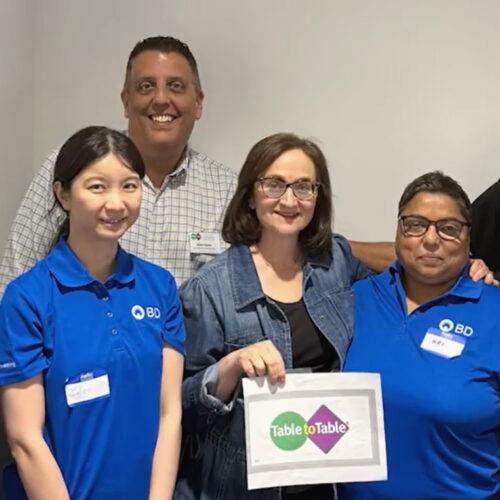
Table to Table Participates in BD Difference in a Day


July 9, 2026
Ed Trucil: Volunteer Spotlight
REAL PEOPLE, REAL STORIES.

July 1, 2026
How Much Food Will Go Uneaten This Independence Day Weekend?
More than an estimated 120 million pounds of food, worth about $400 million, will go uneaten during the upcoming Independence Day weekend....
May 12, 2026
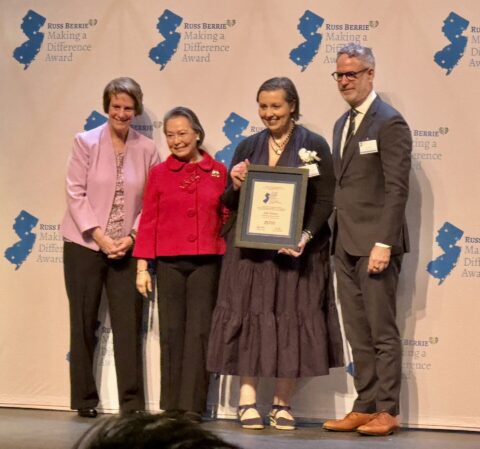
Table to Table’s Vice President of Operations Julie Kinner Honored with Russ Berrie Making a Difference Award
Julie received the Transformational Leadership Award Julie Kinner, Table to Table’s longtime Vice President of Operations, was honored with a Russ Berrie...

May 6, 2026
Food Security Groups, Officials Convene for Annual Conference in North Jersey
Editor’s note: This story was aggregated from an article by Montclair Local. Click here to read the entire article. Nonprofit leaders, government...